Tampilkan postingan dengan label Buddy Ryan. Tampilkan semua postingan

Senin, 23 Januari 2012

Defensive Backs in the 46 Nickel


Well, the last position manual in the defense is complete! The unique thing about the 46 Nickel compared to its cousin the old standard 46, is that there are five defensive backs (DB's) on the field at any given time. This allows you to use athletic players as adjusters against spread-type sets, yet coupled with the 46's patented base front, you can also play these smaller, quicker players inside the box because they are protected. It is imperative to understand that the use of the 46 against the spread is a pressure concept, if you are not a "man to man guy", then you might as well forget this defense...it's not for you. The heart of the defense is built around the idea of "Get to them, before they get to you". This idea should be ingrained in your defense players if you so choose to use this defense.

Now that we've got that out of the way, let's look at personnel in the 46 Nickel!

Archetypes
  • Strong Safety (Spur)- The Spur is a good "all around" athlete. He's probably the second best pure athlete on your defense. He has the ability to play in space, but is not shy about playing inside the box. He must be physical enough to play the seven technique, yet agile enough to cover a slot receiver man to man.
  • Weak Safety (Whip)- The Whip is the least athletic of all of the DB's in the 46 Nickel. Even though he aligns in the box, DON'T think linebacker (LB) here. The Whip is protected by two defensive linemen (DL) and an outside linebacker (OLB), so he doesn't have to be as physical a player as a LB. He does need to like contact, I mean after all, he's on defense! The Whip should be able to cover man to man, look for that ability first, then move on to what else that player can do.
  • Free Safety- This is the man in the middle. He's the best athlete in the secondary, and possibly on the team. He must be able to cover ground, love to hit, and tackle well in open space. He must also make all the adjustment checks in the secondary. This is probably your best football player on the team. DO NOT skimp at this position!
  • Corner- Corners are cover guys. The more physical the better, but it's not a must. The ability to be able to cover a receiver in single coverage is paramount, everything else is secondary. Look for good feet and hips, speed is a plus, but not a must.

Man Free-Pressuring With Coverage

As was stated earlier, the 46 Nickel thrives on pressure. If a defense is going to base with a pressure philosophy, then they need to cover with a pressure philosophy as well. Man free coverage, typically known as Cover 1, is the base coverage in the 46 Nickel. It's not the only coverage, however this is the coverage you will teach from day one.

The rules are simple and concise with Cover one. The corners will take the number one receiver to their side man to man. The Spur and Whip will cover the number two receiver man to man to their respective side. The Spur and Whip are the adjusters to each side and the FS is the final adjuster.

Alignment-Spur
The Spur has a pretty simple job. First, he listens for the strength call, given by the Mike LB, and goes to that side of the formation, and covers the number two receiver man to man. If this receiver is a tight end (TE), he will align in a seven technique and cover the TE man to man. If the number two receiver is a split receiver, then the Spur will move to five yards off this receiver and in inside leverage of this receiver. The only time the "cover number two rule" does not hold true is against TE trips, or "Trey" sets. In this case, the Spur will stay in the seven technique and cover the TE man to man, while another DB in the secondary will cover the number two receiver. The reason behind this is that the Spur is usually the more physical of the outside safeties (OSS's), so he's better suited to stay in the seven technique against Trey sets.


Alignment- Whip
The Whip is similar to the Spur, but has a few different alignments against certain offensive sets.  If there are two or three backs in the backfield, then the Whip will align in a weak 40 technique and will essentially be the weakside LB in the defense.  If the offense comes out in a one back set, and puts a TE to the weak side then the Whip will align in a seven technique and cover the TE man to man.  If the number two receiver is a split receiver he uses the same rule as the Spur does in the same situation.  The Whip will be called on, in certain situations to move to the strong side of the defense.  This is when the FS gives a "help" call, alerting the Whip, that there is a trips or trey set on the opposite side of the defense.  The Whip's rule is to go to the call side, and cover the number three receiver, unless the number three receiver is a TE.  If the #3 receiver is a TE, then he adjusts and covers the number two receiver man to man (see illustration above).

Alignments-Free Safety
The FS's normal alignment is over the center at a depth of no less than eight and no greater than 15 yards off the line of scrimmage (LOS).  This depth is dependant on coverage or down and distance, or both.  If the FS expects a run play, I like him to be around eight yards, whereas if he expects the pass, then he should move back to ten or 12 yards.  In a double coverage scenario, the FS will cheat over late to inside leverage on the double covered receiver.  The FS must learn to time this move, as we do not want to give away what our defense is doing.  If the offense presents three backs in the backfield, the FS will move to a "backer" alignment, putting him over the center, at LB depth. 


FS Cheats Late in Double Coverage

Alignments- Cornerback
Corners have three basic alignment, normal, press and off.  The normal alignment is five yards off their receiver and in inside leverage.  Press is inside leverage but on the LOS as close to the receiver as legally possible.  Off is inside leverage, but eight yards off the receiver.  It's important that the corner know not only how to align in these alignments, but how to stem to these alignments as well. 

There will be some cases where the cornerback will have to play the seven technique as well.  If the offense comes out in two or three backs and has two TE's then the weakside corner plays the seven technique.  If you are not comfortable with this, an easy adjustment is put the corner in a weakside 40 technique and move the Whip safety to the seven technique. 


Weak Corner Plays the Seven Technique

A Note on Dividers
Some coaches use divider rules to align their DB's, and this is perfectly fine.  Most of these rules are pretty standard.
Corners
  • #1 Aligns outside the top of the numbers, inside leverage
  • #1 Aligns inside the top of the numbers, outside leverage
OSS
  • #2 Aligns outside the hash mark, inside leverage
  • #2 Aligns inside the hash mark, outside leverage
I currently coach junior high football, and we don't use divider rules.  I just don't feel it's necessary at my age level.  I'm not sure I'd use them all that much at the high school level either, but whatever you feel comfortable with is just fine.

Vs. the Run-Spur
The Spur has very little to do with the run game when in man to man coverage.  All DB's use the catch man technique, but when involved in man coverage all DB's are secondary run support ONLY.  When the Spur is in the seven technique, he has NO run assignment whatsoever.  He must be conscious of the TE and his ability to run a route.  At the more advanced level, you can have the SS read the TE's release for run or pass, however this is difficult and time consuming.

One way to give the offense fits is to blitz or stunt the Spur.  The Single Spur blitz is very simple, the Spur will blitz, from wherever he is on the field and take the C gap.  This is a very good blitz that the offense will not expect and get you an extra run defender to the strong side of the formation. 


Single Spur

A good stunt to use, especially against wing-t teams or teams that like to run Power is Spur "X".  The "X" in the call tells the OLB to that side to run the Jet stunt (discussed earlier) and the Spur will loop outside for contain.  These stunts and blitzes are used to keep the Spur, who is one of the better athletes on the team, involved in attacking the offense and not just covering receivers.


Single Spur "X"

Vs. the Run- Whip
The Whip, in some cases is like a LB, whereas in other situations he is like a DB.  When the offense has two or three backs, the Whip is in LB mode and will play using LB keys and reads.  Against one back or empty teams, the Whip is a DB first and has no run assignment.  Just as with the Spur, you can blitz the Whip in a bunch of different ways to get him involved in pressuring the offense.

Vs. the Run- Free Safety
The FS is actually quite an important factor against the run.  The FS is the alley player to either side of the formation on outside run plays, and plays the cutback on inside run plays.  This is one reason the FS needs to be one of the best athletes on the field as he must be able to play like a LB or a DB depending on what the offense is presenting the defense.  Against option teams the FS is VERY important as he is used in tracking down and helping take away the QB and helping defend the dreaded option pass.  This run responsibility is the major reason that the FS will align so close to the LOS in run situations.

Vs. the Run- Cornerback
The corner has no run assignment, as he is always involved in coverage.  A good way to mix things up is to run a corner blitz from the boundary, if you have the personnel to do so.  This means the corner must be able to get there, and must be able to do something once he gets to the football.  In normal situations, the corner is purely a cover man though.


Corner Blitz From the Boundary

Vs. the Pass
Against the passing game, the rule is quite simple...cover your man!  The main component of the man free coverage used, is the FS.  He plays a robber technique and assists on all routes coming into the middle of the field.  All the other DB's must realize this, and can play their man accordingly.  What this means is that if a corner gets an inside move, he does not necessarily have to "jump" the route, because he knows he has help to the inside.  However, the corner should be overly concerned by outside breaking routes, because these routes move away from the FS, thereby not allowing the FS to help. 


This middle of the field robber technique, can be modified by deepening the FS to allow him to play over the top of any inside route (he normally is inside and underneath these routes).  The tag "deep" added to the coverage tells the FS to deepen his alignment and play over the top of any inside route in the middle of the field. 

All defenders must learn how to play catch man.  The catch man technique is the backbone of the 46 Nickel's pressure coverage package.  Catch man allows the DB's to read and react to a receiver's movement and then play off of that movement accordingly.  This technique also allows man defenders to react to running plays quicker than when using traditional man to man techniques.

Adjustments-Aligning and Attacking

The adjustments in cover one are pretty simple, but here are a few of the basic ones so you can get an idea on how the secondary handles the adjustments.  One rule to keep in mind is I don't ask my LB's to leave the box to cover anyone, this is why I declare the FS to be the final adjuster.


Against any nub set, the call is Flip. Flip tells the corner to the nub side to go cover the number two receiver to the side he was called to. This keeps your best athletes covering their best athletes.


Two by two is pretty simple, the SS will go cover the strong number two receiver and the WS will cover the weak number two receiver.  The FS should align splitting the middle of the widest vertical threats.


When the offense presents three or more receiving threats to one side of the defense, the FS makes a "help" call.  This tells the WS to move over and cover the number three receiver.  The only time this doesn't hold true is if the number three receiver is a TE.


Against the empty set, I check to cover zero and auto-blitz the Mike LB, however there are other ways to do this.  The first adjustment I've seen, is simple, have the Mike slide out and cover number three strong and keep the FS in the middle of the field.


A problem with that adjustment is QB draw can be a little rough to defend from that alignment.  Another adjustment that can be used is to drop the nose back to LB depth and have him spy the QB.


However you choose to do it, all of those adjustments are simple and easy to get in to.  I choose to keep the Mike as the "man in the middle" as that is what he normally does in the defense.

Additional Coverages- One High
There are several other coverages that can be run out of the 46 Nickel.  The first of these, would be cover three.  Since the defense is pressure based, I don't recommend utilizing cover three as much because I feel cover three does not pressure the offense, however if you want a zone coverage to fit with the defense, this is the coverage for you.


In cover three, the deep zone droppers are the corners and the FS.  This is just your standard three deep zone, although you can use pattern reading if you like, but then why not run cover one?  The Sam and Spur are the key to the coverage and they must communicate at all times.  The widest of these two defenders will drop to the numbers and play the curl to flat area and is the swing deep of two player.  This means this player will run with the number two receiver through the zone man to man.  The inside-most of these two players is the hook zone player to his respective side and will drop to just inside the near hash mark.  The Mike drops to the opposite hash mark and is the weak hook player.  The WS will drop to the weak numbers and is the weak curl to flat, swing deep of two player.  Another key element is that there must be an automatic "Spike" call given to the DE who is on the side the Sam LB is on.  This tells this DE to cross face of the OT to the outside and contain rush. 

One coverage I particularly like if you want to play zone in the 46 Nickel, is cover six.  Cover six is a three deep, three underneath fire zone package that allows you to still send five after the QB.  The rules are very similar to some of the pattern reading coverages discussed here before (most notably Saban's Rip/Liz adjustment to cover three).  The corners will take all of number one vertical, while the OSS's will take number two vertical or outside.  If number two is inside, then they release and relate to the number one receiver.  The Mike LB will handle allow shallow crossers and the FS handles any of the deeper inside routes.  The Sam is now free to rush the QB. 

Again, not sure why anyone would not want to run cover one.  When coupled with the catch man technique, there is no real need for any other coverage.

Additional Coverages- 2 High
This defense is completely capable of morphing into a seven man front if need be with coverage.  Not sure exactly why, but the concept is relatively simple.  Using split field techniques the defense can easily get into a seven man front and provide for sound pass coverage.  Utilizing what we know about split field coverage from TCU's Gary Patterson we see against a two by two set the 46 Nickel would align as follows:


The rules are the same as discussed in earlier posts on TCU's famed Blue coverage.  The Sam will drop to the strong hook, and will have number three vertical, whereas the Mike is the away side slice player.  To the strong side of the coverage, the SS is the curl to flat, swing deep of three player, while the corner and FS play their Blue reads to the number one and number two receiver.  The away side can play Blue, or Bronco (man), whichever you choose.

As you can see, the 46 Nickel is not some "flash in the pan" defense.  It has all the capabilities of doing what any other defense does.  However, this is not what the defense was built for.  This defense, as stated earlier, is built to pressure.  If you are not comfortable with this, I suggest a different defense.

In my next posts, I'm going to look at and break down how the 46 Nickel handles various offenses that you might see.  The first offense will be the dreaded Flexbone offense!

Well, the Super Bowl Matchup has been decided, who are you taking the Pats or the Giants?  I'm going with New York, they play good defense and well, I don't care for Tom Brady!  Anyhow, who you got in the big game?


Duece

Kamis, 19 Januari 2012

Linebacker Play in the 46 Nickel


Well here's the next installment of our 46 Nickel posts!  Linebacker play in this defense is probably unlike any other you've seen.  Basing out of nickle personnel, usually means the 3-3 or 4-2 as your base defense.  I chose the 3-3, since a lot of 3-4 teams find shifting to the 46 simpler than the 4 man line.  Main reason is in the 4 man scheme, all 4 of your defensive linemen (DL) are taught block down step down (BDSD), and when kicked into the 46, the weak defensive end (DE) must now learn to play force.  Not rocket science, but it is another skill that this player must learn.  So I chose the 3-3 as my base, utilizing three linebackers, the Sam (strong side outside linebacker), Mike (middle linebacker), and Rush (weakside outside linebacker).  Now, so far, I've never been the 3-3, but it's in my playbook.  I purposely developed this defense to attack teams that are on our schedule which includes the following:

  1. Appalachian State Spread
  2. Rich Rodriguez Spread
  3. Multi-formation (Pro I as a base)
  4. Run and Shoot Spread
  5. 1 Back Under Center Zone (Wisconsin-style run game)
  6. Urban Meyer Spread
So as you can see, I needed something to defend the spread!  Now I know a lot of you are going "The 46...really?".  Well go here to learn more on how I found out about this defense.

Anyhow, let's look at our base alignment in the 46 Nickel.  As you can see, there is only one of our three LB's that align off the LOS.  I know...odd, but hear me out.  I needed guys that can play in space, cover and rush the passer, so I utilized LB types at what many would consider DE's.  Yes, the OLB's job is simple, play force, contain the passer and on certain blitzes and zone coverages they will drop.  Let's look at the type of player needed to play LB in the 46 Nickel.

Archetypes

The Sam is the LB I always set to the field.  He's the quickest, and most athletic of the three LB's.  There's a variety of techniques this player can use, however he is not BDSD.  He keeps outside shoulder free at all times.  I teach for both the Sam and Rush to rush the near shoulder of the near back.  This gives them a clear and concise aiming point.  I do teach them to key the near hip of the near offensive lineman as well.  The Sam will be involved in some coverage as a peel rusher on certain blitzes.  The Sam is also the LB that drops to the strong hook zone in cover three.  So, as you can see he must be very versatile. 


The Rush is not much different than the Sam, however he can be a stand up DE if need be.  He rarely drops to cover and does have limited coverage duties as a peel rusher.  He does not need to be the most athletic player, however if you ranked them, he'd be the second best athlete of all the LB's.  His main duty is to force on run plays to the boundary, play boot, reverse, cutback (BRC) on runs away.  The Rush's keys are the same as the Sam, so the teaching is universal.  If the Rush has one quality that might be better than the Sam's is that he's a good pass rusher.  This will be his job, 90 percent of the time, so think pass rusher when you go looking for a weakside LB.


The Mike LB is a pure plugger type of LB.  Size is good, but not a must, however the absolute love to hit is a "must".  The Mike must also be somewhat of a "headsy" ball player.  He must know where to align, and what adjustments to make as he calls all the front checks as well as the formation strength.  The Mike is involved in man coverage, and depending how you run your man free (Cover 1) he may even be required to cover receivers outside the box.  At my level, I do not ask my Mike to leave the box, and he covers running backs (RB's) and tight ends (TE's) only.  This is your choice, and is the benefit of man free coverage, which is the heart and soul of the 46 Nickel.


Alignments

The Sam and Rush are interchangeable in their alignments.  They will align two yards wider than the widest offensive player attached to the formation.  This puts them in a position to force, and play BRC, as well as put the offensive tackle (OT) on an island when involved in pass protection.


The Mike's alignment is dependant on the offensive personnel that the defense is facing.  Against two or three backs, the Mike aligns in a strong 40 technique.  Against one back sets, the Mike will align over the single back.  This helps him in man to man coverage, as he's aligned over his run key, and over the man he's covering.  For me, against the empty backfield, the Mike aligns over the QB.  If you're not a cover 0 guy, then your Mike would align over the #3 receiver to the strong side. 


Vs. 1 back 2x2


46 Nickel Alignment vs Empty
Keys/Reads
The Sam and Rush will key the near hip of the EMOL to their side.  If that key moves upfield or at them, they squeeze and look to force the ball back inside.  If the hip moves down inside, they squeeze and look for a trap or kickout block coming from the inside.  Again, these are force players, so they keep the outside arm free.  A "Jet" call tells them to wrong arm these kickout blocks, which now puts the Mike LB and the Whip safety as the force players.  The Jet call is used sparingly, however is very effective when teams are trap blocking your OLB's.  When they Sam or Rush gets a "high hat" read, they are rushing at the near shoulder of the near back, looking to collapse the pocket as they rush the QB.  They are also looking for the QB to flush their way, or they are looking to contain the bootleg.  If they read a quick drop, the OLB's settle their feet and look to get their hands up in an attempt to knock the pass down. 


Against the option, the Sam and Rush are the pitch players and will "feather" the QB as they are being attacked.  It is very important that these players keep their shoulders square to the LOS and break down while keeping leverage on the pitch back.  This technique is the same whether the offense is running a dive option, or a lead option.  The only time it changes is with a Jet call.  When the Jet call is given, then the OLB becomes the QB player.

The Mike LB uses a pointer system, which is exactly what Rex Ryan teaches.  What this means is that the LB will key the near back, or fullback against a two back set.  The pointer system, tells the LB that if his key is to him, then he looks to the near tackle for his read.  If this window is open, the LB will stack the inside foot of the C gap player and look to spill the ball to the outside.  If the key is away, then the eyes go to the backside guard to see if their is a pull away from action.  If the guard does pull, the LB plants and redirects to stack the inside foot of the C gap player.  If the guards action is the same as the backfield's then this backside LB should scrape across the Nose, and play the run side A gap for the cutback.  The other reaction would be to see the opposite guard "high hat" or pass set.  This alerts the LB that he is seeing a playaction pass, and will now work into his zone drop, or to his man if in man coverage.


Against one back sets, the keys are the same, except the near back is considered the single back.  The Mike LB will mirror the single back wherever he goes.  This does one of two things, first, it allows the Mike to remain in good leverage on the RB, no matter where he aligns.  It also allows the Mike to have the same leverage in the passing game when he's in man to man coverage.  This alignment keeps the reads sound and clear for the Mike LB. 

On a side note, against two back sets, the weak safety or Whip safety, is considered a LB.  The Whip's reads are the same as the Mike's, so long as there is two or three backs in the backfield.  The role of the Whip will be discussed in the secondary article coming soon!

Against the option, the inside LB's are the QB players.  They work to fit inside the load block and play inside half of QB to pitch.  This is the most important player the defense has against the option, as this prevents the dangerous cutback run on option plays by the QB.  A "heavy" call, puts this player outside the load, which is usually the free safety's (FS) job.  Just another way to defend the option from the 46 Nickel.  This is a good change up keeping the option QB on his toes.

Linebackers in Coverage

Since the 46 Nickel is a pressure based defense, man to man coverage is the basic coverage.  Man free is utilitzed in the 46 Nickel, which involves the LB's having to cover man to man in certain situtations.  In normal situations where no blitz has been called, the Sam and Rush have no pass coverage responsibilites.  They read pass, they contain the QB, it's just that simple.  If involved in a blitz, there will be times that the Sam and Rush must be peel rushers, and come off to cover a RB out of the backfield if he attempts to cross their face.  Go here to learn more about these blitzes from the 46 Nickel.

The Mike LB will be locked man to man on the near back to his alignemnt.  This is also true for the Whip safety if the offense is in a two or three back set.  If both backs are algined on the  midline, then there are two types of coverage that must be worked on, split and flow.  Split is if both backs split from the midline to either side of the center to run a pass route.  The rule here is to cover the back that came to your side. 

Flow coverage is where both backs attack the same side.  The rule here is quite simple, the LB to the flow side has the first back out and the LB away from the flow has the first back vertical.  This keeps consistent with both LB's needing to keep leverage on their respective RB's as shown in the diagrams below.


Split Coverage


Flow Coverage
The Read Rush-Setting the 46 Nickel Apart From the Rest

The read rush is a technique that can be found in any 46 scheme.  What this means is that any inside LB that is responsible for covering a RB will rush the QB if their key blocks.  This ensures that the 46 is a pressure based defense.  The fine art of teaching this technique, is that the LB MUST attack their key, they cannot leave their key.  This does two things, it can add up to two rushers to the pass rush, and it completely eliminates the screen game from hurting your pressure packed defense.  Again, the key here is for the LB to attack his key, never losing sight of his key.  Once contact his made, if the back is blocking, then the LB can make a move, but only until the LB is sure there is no screen threat, can he do this.  The read rush is a unique element to 46 defenses that allow them to appear as though everyone is blitzing, when in fact they are not.


Mike LB Pass Reads (Man Free Coverage)


Linebacker play is very important in any defense, and the 46 Nickel is no different than any defenses you've seen.  The DL play helps keep these LB's free and running, and also allows you to play a safety type player at the weakside LB.  Make no mistake though, the LB's make this defense go, their ability to do their job, is key to the success or failure of this defense.

Ok, two down one to go!  I'm also working on a piece on how the 46 Nickel will handle the dreaded flexbone triple option!  Stay tuned!


Duece
Minggu, 08 Januari 2012

Defensive Line Play in the 46 Nickel


Well, after using the 46 Nickel for a couple of seasons now, I'm getting my stuff together and preparing some manuals. The first one is the defensive line (DL) manual. Defensive line play is critical in any defense, so the 46 is no different. One unique thing about the 46 is the defensive line play. For most that haven't watched Rex Ryan's video entitled "Coaching Football's 46 Defense", you are missing out on defensive line play. Before I dive into the "how", I'm going to go to the why, which will result in us strolling down memory lane a bit.


As some of you know, I went to the 46 out of pure desparation two years ago. The top reason I used the 46, was the defensive line play I learned from Rex Ryan. Ryan's method of teaching and reacting to blocking schemes fits lesser athletic and lesser talented DL. Two years ago if you would have looked up "lesser athletic and lesser talented DL" in the dictionary, a picture of my front four would have been in there! Needless to say, we needed something to help us out, and in this case scheme was our answer. So now that you see the "why", let's look at the "how".

Speaking of history and memory lane, for those that know me, they know I'm a big Miami 4-3 guy. It's the defense I cut my teeth with. The technique I was brought up on, was pure block down, step down (BDSD), and to this day BDSD is still a large part of my teaching when it comes to defensive line. The problem with some of the basic fundamentals of defensive line play in the Miami 4-3 is that it does take some athleticism to do some of the things being asked of these players. For most of my career I've had those guys, however at my last stop, and where I'm currently at, we are devoid of anything remotely close to what I'd call an athlete on our defensive lines. Basically, we are "space eaters" that are good at getting in the way of things, rather than getting off a block and making a play. So, enter in Rex Ryan's teaching on how to play DL!


I have always taught, there are four blocks that a DL has to react to and they are:

  1. Base block
  2. Reach block
  3. Down block
  4. Pass block 
Ryan does not do this, he teaches two very simple rules.  Don't get reached, and don't allow the jump-through (known by most as the scoop block).  So in essence he's taken the system I (and many others) learned and cut it in half.  Yes, I know pass blocking is the same for both, but that's a whole different topic.  Ryan lumps the base block and the reach block together, cutting the teaching down for both.  The down block is also treated like the scoop block, so no new teaching there either.  Ryan refers to this as "generic coaching".  What this means for those that are DL coaches, is you teach only a couple of sound reactions to blocks, and it has to do with basically the direction of the OL the DL aligns over.  You really cannot ask for a more simplified system. 

In 2009 this is just what we needed, as we were not good enough to react to four different blocks, yet we could master the two that Ryan taught.  The reads weren't the problem though, as much as the movements themselves.  Ryan teaches simpler, more effective movements and reactions to blocks, than some of the older, more traditional schemes do. 

Ryan goes further in his discussion on dividing blocks into two categories, rule blocks and reacitonary blocks.  The reach, scoop, and double team fall into the rule block category, while the fold, trap and pass blocks fall into reactionary blocks.  The reactions to all these blocks is still only 2 movements, which is the basis for the simplicity behind the way Ryan teaches his defensive linemen.  This worked perfectly for us, because we felt our DL could handle having their movements, basically cut in half.


Probably the most eye-opening of Ryan's teaching methods is his famous "hips to the hole" reaction.  Many schemes, such as the one we were teaching, focus on the DL's head and hand placement.  Ryan teaches the hips to the hole method of defeating the reach block and double team.  What this means, it that instead of the traditional teaching of "run with your gap" (the DL's gap moves with a reach block, so he must run to maintain it), Ryan teaches to swing the hips in the direction of the reach, thereby gaining leverage on the blocker and filling the gap with the DL body.  The traditional method, has the DL use a push-pull technique attempting to run with the blocker and keeping the DL's head in the gap, with the hips trailing behind.  When you look at it, the OL has all the leverage because the DL only has his head an one arm to stop the OL, whereas with Ryan's method, the DL is using all of his body and both arms to styme the OL and keep the gap from widening.  Again, the game and technique boil down to simple physics!  Sure, a good DL should be able to run with his gap, maintaining leverage, but after teaching both, with sub-par athletes at the DL position, I can tell you, Ryan's method is much better for those suffering from the LOFT syndrome (Lack of Freakin' Talent). 


The double team only gets tweaked ever so slightly, and that is by having the DL overexaggerate the swinging of the hips into the OL that is attempting to overtake him.  This stalemates double teams, because of physics once again.  The DL makes himself wider, thereby creating a larger "clot" in the gap, which is tougher to move than if he were to drop and try to make a pile.  Plus, if he drops to make a pile, you are trading one for two, not what you want on defense.  This method of defeating the double team also kills the combo block.  Looking at your typical three technique, if they are trying to combo and get an OL on the LB, the DL prevents this by grabbing one of the OL and swinging the hips into the other.  The hips, force the trailing OL to have to go around the DL, thereby losing blocking leverage on the scraping LB.  This is where the technique paid off for us.  We were getting our LB's killed on combo blocks because our guys were trying to be penetrators (which we taught), and once we switched our undersized LB's were able to fly to the football. 


To defeat the scoop blocking scheme is not all that much different than the reach block, as again, the DL is using simple physics against the blocker.  The DL shoots the hands into the OL as he feels the scoop block working away from him, he simply latches on to the OL and utilizes a push-pull technique which does one of two things.  First it slows the blocker's momentum down, which is a key element to scoop blocking (just watch Georgia Tech's OL).  This keeps the blocker from being able to gain leverage on a scraping LB.  The other thing it does, is prevent the DL from being cut, and frees up the DL to chase the play. 

These techniques are very easy to teach, but at the heart and soul of both techniques is the hand play of the DL.  I think hand play for DL is an extremely underrated technique.  Looking back, you will see the hand placement of the DL is critical.  When defeating the reach, it is imperative that the DL punch his hands into the near shoulder and sternum of the OL so as to styme the OL's movment so the DL can swing the hips and gain leverage.  If there is no punch, the momentum of the blocker is not stopped and the hips cannot be swung into the gap.  The jump through utilizes the hand placement even more so.  The DL must again, shoot the hands, so as to slow the momentup of the scoop blocker, and then be able to pull himself by and behind the blocker. 


I know that sounds quite complicated, but it's not.  To be honest neither style of DL technique will work with poor hand placement.  This is why I say, hand placement and proper punch technique are often overlooked and undertaught. 

The reactionary blocks are even simpler than the rule blocks.  Ryan states there is basically no wrong way to play these.  I had a hard time wrapping my head around this concept because my entire coaching career I'd been schooled in one thought of DL play.  But when you watch the techniques on the video and he describes the various methods of defeating these reactionary blocks, it really opens your eyes.  What it means to the DL coach is, let your guys play.  I think all coaches at some point in their careers are guilty of "overcoaching".  Ryan, I'm sure, has fell prey to this too, and has seen the light, as against the reactionary blocks he just lets his guys play.  This really makes teaching the DL simple, but at the same time, is highly effective.  A good example of this is the outside fold block on a three technique.  There are two very simple ways to attack this scheme.  The DL, if quick enough, can get off the ball and get in the hip pocket of the puller, thereby putting himself right in the gap being attacked.  Nothing wrong with that!  Now, say your DL is a bit of a bulkier guy (like ours were), there's nothing wrong with the DL "chipping" or clubbing across the face of the down block either.  This puts the DL right back into the gap where the offense is attacking.  As you can see, the two methods are equally effective, and since Ryan let's his guys play it, the players are playing to their abilities and not being forced into a scheme that they cannot execute.

Some of the other basic philosophies of the 46 DL are very similar to other defenses I've read about.  Ryan does not elaborate much on stances, other than the DL should be comfortable and able to move laterally.  Ryan does talk about using short choppy explosive steps rather than big steps in order for the DL to keep his balance.  One topic Ryan states is the abiltiy of the defender to neurtralize the blocker.  He does not ask his DL to create a new LOS, but rather maintain the LOS, which can be seen in the clips.  This maintenance of the LOS, means the LB's are free runners and able to attack open windows in the offense. 


When we made the jump to the 46 Nickel, the DL play was the top reason we made the switch.  The results were immediate, in one week we made a huge turnaround in our DL play, and the film grades showed.  Obviously there are some other nuainces to DL play in the 46, but the heart and soul is the technique shown here.  I never knew much about these until I bought Rex Ryan's book on the 46, as well as the DVD.  Both of these are must buys for anybody learning about playing the 46 defense.


Well, the offseason has begun.  Coaches are tweaking offenses, and defenses and players are hitting the weight rooms.  This is not a time to be standing still!  Recruiting is also in full swing, do your seniors a favor and work your tail off for them, just like they did for you.  You never know just how much that means to your players.  Hope everyone is off to a great New Year. 


Duece

P.S.- I need some good punt block info.  If anyone is willing to share, please, hit me up!!!


Selasa, 04 Oktober 2011

Eating My Words...


One part of being a good coach is learning to eat your words.  I had put a post out a while back where I was discussing all the nuances of the position of the strong safety (SS) in the 46 defense.  Well, I have to say, I have significantly shifted my perspective from where is was just months ago.  Here is the original post for those that haven't read it.  I think it wise to do so before proceeding with this article.

The proving grounds, or the field as it's called in football, has a way of humbling even the smartest of coaches when it comes to implementing something...this is no different.  Last season at the varsity level, I ran the 46 Nickel with 4-2 personnel and had some success with it.  We got into the front as an adjustment with no personnel substitutions whatsoever.  It was simple, it worked and the kids liked it.  Enter this season now as a junior high defensive coordinator and I simply install things the way we did last year with the exception that we are 3-3 personnel now instead.  As I'm working this look in the first few weeks of practice, I'm noticing we are struggling with some of our adjustments and we never can seem to keep the tight end (TE) covered.  Well, when I sat down and looked at what I was doing, I had realized the error of my ways.  Let's go back now and look at the different philosophies of the position of the SS in the 46 defense.


Original Position of SS in 46 Bear Defense Under Buddy Ryan


SS is now in 7 technique.  This alignment was used by Boston College.

SS position outside the TE, this is how Rex Ryan currently runs the 46 defense.
 

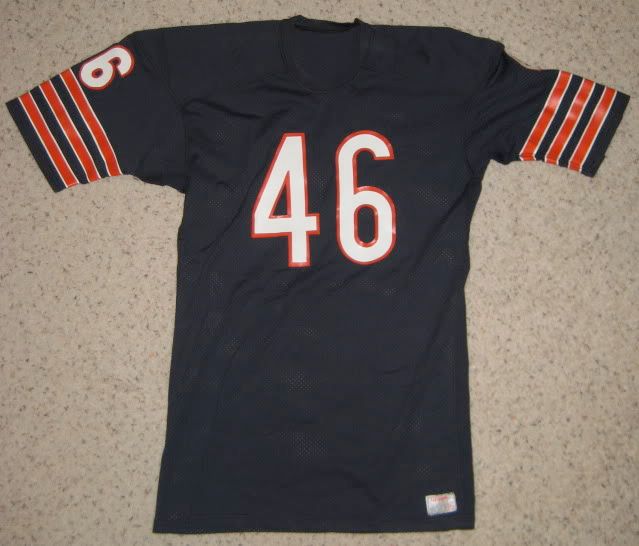
As most know, the defense got its name from famous SS, Doug Plank who had jersey number 46 when playing for the Chicago Bears back in the mid-80's.  Coach Buddy Ryan played Plank over the weakside tackle against 2 back teams that employed a TE.  The SS was the adjuster in the defense from this position.  As time moved on, people began to move the SS around.  Even Buddy's son Rex, has changed the original position of the SS in the defense.  Rex puts the SS outside the TE when aligning.  He feels this keeps the SS's alignment consistent and allows the SS to see his adjustments quicker.  This is what I originally advocated, and I'm sure with the NFL talent that Ryan has, along with the large amount of time given to coaches to work with their players at the NFL level, Ryan has little to no trouble teaching his system.  However, at my level, where we get a grand total of six hours (if we're lucky) of practice per week before gameday, things need to be quite simpler.  So, I opted to move to the alignment I found in a Boston College defensive playbook.  The defense they ran was based out of the 3-4 and simply put the SS inside the TE as the seven technique.  I had my doubts about this alignment, but since then I've seen just how much teaching I've eliminated by doing so, and have quickly come to enjoy this new alignment (and subsequent corrections in my playbook). 


As you can see, remove the TE and the "box" players remain the same with the SS as the 7 technique.
 
One thing to point out though, NONE of our opponents have run with a TE so far this season.  We are in a "spread to run" league where everybody feels they are Appalachian State or Urban Meyer, so we see very little TE sets.  So this basically translates my defense into a double eagle nickel package, with two outside safeties (OSS's) taking the brunt of the adjustments in our man coverage scheme (ok, it's just cover 1).  Anyhow, the OLB's in my defense (shown as S and R in the diagrams) only have to learn a couple of techniques, where before, my OLB to the TE side had to learn how to cover a TE man to man from the seven technique position.  The SS had to learn the OLB's job was well as learning how to cover displaced receivers man to man.  This led to a lot of overlapping teaching, but too much of a job description for both positions.  So, by moving the SS inside to the seven technique, I effectively eliminated any teaching time teaching him how to force, play boot, reverse, cutback (BRC) on runs away and simply had to teach him to cover a TE man to man from the seven technique, as well as man coverage on displaced receivers.  The OLB's job was made simpler too by teaching him one consistent alignment.  I align my guys one yard outside the EMOL, and keep it at that.  Now they play quicker, faster and with less of a thought process, which is EXACTLY what I as a coach strive for.


Play Faster!!!!

So, as I'm writing you this, I'm eating my words on my original stance on the position of the SS in the 46.  I think all three philosophies have merit, however, when applied "to grass", I like Boston College's version for the simplicity it presents in teaching the concepts based on what player's jobs are.  Ok, so hopefully I didn't steer anybody in a direction they are cussing me for, but if I did, shoot me an email and we can talk.  Otherwise, enjoy and gloat in the joy of me eating my previous words.


Well the grind is on, as most of us are entering mid-season.  I need some help, especially from youth coaches.  We are struggling to keep our practices from being a grind to the kids, and we need something fun and "lifting" to do in practice.  If you have any ideas please shoot me an email at footballislifeblog@yahoo.com .  Any information would be greatly appreciated.  Keep working fellas, keep your eyes on that prize!

Duece

Kamis, 28 Juli 2011

The Strong Safety in the 46 Bear and 46 Nickel Defenses


As some of you know, from a previous post, I had some success (I do use that term relatively) with the 46 Nickel this past season.  Since using this defense, I have been enamored with finding out more information on its father, the Bear 46.  I have dug high and low and have come up with some very good resources, that have led me to some very insightful research.  The one thing that sticks out in my mind is the placement of the strong safety in this defense.  I will not go in to history here much, but as a lot of you know one of the key elements to Buddy Ryan's historic 85' Chicago Bears' Defense was the play of strong safety, Doug Plank.  With this position being so critical to the defense, it had me wondering why there were so many variations on the placement of this player.  It is hard to find any information on the 46, that has the strong safety in the same position.  So I thought a post about the pros and con's of the alignments of the strong safety were necessary.  I will also shed light, as I usually do, on what I did, and why I did it, so hopefully you can make an informative choice when placing such a critical player.


Early Years...The Beginning
Buddy Ryan's original position for the strong safety (SS) was at the weak side 40 technique.  There's much argument as to why Ryan put the SS here, however there is no doubt that this early alignment has since been challenged.  I can only speculate, but because the SS was in the box to the weak side, it allowed him to adjust to communicate with the linebackers (LB's) easier when and where he was adjusting to.  I'm sure there are other more concrete reasons why Doug Plank was placed in the weak side 40 technique, but for the purpose of this article, I will simply look at the pros and the cons of the alignment.


Pros
The Pros of the alignment are, in my opinion, very slim, as I did not utilize this alignment (well I sorta did since it WAS a safety for me, however it was NOT my SS, it was my WS).  The pros are as follows:
  • SS is in good position to communicate his adjustment/assignment to middle linebacker (MLB) who can then adjust the front accordingly (Jayhawk adjustment).
  • SS is in good position to walk out and cover a displaced #2 to the weak side.
  • SS is in good position to defend the run, and is well protected by the Nose, weak 3 technique and the wide nine technique defensive end.
Cons
  • SS is in poor position to see adjustment threat to the weak side, or handle motion away from the backfield to the strong side of the formation.
  • SS is not typically a run first defender, yet is aligned in the box, and such schemes as Power O, or Power G can exploit a weak run defender on the weak side of the defense.
  • SS has more to learn from this position.  His skill set is as follows:
    • Read and react to keys like a LB.
    • Cover receivers man to man.
    • Drop off in zone coverage.
    • Blitz from depth.


Strong Safety as the Seven Technique
The latter point will be argued in other sections of the article.  Basically, Buddy Ryan's traditional alignment is fine, but I think there have been other methods proven to be slightly more economically in their placement of the strong safety.  The first I will discuss, is one method I found in an old video about Boston College's version of the 46.  At one time, apparently BC ran their version of the 46 with 3-4 personnel.  BC placed the SS in the seven technique position, normally occupied by the Charlie LB (weakside linebacker) in Buddy Ryan's original scheme.  I will now take a look at some of the pros and cons of the SS being in the seven technique alignment.

Pros
  • Only one defender has to learn a new skill set, all 10 others play skill sets related to their original scheme.
  • SS is used to covering a defender man to man, whereas not all LB's are.  SS does not have to learn new skill set, and neither does LB.
  • SS can use quickness on LOS to beat slower, bulkier offensive linemen when blitzing.
Cons
  • SS still not in good position to get to adjustment assignments or adjust to motion.
  • SS must learn new assignment when facing the option (normally has pitch or alley assignment, now must take quarterback fitting inside the load block).
  • SS is usually undersized when compared to the LB being at the seven technique position.  This weakness can take its toll on strong side C gap runs as the SS is usually at a physical disadvantage to a tight end (TE) or offensive tackle (OT).
  • In zone coverage SS will drop to an inside zone, he does not normally drop to.  This puts more teaching time into teaching the SS additional zone drops from his normal assignment.

Boston College's 3-4 Version of the 46

The idea behind what Boston College is simple, only change one player and the rest of the defense can align and get after the offense.  I like it, but the idea of having a defensive back (DB) standing in the C gap, did not particularly sit well with  me.  So I looked at some schemes that had the SS set outside the TE to the strong side.  This fit very well with my 4-2-5 scheme as our SS was asked to play up and around the LOS on numerous occasions.  Now, let's look at the pros and cons of aligning our SS outside the TE to the strong side.


Base 4-2-5 Alignment


4-2-5 Version of the 46

Pros
  • SS only has to learn one new skill set, that of the outside rush.  Since we were 4-2-5 and ran TCU's Smoke Blitz, this was an easy install for me.
  • SS can easily get to his assignment of being the adjuster to the strong side, and can easily chase motion away from the backfield.
  • SS can drop off and cover an outside zone, which was his normal coverage responsibility in the 4-2-5.
  • Because of the SS being involved in blitzes in the original 4-2 scheme, he could also easily be taught blitz games coupled with the strong side LB to confuse the offense. 
  • SS in good position to defend the pitch on option, another carry over from his normal option assignments in the base defense.
  • No new reads or reactions need to be taught.
Cons
  • Further displacement from the box makes communication of adjustments more difficult.

I know, I'm biased, but I'm showing exactly what I did when looking at adding the 46 as a package to my defense last season.  I felt what I did "fit" what we were doing as a base defense, and allowed us to get into the 46 with little to no new teaching. 

The SS is a very important part of the 46 defense, and his placement is still up to your preference.  To be honest, no single way is correct or better, it's all in how you coach it up.  Just remember there are pros and cons to your decision, and that's why I posted this article.  For more information, check out my first post on the 46 Nickel, and go to by Scribd site and download some very good information!  Hope this helped, and I'm going to keep researching one of football's ultimate pressure defenses, the 46!!!


I do things MY way...


Duece