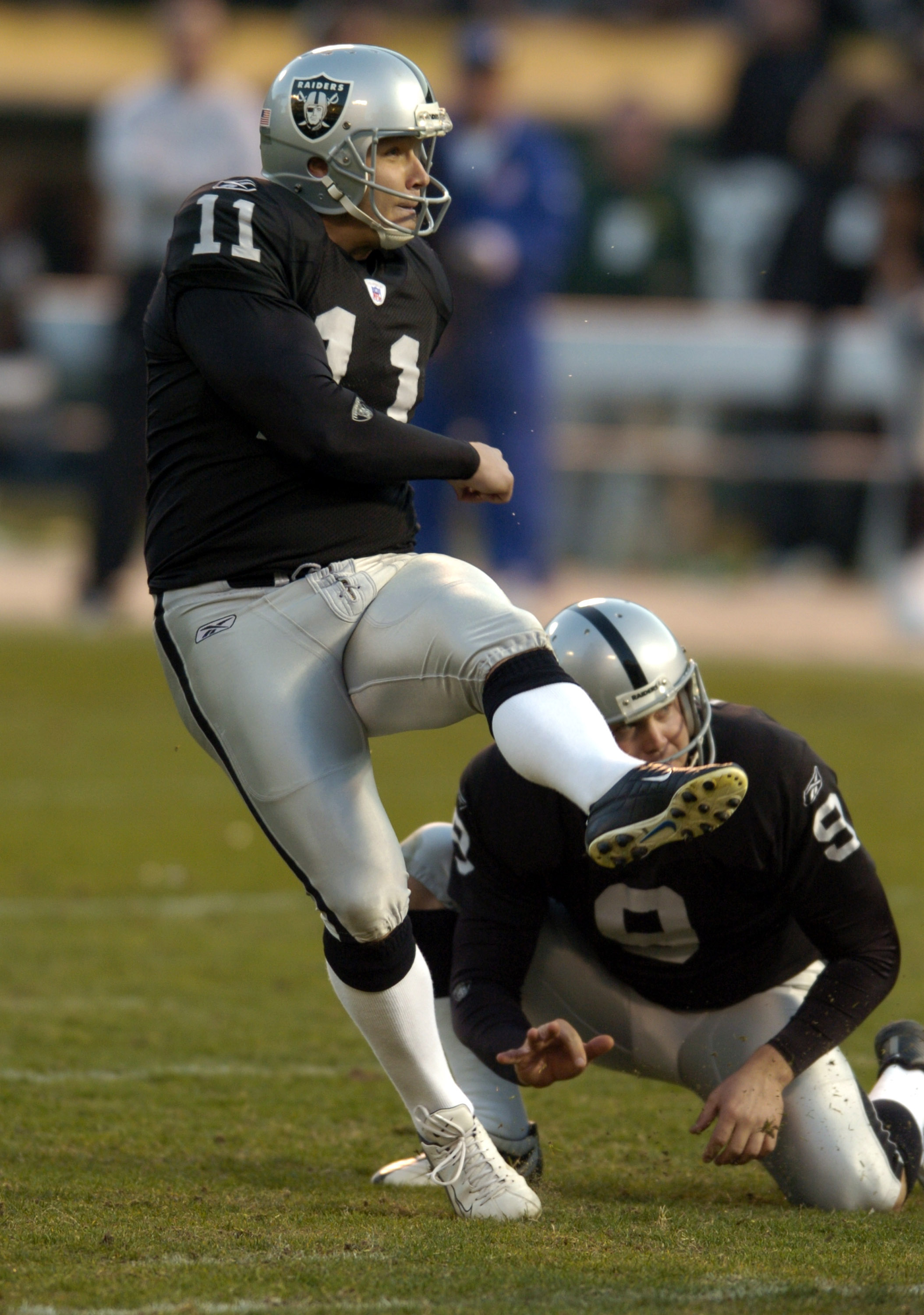
Great article hereby former Dolphins and Jets Special Teams Coordinator Mike Westoff on SI's MMQB talking about his idea of a 8-2-1 Kickoff Return. Duece from the Football is Life blog was the first one to come up with the radical idea of the 8-2-1 Kickoff Return and I did an article on the 8-2-1 Kickoff Return here back in February proposing it as a solution to the NFL's safety problem. This idea that was initially dismissed as a gimmick is now starting to gain serious consideration as a viable solution to the NFL's safety problem as well as a way to restore the importance of the kickoff return in professional football.
Check out the 8-2-1 diagram from the article by Westoff:
Here is the 8-2-1 Kickoff Return by Duece with the high school kickoff line at the 40:
Westoff proposed to move the kickoff line from the 35 to the 25-yard line because touchbacks, although they are reducing the number of high-speed collisions to make the NFL a little bit safer, are boring and are a detriment to our great sport. The 8-2-1 Kickoff Return allows you to keep the excitement of the kick return plus it reduces the number of high-speed collisions with the eight men in the front able to execute their blocks by "covering" their man much like a defensive back would cover a wide receiver. Essentially the kickoff return will look more like a punt return.
Peter King said in this week's Monday Morning Quarterback that, "whoever advances this cause will have to have some proof or logic that it won't get more players hurt." The logic is this: aligning players closer to one another reduces the speed and force of the collisions. Force equals mass times velocity, and reducing the velocity of the players by shortening the distance between the players will also reduce the force of the collisions. Good coaches have already put this concept into practice by having players in close proximity to one another when doing tackling drills. This minimizes the force of the collisions and reduces the number of practice injuries while still allowing you to practice proper tackling technique.
Besides the safety advantage, the 8-2-1 allows for better production with more yards per return due to less whiffs and easier blocks than the standard kick return. Most people use some form of the 8-2-1 for "Hands" team when expecting an onsides kick, but post a reply or send an email if you have made regular use of the 8-2-1 this season. Now that people like Mike Westoff and Peter King are on board, I look forward to seeing the 8-2-1 Kickoff Return becoming an important part of the future of our sport.
I believe that Duece's 8-2-1 Kickoff Return can be the solution to the NFL's concussion problem. Not that he needs me to validate him, but this idea should not be so easily dismissed without evaluating it on its merit. Let me start by saying that when I first heard about the 8-2-1 KR that I thought it was the Special Team version of the A-11 Offense (read: gimmick), but I let Duece clinic me on the subject recently and I became convinced.
Roger Goodell had a conversion with Tampa Bay Buccaneers Head Coach Greg Schiano about some "outside of the box" ideas to make the game safer (Time Magazine article). Schiano proposed that if a team scored, they would get the ball on their own 30-yard line and it would be 4th and 15. They could "go for it" or Punt in this situation. I would guess the percentage of converting a 3rd or 4th and 15 is higher than that of the onside kick, but this still is not a bad idea to get the ball rolling on possible solutions to the problem at hand. The idea that I have heard a few times is that the Kickoff needs to be more like a Punt Return, which is exactly where the 8-2-1 Kickoff Return fits in.
There are two things I really like about the 8-2-1:
1. Better Production - as evidenced by statistical data (albeit limited)
a. Increased Block Efficiency - less whiffs and easier blocks than with the standard KR
b. Better Field Position
c. More TDs and more KRs returned past midfield
2. Increased Player Safety - the 8-2-1 is more like a Punt Return with less high-speed
collisions. The blockers are running with their man and they "cover" him like a CB would
cover a WR.
The talk of eliminating the Kickoff is evidence of how drastic the NFL's safety problem is and will continue to be. Moving kickoffs from the 30- to the 35-yard line was an okay idea, but a better solution would be to make a rule that teams have at least 8 men within 15 yards of the line of scrimmage. It is important that we preserve our great game by maintaining a play that is an essential part of the sport itself, and this idea is just crazy enough to work.
For most of my coaching career, I have been a 5-4-2 kickoff return guy. It's just what I was taught and how I did things when I got my chance to coach. Now I've had teams in certain years that had kickoff returns for touchdowns here and there, but the most in a single season was only two. There were several (and I mean SEVERAL) seasons where we had none! Anyhow, I went and watched a local high school play in a playoff game last season, and I saw something I had never seen before. They had eight guys on the line with only three guys being back deep! Now I thought maybe their opponent was known for onsides kicks or something. I watched the entire game as the opponent kicked the ball deep and gave up good returns for great field position. The average starting field position that particular night was the 38 yard line. Now these were on deep kicks too, the opposing team had a kicker that could put the ball consistently inside the five yard line, so as you can see the field position stat was pretty good (also considering one went for a touch back). Lucky for me I don't go to too many football outings without my handy flip video, and so I recorded these kicks. The following week this very same team was playing nearby so I traveled to see them again, and sure enough, they were still using the same kickoff return scheme. After that, I just knew I had to find out more about it, and I did what any good, persistent, nagging football coach yearning for more information did, and I called a member of the coaching staff. I ended up getting the specifics of the scheme and even got to look at (but unfortunately not keep) some more film of the scheme. So back home I go and I delve into making this thing work on my middle school football team. What sold me was when the coach told me they had been doing this for the past two seasons (now going on three), and their "block percentage" had increased almost three times! I asked "block percentage", what the hell is that?!". As it was explained to me, that is the number of your players making contact and maintaining contact during the kick return versus the total number of defenders being used on the kickoff team. He said prior to running this scheme, their average block percentage was around 25 percent. That means out of 11 players on the kickoff team, only three of them were being blocked. His team's average starting field position was the 26 yard line, and they had not returned a kick for a touchdown since the 2006 season. Upon installing the 8-2-1 scheme, here were the new numbers:
Block percentage went up from 25% to 73% in first season and 79% in second season.
Field position increased to the 32 yard line in the first season and the 39 yard line in the second season.
The first year they installed the scheme, they returned a total of four kickoffs for touchdowns and had 14 kick returns cross midfield that season. The second year of the scheme, they returned 6 kicks for touchdowns and had 17 kick returns cross midfield.
I was hooked, but was still unsure if it would work at my level. I brought it back to my head coach and he nixed the idea almost immediately. The reasoning he gave is that teams would pooch and sky kick you to death, which is a fair assumption seeing as how much open space there is. So we enter this season, with me being an interim head coach and after the third game of the season, I thought to myself, hell if this is my ship, I'm going to do things MY WAY! I installed this in one practice and we stayed in it the rest of the season. Here were our numbers for this past season:
Block percentage increased from 22% to 70%.
Field position increased from the 37 yard line to the 49 yard line (we don't get too many deep kicks).
One kickoff return for a touchdown increased to six kickoff returns for touchdowns (seven total on the year, a school record by three). We had 1 kickoff return cross midfield in the first three games (the one returned for a touchdown) and that number increased to nine by the end of the season.
Now that I've shared with you the numbers, let's talk about the scheme and installation.
Personnel
Most of us have grown out of having linemen on special teams (I'm not a hater, hell I'm a former OL myself), but for those that do, now's the time to evolve. This scheme is made for mostly defensive backs, linebackers, running backs, wide receivers and the occasional athletic defensive end. The front eight need to be able to run and cover a guy man to man, but only for a short period of time. The upbacks need to be fearless guys who are not afraid to catch a kick in traffic. A good idea here is to think punt returner. The upbacks do need to be able to block in space, but don't sacrifice blocking for being able to catch the football in traffic. The returner, can be your typical kick returner, but he doesn't need to be a "missile", he needs to have the ability to read "cloudy" and "clear" and know how to run to daylight based on the blocks occurring in front of him.
Alignment
8-2-1 Alignment
Ok, the front line is a mirror of four players, there are two guards, two tackles, two ends and two wings. They align about two to three yards off the 50 yard line and are facing forward looking at the kicker and the football. There are two upbacks, whose depth depends on the kicker's ability and whether or not the opposing team likes to sky kick or not. As a base rule at the junior high level, I aligned my guys and the 35 yard line (this is assuming we knew nothing about our opponent's kicker). The middle returner aligned at average kick depth based on film or pre-game scouting. If we didn't know anything about the opponent's kicker then we aligned him at the 25 yard line. Remember, you will have to adjust these some for high school ball, so bear with me.
Width alignments had the guards between the hash mark and the middle of the field with both tackles aligning on the hash marks. The ends would align halfway between the hash and the bottom of the numbers. The wings would align just off the bottom of the numbers. The Upbacks basically stacked behind the ends, splitting the difference between the hash and the bottom of the numbers as well. The returner would align in the middle of the field, splitting the hashes.
Assignment
Blocking assignments were VERY simple. The blockers would begin their count from the closest sideline(this is assuming a middle return, which is all we ran last season, however the sky is the limit when it comes to the types of returns you can run), and would count until they got to their number. The way it worked was this, since the the right tackle for instance (RT in the diagram) was the fourth player from the right side, he counted out four men and that was his man. So for the Right wing, he would have one, the right end would have two, the right tackle would take three and the right guard had four. We did not count the kicker in this scheme, the returner has to make the kicker miss. Now I know what you are saying, that leaves, two players unaccounted for, well how this works is that the upbacks are always responsible for the fifth guy from their respective sideline. Here is how it looks on paper.
Middle Return
Technique
The technique the front wall blockers use is very similar to the shuffle technique used by defensive backs or basketball players. The player will open in the direction of his man (or zone if using a zone scheme) and will shuffle out, staying low and keeping a good wide base and low center of gravity. As the defender "eats up" the blocker's cushion, and declares which side he is going, the blocker will then turn and run with the defender. If the defender decides to try to switch lanes, the blocker will simply flip his hips, much like a defensive back doing a zone turn would and then "wall off" the defender from the other side.
Blocking is not a great word for the exactly what the blockers do. These players are quite simply put, "in the way". I coached my guys this past season, to get on a hip and stay on a hip, but most importantly "be in the way" during a return. In some of the video clips you will see, we don't do a very good job of blocking, but we are in the way enough the defender loses lane integrity and a seam is opened up for the returner.
Speaking of the returner, when teaching this guy how to return, patience is key. He needs to have a good burst of speed, but does not need to be a "bottle rocket". I link the type of running he does to that of a good zone tailback, in that he gets the ball and lets the blocks set up and lets the defenders declare where they are going to be. Once this occurs the returner simply "runs to daylight", finding a seam and exploding through it.
Other types of Returns
Two other returns are left and right, and are blocked in this manner. The side away from the call will block as they would in a middle return (shown above), and the call side, will begin their count in negating the first two men from the sideline.
As you can see here's how the new count works for a return called to the right. The right wing (RW) is going to block number three, the end has number four and so forth, while the upbacks pick up the one and two on the called side.
There are also zone returns, where each player blocks a gap in one direction much like a slide protection would work with the upbacks blocking the first defenders to show. The possibilities are endless here as you can have the front eight block the gap to their right, left, inside or outside, depending on how you want to handle the return. The zone returns are a great way to handle teams that like to cross their players to confuse the man scheme and it is recommended to have both schemes in place.
Dealing With the Bunch Attack
What do you do when dealing with the bunch attack? This is pretty simple, and is handled by the front eight as well as the two upbacks. The upbacks and wings drop back 10 yards off the ball, the wings are centered between the hash mark and the top of the numbers,while the upbacks are inside the hash marks. The front eight, will align over the ball, but now the guards and tackles will be inside the hash marks, with the ends aligning on the hashes.
If the kickoff team then spreads out, the kickoff return team will simply align as they normally would against a regular kickoff. It should be noted that when facing teams that do this type of kickoff scheme, it is better suited for a zone blocking scheme rather than man.
Concerns about the 8-2-1
Some concerns many coaches have about the 8-2-1 is all the open field that it presents when you look at it on paper. Many coaches elect to sky or pooch kick to try and put the 8-2-1 in a bind, however this is easily negated. First, the upbacks handle all sky kicks, and they do so by giving a "sky" call to the front line. Once a sky call is heard by the front line, they quit dropping and put their foot in the ground and begin to block. Now the returner does not have a defender bearing down on him while trying to receive the football. When in doubt the upback should always fair catch any sky kick. I made this mandatory last season, and it worked quite well for us. Later in the season, I gave my guys a bit more freedom to do what they wanted with the ball and it worked quite nicely. One thing to note is that when an upback gets the football, the returner should replace him in the blocking scheme.
Advantages of the 8-2-1
Players seem to "fit" better into this scheme more than any other I've run. I always seem to have a bunch of leftover defensive back/wide receiver type players who one way or the other don't get much playing time. Here is a way to get those guys on the field. Remember the blocks are the greatest and all they have to do is "be in the way". Most of those kids can and will do that job quite effectively.
It makes the "wedge buster" obsolete. No longer can guys run down field and simply "tee off" on your wedge players. This in turn could help lead to a reduction in concussions (Thanks Coach Hoover), which as we all know in college and the NFL this has been a serious issue that has changed the standard kickoff over the past few seasons. When I asked my guys at the end of this past season what they liked about the 8-2-1, the majority said that they no longer felt like a "target", which made enough sense to me to stick with the scheme.
Onside kicks are immediately negated. First you are basically playing with your hands team out there. Since most guys are skill position, handling the football is the least of their worries. The eight men on the line also immediately reduces the kicking team's chances of a successful recovery.
The kick returner can treat the return similar to a zone tailback. No longer do you need to look for that kamikaze returner who is fearless and will run full bore into traffic. Now all you need is a runner who has good vision and can cut off blockers.
Sorry it has been so long between posts, I'm still trying to get my ducks in a row, and really hitting the book hard after such a grueling season. I do have a request to make, if anybody can give me a hand with wanting to share any of their 46 defense resources, please hit me up at footballislifeblog@yahoo.com. I'm in need of some major improvements coming into next season, and I'm always willing to look at new ideas. Hit me up and we can talk. Hope all that are in the playoffs are still working hard and motivating those young men to do their best. This can be one of the most trying times of the season, but remember...IT'S WORTH IT!!!
Whew! Well, it's over. Having lost the league championship, yet finishing 7-1 on the season, many would say that was a great year. I think, however, that this past season has been one of the most unbelievable rides I've ever been on. I want to take time out to share this with you, and maybe you can see some of my shortcomings and some things we did to take advantage of some of our situations etc. Hell, analyze my situations and see what you'd have done differently, I'm all for that. Whatever you can take from this season, I'd be glad to, and whatever you can add, please, by all means shoot me an email at footballislifeblog@yahoo.com.
Lessons Learned The first thing I learned is that the Unbalanced Single Wing (UBSW) is a pretty cool offense. My hat's off to Dave Cisar's system as we were able to install it from the ground up and had great success with it. We ended up having the Power series, the Spin series and Jet series in at the start of the season and never really added anything after that. Our Jet series really came alive in the latter part of the season once folks had film on us and knew what we were going to be doing. The other thing is the UBSW is one of the most fun offenses I've ever coached in (yes including Flexbone). The simplicity of it is so simple, yet because so many folks have not seen the offense in decades, it creates quite a bit of confusion for the defense. Anyhow, it was very fun to coach in, and I got numerous questions from parents, coaches and even the officials!
I have had tragedy strike during football season, but none like this season. I've never lost a player, and I've never had this much tragedy strike. Losing two parents, and a player in the span of four days was the most incredibly terrible thing I've had to witness as a human being. Then having to put it all together and put it out there on the field was pretty tough too. I was amazed at the resiliency of the young men I coached. I actually think THEY helped ME deal with it all. Then in the end, we lost a player to a very serious back injury, that may have ended his football career. Thankfully enough, the young man will walk, however football is probably out for the rest of his life. In all this tragedy I felt like the young men were able to keep it together, keep things in perspective and lose themselves in the game, exactly like I would have them do. I can't say enough about the quality of the young men I coached this year, as our character shined through time and time again this season.
I have to learn to enjoy the season more. I have just went through a 7-1 season, in which we set the record for best season in school history, and I feel as though we failed. The season ended two weeks ago, and yet I cannot come to the realization that we did good, despite not winning our league title. I'm not sure how you ever get over what we had happen at the end of the season where we come up short on a goal we set out to accomplish, but if you have any suggestions, send them my way, as I'm still hurting.
The 46 defense is a great defense, but it does have its limitations. I found out exactly what those were this season. The seven technique in that defense nearly got us killed this year and I didn't have that kid to fill that position. A year ago, we in our league we faced no 21 personnel teams whatsoever. The breakdown was as follows:
5- 10 personnel teams
2- 20 personnel teams
So as you can see the need for a dominant seven technique was not needed. In comes the 2012 season, and boy look at how things change:
3-21 personnel teams
1- 11 personnel team
3- 10 personnel teams
Much different mix than a year before. Anyhow, the addition of the tight end to the scheme really hurt us as I just did not have that player to sacrifice at the seven technique position. Now, normally I'm a four man front guy, but I work for somebody and he likes the odd front, so I ran the 46 with 3-3 personnel. Well, I moved to a true 3-3 for two games to try and stunt/blitz my way into some things, and I did not care for this at all. The kids liked it, but we were sloppy with our execution of the blitzes and when you are sloppy in the 3-3, the holes show up BIG TIME. So then I moved back to my old staple, the 4-2-5. I played cover 3 with it and mixed in some man to man, and things started to tighten up. Now I have the blessings of my boss, I get to run whatever I want next season. Looks like I'm going back to the ol' 4-2-5!
Be ready for anything. Here I was cruising along as a coordinator, and BAM, all of a sudden I got the head coach title slapped on me. Three weeks before the season comes up, my boss, the head coach, has a mild heart attack. Now, I'm freaking out because this is a guy who has been a mentor of mine for years and is the epitome of a class act. Now I'm sitting there in a hospital room with him telling me, "You're it, go coach em' up kid". To which I dang near soil myself! Now, I've been a head coach in career twice, and I have to say this, I didn't care for it to be honest. The politics, the whining parents, the nagging administration, it just wasn't for me. I like my job as the defensive coordinator as I'm free to do what I want, when I want, and how I want. Sure, you do have some of that freedom as the head guy, but there's just too much political BS involved for my taste. Anyhow, things went smooth and I didn't have much in the way of headaches from the parents, but then again winning cures everything. Just be ready for anything, you never know what you will face, or what you will come up against. In retrospect, looking back on the past season being able to do what we did with the tragedy we had AND an interim coach, I'm really quite amazed.
Be ready for anything grasshopper...
Don't do too much. I really put too much on my defense at times. Our offense and special teams won us a lot of games, which is the EXACT opposite of how my other successful teams have won (in the past I've been more like UF is now). Anyhow, winning is winning, so I'll take it, but not playing solid defense came down to me. I have to do better in that department and keep less on the defense and just "let them play".
Special teams are special. Our special teams unit single handily was the most outstanding unit on the field this season, with our punt team and kickoff return team leading all groups. We returned a school record (and league most) 8 kickoffs for touchdowns this season. Punting-wise we averaged 43.4 yards per punt in JUNIOR HIGH (yes, my punter was a stud) and we converted EVERY fake we attempted this season (four for four). We only had to punt a grand total of 10 times this season, which is a third less than last season (34 times). We did give up one blocked punt this season and had one bad snap, which was our total from a year ago, so we did not get better there. We did not allow a single kickoff return for a touchdown as we followed the "onside every time" philosophy this year (that's after giving up 4 KOR's for touchdowns the year before). Now, we did not have a very accurate field goal kicker, so we did not even have a field goal team, but we averaged a dismal 43% on our two-point conversions this season, which must get better. All in all, I was impressed with our special teams, and our ability to flip the field position on our opponent was second-to-none in our league.
Get everyone involved. Another lesson I took from Dave Cisar, was to get as many players involved as you can. Our retention rate was unreal this season. We had 44 kids show up day one, and by the start of the first game we had all 38 uniforms filled, and did not have to have cuts (we had three kids quit, one get hurt, and two others did not have the grades). By the end of the season we finished our final game dressing 34 players due to injuries. NOBODY quit after the initial 38 were selected. This is after a season in which we finished with 22 kids after starting with 28 (four quit, 1 was kicked off, and 1 was injured). Our ability to get everyone involved both in practice and in games was essential to this retention rate. Another thing I implemented was the "Buddy System". Each eighth grader was responsible for a seventh grade teammate. They exchanged phone numbers and had to answer weekly questions about their partners in front of the team. I think the Buddy System really helped our overall team chemistry and kept us from having individual "cliques" within our group of 38.
Tackle everyday. The head coach and I disagreed on this originally, but since implementing this in his absence he has seen the light. We were AWESOME tacklers this season compared to last. Last year it took three to four guys to slow a ball carrier up, whereas this season we had several guys make solo tackles. On film, the biggest difference is that the first guy would get the ball carrier down instead of holding on why the others got there. We literally tackled everyday for the first month of the season. After that we tackled on Monday and Wednesday with Monday being full bore tackling stations, and Wednesday being fit and freeze only. The last two weeks of the season we tapered off to just fit and freeze type drills on Monday only.
Alignment and Assignment and Fit-and-Freeze drills are essential at this age. I have always been a big team guy. I want to see reps and I want to see them live. Well, in researching practice methodology over the past few years, I have found the good ones don't do this. They do a lot of FNF and AA drills instead. I cut our live team time on offense in half this season and we rarely went live on defense. Offensively we did FNF on Monday, with live team on Tuesday and all plays on air on Wednesday, which included simulating game situations. Defensively, we did FNF on Monday, Inside Drill on Tuesday and Seven-on-Seven on Wednesday. Now if a team we were facing had very little passing threat we would do a live defensive team on Tuesday and then do Inside Drill on Wednesday. Special teams we did at least one live per week. Early on in preseason we did all of them live, but as the season progressed we cut that down to 2 a week, then at the end we did not do any live special teams. FNF really improved, not only our technique, but our younger players confidence as well. There's a lot you take for granted when it comes to coaching and one thing was my players level of development, and boy did I undershoot it. That was clearly evident from my coaching last season. This season was much better as we took the approach that our players knew absolutely nothing about the game and we were starting at the ground floor.
The No-Huddle offense is the way to go. I have dabbled with no-huddle in the past, but not like I did this season. Now we were no Oregon, but in our live team sessions we averaged about 25 plays a session, which is better than a play a minute. We had two speeds, regular and 9-1-1. 9-1-1 was our hurry up stuff and we really did well with that. In three out of our eight games we scored right before halftime using our up-tempo pace and the largest amount of time we had was 1:18. In game three we scored on a four play 61 yard drive with 55 seconds left in the half and one timeout. In game five we scored on a five play 77 yard drive with 1:09 left and two timeouts. In game seven we scored on a five play 48 yard drive with 1:18 left to go and one timeout remaining. These were points we'd not have gotten last season, and in games four and seven they were the difference in the game. If you are still huddling, you are wasting a lot of time, and I don't mean in the games. The benefit we saw from going no-huddle is not in the games, but in practice. We doubled our reps on practice, by far and in the games you automatically have a two-minute offense built in. We can't go hurry up because a lot of our players play both ways, but still, we went no-huddle to improve efficiency in practice time and eliminate wasted time.
Things to Improve On
Practice efficiency. There was still a lot of wasted time in practice. Now, mind you, we were practicing for easily two-and-a-half hours a year ago, and cut that down to two hours on average this season. Still, there are areas where we need to improve and be able to get these kids home at a decent hour. I have pushed and pushed, but the coaches I have are not really taking to the up-tempo like I am. I don't have the luxury of firing anyone either as I was glad to have the other two helping me. Anyhow, I will continue to work with them and push for MAXIMUM efficiency until we get it.
Relaxing. I have a tough time turning off football, and even though this is Junior High football, I still constantly watched film, breaking things down and even took things so far as creating scouting reports (our league allows us to scout and trade film). I also have a tough time detaching from the game, even in the off-season. I simply cannot get my mind off the game, and I have to, or else I'm afraid burn-out is coming. Any suggestions would be greatly appreciated.
Finding a kicker. Holy cow, thank goodness we onside every time, or else I'm not sure what we'd have done. Also, we could have used a couple of field goals, that thankfully didn't come back to haunt us during the season. I need to learn more about the individual technique of kicking, as to be honest I'm clueless.
Getting over the wall. Our player development went good for the first six games. Then we seemed to hit a wall where nobody really improved except for the younger players. This concerns me, because it's the second year in a row I felt this way. I even felt as though some of our players went backwards in their development, which is a really bad scenario. Several players plateaued about that time in the season, and our toughest games were towards the end of the season. I need to find ways to keep the young men motivated for an entire season, and keep developing their skills. I know there comes a point in the season where getting any better is slim to none, but you CAN improve at least a little bit every day...right?
Handling a loss. My favorite quote is one I live by..."I hate to lose even more than I love to win". This is me in a nutshell. A win to me is a win, nothing big about it, you did your job, you won. A loss is failure though, and unacceptable. I have a hard time coming to grips with losing, and when you lose the league championship on the last game of the season when you've gone 7-0, it really becomes are a hard pill to swallow.
Dealing with officials. I guess I'm getting a bit crotchety in my old age, as I had a few of those yeller' hankies thrown on me this season. However, I must say, our referees made the NFL replacement refs look like officiating scholars. Anyhow, this does not bode well when teaching young men about dealing with adversity. I'm sure that official did not need me to bite his head off, I should merely "explain" my point of view, rather than trying to stuff it down his throat. Point taken!
Do you kiss your mom with that mouth?
Well, that's my 2012 in review. I feel with what my little guys went through this season, and where they came from, it has been a success story. I'd love to have a trophy to put in the case (believe me, we need one, that damn thing is bare), but the memories of this season will go down as a special one in my book. I have to say, watching young men conquer adversity like this bunch did, was quite a site to see. I only hope next year we can do the same...
Duece
P.S.- For those headed to the playoffs, now's not the time to let up, keep on keepin' on!!! Good luck!
Well, it's been a crazy ride this season, and with only two games left, things will be over soon and I can get back to posting. Do I ever have some stuff for you guys! I'm working on the following:
Key mistakes to avoid as a defensive coordinator
Believe me folks, if anybody has screwed up and NOT followed this protocol this season, it's me. I'm going to share some of those events and how we got the ship righted to finish strong.
The 8-2-1 kickoff return scheme.
Using nickel personnel to effectively defend the two back running game.
Tackling drills.
The unbalanced single wing and how this offense impacted myself, our coaches, and the players.
These are just a few of the things I've got in store, so don't forget about me. In the meantime you can always check out my other blog, The Twelfth Man, where I get away from X's and O's and go a little more "opinionated". Here are some other things you should be looking at as well.
Brophy has been back and has some great pieces, on Saban, Tony Franklin and La. Tech. As always Brophy writes with a witty purpose, and does a great job explaining things.
Smart Football has been putting up some good stuff on the West Coast offense and how it helped Drew Brees attain his record. Also some great articles on Geno Smith, Dana Holgorsen and some breakdown on the zone blitz coverage. As always, Chris is a very talented writer and has links to several great video clips over on his site.
Well, if you season is ending and you are not looking to the playoffs, once it's over, take a week or two and rest up as the whirlwind we know as the off-season will begin! If your headed to the playoffs, congratulations, now keep your eyes on the prize!!!
Many coaches look at punting as the raising of the white flag when on offense. Some coaches even look at punting as what you do when you've failed to move the ball. I look at punting as an opportunity to stress my opponent even further. For years I was like the others and simply aligned in a standard tight punt formation, punted the ball, hoped like hell my guys covered well and got the defense on the field. Well, not anymore! I'm going to take you through some of the evolution of my punt teams to where we are today and show you how you should relish the chance to punt the football instead of looking at fourth down as a failure!
Loco Punt A few years back in American Football Monthly magazine, there was an article on the Loco Punt. I can't remember the specifics, but I remember the scheme being very simple, fake friendly and utilized directional punting. What I really liked about the Loco Punt was not only the directional punting, but the fact you punted towards a split receiver, who could release and get down field quickly. I also liked all the fake potential the Loco Punt had as well. Here is the base formation:
The punter started by initiating a "shift" call which took the WB and moved him on the LOS and dropped the RE off. Once set, the RE would then go in motion and align as a wing to the left side of the formation as shown below.
The motion would really get the defense to working now, as they had to honor the change of strength, which is something not many defenses deal with well, when facing a punt team. The more and more we ran this, the more punt safe defenses we saw. The final formation is shown below.
From here, if the defense did not adjust we could either punt the football or run a sweep fake to the side the defense did not adjust to . If the defense over adjusted, then we could run a sweep fake to the side they left open. There was also a pass fake to go along with it as well. All of these fakes, coupled with the shift and motion, made life miserable on the return team. This was my goal all along.
The punt protection and coverage schemes were also very simple, so much so we really only repped them once a week. The fakes made us known around our league as a team that fourth down didn't always mean we were going to punt. The last season I was in charge of the punt team we had a punt fake success rate of over 75 percent with 7 or less yards to gain (it helped our punter was also an option QB)!!! Needless to say I was sold on the idea that punting was "giving up".
The Wildcat Punt Well, enter my new job, where last year I really only dealt with defense, and now this season due to our head coach being sick, I'm now in charge of just about EVERYTHING! So, I got a chance to go back to the punt team. Well, we have chosen to run Dave Cisar's Unbalanced Single Wing Offense and one formation in his playbook is very similar to the good ol' Wildcat. I looked at that formation some time before deciding to go with some things, but here's what I came up with and so far we've been DEADLY with our punt team.
All of the above is our normal alignment for our Wildcat package with the exception of the depth of the punter. I have chosen to shift into this look from our base look so our Punter aligns at three-and-a-half yards back, and then shifts back to his normal ten yard depth (this is junior high football, if it were high school I'd be back at 12-13 yards). From the get-go you can see the defense is forced to honor the three receivers by covering them man-to-man, or else risk the quick throw for the first down. Being unbalanced we have our BB look for any overloads by the defense before signaling all clear and ready to punt. Ideally, we are going to punt the ball if we get four defenders strong and three defenders weak (as shown above). When we punt, the blocking is simple, as we have adopted Cisar's GOD (Inside Gap, On, Down) blocking scheme for our punts as well. So all the players on the LOS block using this GOD rule, and they do so for a two count. The BB releases outside and walls off any defenders coming outside the PT. So the blocking for the above front would be as follows:
Now I know what you are thinking, wait, the DE on the punt team's left side has a free run to the punter. Well, we rugby punt, so on the snap we are putting distance between the DE and the punter immediately. The other little addition we had to add was that the LOS players treat the LB's as though they were in their inside gap (since most of Cisar's stuff does not involve OL blocking LB's, we had to improvise a bit). The blocking back simply takes the outside rusher wherever he wants to go and the punter either goes around the block and punts, or steps up inside and punts. Either way the edge rusher cannot be right.
Coverage is also very easy, and since most teams can ill afford to give up six players to double team the three gunners you have presented them, you now have easy free releases down field for the RE, LE and the WB. The coverage for the Wildcat punt is shown below:
The RE will release outside and works to the outside hip of the returner. The WB has a 2 way go, but must end up in the middle of the returner (he does not pick a side). The QB will work to the inside hip of the returner, and must get an inside release (we've had him fake outside then come underneath vs. press looks). The BB will secure his block and then will work to the punt-side hash mark and is a 1/2 field safety. The punter punts the ball, and will signal if it's a bad punt and then will drift back to the opposite hash mark and play the 1/2 field safety away from where the ball was punted. All other players, after securing their blocking assignment, will take a natural pursuit path to the football. Having the three gunners has allowed us to remove some of the traditional "lanes" many of us were schooled on (and some of struggled at teaching) because we are essentially having the hounds flush the prey to the hunters. Lanes don't really matter all that much, although we do work them, however the idea here is get your block, then fly down field to the ball.
The fakes are the key essentials to the Wildcat punt as well. If we want our punter to read the punt return team's reaction to our scheme, we give him a "green" call, which stands for green light if the punt return team bails out in coverage. The punter will see this and simply tuck the ball and run for the first down.
We will also look for overloads by the defense and call our fakes accordingly. We have three of these, two runs and one pass. The first fake is simply our sweep to the right, shown below.
The OL simply blocks the GOD rule (inside gap, on, down) with the right guard pulling and wrapping while the BB leads. This call has been made because the defense decided to give us four players to our two-man surface. Depending on who you have at punter either the punter can call this fake or the coach, but either way you have caught the defense guessing, and now are making them pay for it.
If the defense chooses to overload the strong side of the formation, we simply check to the sweep to the weak side. Since we rugby punt, many teams will try to do this overload, but it leaves them extremely weak to the short side of the formation.
The BB will shift over to the weak side and we will snap the ball once he is set. Again the right guard pulls and the BB leads the play.
If the distance to go is greater than you want to run for it, or the defense has remained balance, yet you still need the fake, the pass fake is a good way of moving the ball down field. The RE will clear the zone by releasing outside as if covering and running a "go" route. The WB, will also take his normal release, but will run an out route instead of covering (this route is usually wide open because the safety has been trying to block the WB all night long covering punts, he does not expect an out route here). The QB, will drag across the formation looking to come out on the strong side about two yards deep giving the punter an outlet receiver if he gets in trouble. The line blocks with hinge protection and the BB slides out and blocks the first threat outside the PT. The punter gets the snap looks to punt for two steps then rolls out looking to hit the WB at the first down marker.
So far teams have quit trying to line up and get a return on us and are staying back and playing defense. This gives our punt team a huge advantage because the rush is slowed, and there is nobody to worry about returning the football. So far we are averaging a little over 35 yards a punt and have given up zero punt return yards!
Haven't posted any links in a while, so I thought I'd give out some good info. Posting may drop off for a while as I might be an interim head coach. I will have to wait and see on what the future holds, but to be honest, I'm not looking forward to being the head man again. Anyhow, on to those links!
Man, Coach Hoover caught my ugly mug in an otherwise good video of OJW (from the Huey board) talking about the 4-2-5 and the flexibility the defense offers when defending today's offenses. You can check out the video here. This video was from our FREE clinic back in early July, if you missed it, I think we might have some more, as we may have started a tradition! Stay tuned for more information.
Brophy has a good post on Check With Me Defense, which is really becoming the wave of the future. I mean why not? Who says the offense has to dictate the tempo of the game, as well as what they are going to do by how you line up? This is a great concept, in its infant stage that I believe will catch on as the collegiate game evolves. I don't know how much this trickles down to high school ball, but I could see it being something high school coaches could take and adapt to the smaller scale for varsity football. As usual, Brophy also has some great links to good videos and free stuff here as well.
Over at Smart Football there's a good article on Spread Punt Protection. Many folks have moved or are moving to this concept of punt formation. I plan on writing an article on an interesting punt formation I have used in the past. There never is enough information on the most important 33.3% of the game out there...special teams! Well, Chris, over at Smart Football has got a good post, that is a must for any coach getting ready to start installing those ever important special teams! Remember, special teams are special! Oh, and by the way, if you haven't bought the book yet, The Essential Smart Football then please proceed to your nearest psychologist and have your head checked!
Teach to Win is a cool blog I found when searching the Internet. Not much on X's and O's, but a lot on philosophy and coaching here. Haven't had a ton of time to look around on the site, but definitely worth checking out.
Anyhow, season is here, so look for a post slowdown for a while. Like I said earlier I'm working on some special teams stuff, but it probably won't be ready until after the start of the season. Sorry, I've just been too busy. Also don't forget to check out my other blog, The 12th Man! A little off kilter, and more opinionated than here, but worth reading.
Miami Northwestern is probably still wondering what happened this past season, when they fell 36-28 to lowly ol' Belen Jesuit High School. Hats off to the Belen coach for knowing his rulebook and using the good ol' free kick after a fair catch on a punt. The 49 yard free kick is counted as a field goal, and capped off a stunning upset of one of Dade County's finest football programs. The interception at the end was simply the "icing on the cake", but it's very nice to see a coach who knows his stuff. Here is the rule from the NHFS rulebook (which governs Florida football):
ART. 3 . . . A free kick is any legal kick which puts the ball in play to start a freekick
down. After the ready-for-play signal and before the kick, each player other
than the kicker and holder for a place kick must be behind his free-kick line. A free
kick is used for a kickoff, for a kick following a safety, and is used if a free kick is
chosen following a fair catch or awarded fair catch.
The Miami Northwestern coach argued that the kicker cannot use a kicking tee, and this is clearly invalid, as seen in Article five of the same section:
ART. 5 . . . A kickoff is a free kick which puts the ball in play at the beginning
of each half of the game, after a successful field goal and after any try. A place
kick or a drop kick shall be used for the kickoff.
Again, it helps to know the rules of the game! Here's the video of the game, the comeback and the final kick to win the game for Belen Jesuit.
So, keep your rule book handy, and ready at all times, you never know when you may need some obscure rule such as the free kick rule!
Well, it's official! Got hired last week as the defensive coordinator at a local junior high school. Looks like I get to get back up on that horse again. Sorry it's been so long since I posted, I've been going to meetings and getting ready for the upcoming season. I know I needed (or maybe wanted) a year off, but middle school football shouldn't quite be the grind that high school football is. I like the idea of having most of my weekends off and even having Friday's off (as we play on Thursday nights) to spend with the family. So, in reality, I will have some time off, yet still be around the game. I think it's the best of both worlds!
Now that's how you watch film!
Now, what to run is the question? Looks like I'm going with the 46 Nickel this season. I'm going to see how that does in this "spread to run" league we are in. I think we should be fine, however I'm always nervous when playing this much man coverage. However, I love the aggressiveness of the defense. We'll see!
Like I say, get to them, before they get to you!
Postings may be few and far between on here, but I will check back in occasionally when I get my stuff together. Still looking for information on the 3-4 defense. If anyone cares to share, maybe we can co-write a post or something. Also, looking for good punt block schemes from any defense. I would really like to start focusing on the special teams aspect of the game a little more. If you got anything to share send it to footballislifeblog@yahoo.com . I hope everyone has a safe and productive season, and remember keep your players safe, it's been brutally hot out there!!!!


.PNG)