Tampilkan postingan dengan label Program building. Tampilkan semua postingan

Senin, 17 Desember 2012

So You Want to Be the Head Ball Coach???


There's more to this than you think!

This is the time of year when coaching jobs are opening up daily, and younger coaches are putting together their resumes and getting their interviewing skills polished up.  I think many, if not all young coaches aspire to one day be the head coach of their own team, and rightfully so, that's how our American society works.  We are taught from a very young age to attain the highest level of achievement possible, so wanting to be the "boss" is not a bad thing by any means.  However, what I think a lot of folks miss, is what is it, exactly that the head football coach does?  I'm going to go through some of my experiences, and then give my opinion on where I'm at in my career and what my direction is going to be.  Hopefully this will steer some of you in your decision as those jobs keep popping up on your state association's websites.

What Does it Mean to be Head Coach?
You need to sit down and ask yourself, what this means.  I used to think it meant I got to run my stuff, how I wanted it, when I wanted it, and if somebody didn't like it they could pound sand!  Well, nothing could be farther from the truth.  Being the head coach means entirely different things at different places.  Of the hundred or so guys I played college and high school football with, I know of nine that are currently head coaches.  Every one of their programs is different, and some quite glaringly different.  This is the top factor to keep in mind when selecting a job to interview for, in my opinion.  You need to ask yourself, and the school where you are interviewing, "What is the job description for the head football coach?".  You might be quite shocked that folks have no clue as to what the job description for a high school football head coach is.  Mainly they want you to win, period, and some places may have a clearly defined set of parameters that they want the head coach to live up to, which is much better than working for folks who have no clue what they want other than a "winner". 


Again, what does it mean to be the head football coach at a high school, or anywhere for that matter.  I think the number one thing young candidates forget is the scrutiny in which you will be judged.  Remember, all the good things that happen are because of you and the bad things are because of you.  It does not matter that little Timmy can't bench press 100 pounds and is your starting tight end, or that you have three FBS running backs in your backfield, everything will revolve around YOU.  This comes as a shock to many new coaches, and some simply can't hack it.  Society has deemed the job this way, you either get used to it and evolve with it, or you will certainly get tossed by the wayside when you can't cope. 

I will give you an example.  I have a buddy, who took over a decent program a few years ago, they had won a state championship in school history and they had been to the playoffs a few years before falling on down times and firing their third year coach (whose best record at the time was 5-5).  In comes the new coach, right about the time that a crop of talented young freshmen were making their way on campus, having won two Pop Warner regional championships and one Pop Warner state championship, these guys were loaded.  A lot of these players started as freshmen and sophomores as my buddy had a little "house cleaning" to do when he got there.  Anyhow, long story short, they played for the state championship two years ago and lost by one point.  They did with 7 kids that were signed to FBS scholarships, 7 kids who went to FCS teams, 2 that played Division II ball, and 5 that went Division III or NAIA.  The next season, when the cupboard was bare, this team that was 11-3 the year before, went 5-5 and didn't even make the playoffs.  The following season they went 6-4, but also missed the playoffs, and my buddy is now no longer coaching there.  The reason, he didn't run a successful program.  Was he a good coach?  I think he his, hell I coached three years with him, and I thought he was a fine coach, but what do I know?  Did he win with just talent?  Maybe so, but talent is part of the picture when it comes to winning.  I have always defined success as when coaching meets talent.  A lack of either, and you can kiss success goodbye.


So remember, just because you think that being the head coach is the "dream job" you will be viewed under a microscope when it comes to EVERY decision you make.  These are things, as an assistant coach, you don't always see on Friday nights.  Every eye is on your decisions, and the outcomes, without having any inkling of what goes into preparing a bunch of young men to play the game in a week's time. 

You are also going to find that being the head football coach, in some places, has little to do with actual football.  In the grand scheme of things, football will be less than half what you have to do at some places.  I have been involved in programs where the head coach had to do all or some of the things listed below:
  • Fundraising- this might seem trivial, but I actually worked at a place where the football staff did no fundraising whatsoever.
  • Field Painting- yep, everywhere I've been the coaches have painted the field.  I have friends who look at me like I have an arm growing out of my ass when I say this, but that's just how it is.
  • Field Maintenance- Yep, you better believe it, be careful where you apply if you don't want to get those hands dirty!
  • Practice setup- I have seen this done different everywhere I've been.  The best place, was where I worked as a DC for the first time, the coaches did nothing when it came to field setup for practice.  We showed up, coached and left...why did I leave????
  • Strength and Conditioning- this too has been a 50-50 split where I've been.  Some programs have had S&C coaches on staff, while others did not.  Not a big deal, but it can be a further time suck.
  • Booster- I worked one place that the requirement was for the head football coach to be a member of the booster club as well as attend all meetings that were held so long as you were not in season.  My last gig as an assistant coach, the guy I worked for didnt' even know the names of the boosters!  Again, this differs everywhere, and I prefer a happy medium of the two situations I listed.


Some other things, that aren't necessarily school enforced are listed below:
  • Manager- that's right, you have to be the macro-manager of the entire ship.  You will be not only managing players, but assistant coaches as well.  Some guys don't see this, as they only see the X's and O's, but you are ultimately responsible for the daily managing of a football program, whose number could easily exceed 100 players, staff and personnel. 
  • Counselor- yep, you bet your sweet ass!  I have had to counsel many a young man when it comes to problems, most not having a single thing to do with the gridiron.  Some coaches don't think about this, and it becomes a drag on the job, but in all honesty I enjoyed helping young people, so it didn't bother me.
  • Coordinator- at both my head coaching stints, I was also a coordinator.  My first high school job I worked under a guy that was nothing more than a "figure head" coach.  Most schools don't have the money to spend on coaches, so having to coordinate is something you may have to do.  At the very least you might have to be a position coach, which isn't bad, but most coaches I know do have some sort of role as a coordinator on their team.  I even had a friend who was not only the head coach, but was also the offensive AND defensive coordinator where he worked.  Needless to say he was run ragged by the end of each season he coached there.
  • Parent- whether you like it or not, to a lot of the players you coach, you will be more of a father figure than they've ever had in their life.  Not many books on coaching spell this out, but it is an ever-growing part of the job that we must realize, and it does take time away from the actual "football" that you could be doing.  This part of the job can also put a lot of stress on you as a coach, so be warned!
  • Banker-most places I've been the coaching staff didn't manage there money, however in some places you will have full control over your account and your budget.  If you are not good at accounting, better find a staff member that is.  Also, if you are not good at budgeting, time to start getting better, especially since in most programs you need to get the most out of the dollar you possibly can!
  • Problem Solver-this is a big one, because everyone will be looking for you to put out the daily fires within the program.  You need to be quick with this one, as untreated problems within, or game time problems need quick thinking and action in order to solve them.  In one way or another, you will solve several problems throughout the course of a single football season, can you handle that?
I'm sure there's more that I'm missing, but these are basically the "highlights" of what can be asked of a head coach either directly or indirectly. 


Some Questions to ask About the Job You are Interviewing
  1. What happened to the previous head coach?  Was he fired?  If so what for?  Did he resign?  If so, why?  Sometimes these answers aren't obvious, but if you can get your hands on the previous head coach, you need to pick his brain.  See why he left, evaluate his reasons and determine if this is still the job for you.  Nothing says that you have to take the job, and it's still wise to interview, but you need to keep some of this stuff in mind during the application process.
  2. What is the current staff like?  Are they staying or leaving?  Will they be loyal if you are hired?  Are any of them also interviewing?  Some of this you'll have to find out for yourself after the hire.  You can get a good judge though if you can meet the current staff.  Most high schools don't get rid of entire staff's (though I was a part of a major purging here recently), so you should be able to contact them.  If one is interviewing for the job, just realize he's at an advantage over you in that he's known, however he can become a bigger problem for you if you get the job.
  3. What is the administration like?  Are the open and receptive to your ideas, or do they already have an idea of what they want to do with the football program?  How long has the current administration been at the school?  These are serious questions, because the administration is your boss, and you need to know who's running the ship.  Do they seem knowledgeable about football?  If they are is it to the point they would be meddling?  If they are not, are they open to learning about the game and it's impact on the school?  How is the A.D.?  Is the A.D. a "football guy", or is he involved mainly with some other sport?
  4. How is the booster club set up and what influence do they have on the hire?  I have been at only one place where the booster club was present at the interview.  This place was terrible, because the boosters basically ran the school, and the football program.  If things weren't done to their liking you got a visit from them, and no head coach has lasted very long at that school.  You need good boosters, but not meddling ones.  Most are meddlesome, however some to the point of being annoying, yet you can get involved with some that are power hungry like I've been involved with.  The power hungry booster club is a recipe for disaster, I highly recommend avoiding them at all costs.
  5. What is your budget?  Where does this money come from and how is it used?  I worked at a program that the baseball team kept the money for parking simply because they worked the gate.  THE BASEBALL TEAM!!!!  You got it, and yep, that football program wasn't very good either.  I also coached at a place where we kept the parking money and used it for charter buses to away games.  Nothing better than rolling up in a nice air-conditioned charter bus than the ol' yellow bird anyday.  You need to think about this one seriously because you need money to run a program, and to keep things nice and new to attract players. 
  6. How supportive is the community?  This is a big one.  Not only do you need an administration that is supportive, but you will need to have not only parents on board, but local businesses as well.  Most, if not all, good programs, have tremendous support for their local high school athletics, so check this out before interviewing. 
  7. What are the facilities like?  Are they in good shape and well kept, or in need of repair and revamping?  If they need to be revamped, is the A.D. and administration open to spending money to get the school's facilities on par with that of your competition?  What is the field like?  Is the football field in good shape?  Who maintains the football field?  You need to know this, because the answer to a lot these questions might be you!  You also need the freedom to keep up with your competition, especially in today's "instant gratification" society.  Kids want to go where it's cool and they can look good.  If you are entering a program that has a 30 year old weight room  and has been using the same jerseys for the past ten seasons, I would LOOK OUT!
  8. How has the program been doing both recently and in the past?  Has this program ever been to the playoffs?  Has this program ever won any sort of championship (district, region or state)?  In the words of a former mentor, "Don't go where you can't win".  This is very important, as I know we all want to leave our mark and our legacy turning around that downtrodden team, but believe me, all you are doing is shaving years off your life with the stress you'll ultimately inherit.  Take a long look at the school's history and how things have been in the past.  Why are they this way?  If you can't put your finger on a solution, I suggest avoiding that job altogether.


So I've Got the Job in Mind I Want, Now What Should I Do?
The number one thing I would tell any young coach, is to have a plan.  I would have a three, five and ten year plan developed based on the questions you've asked, as well as the research you've done.  Be very detailed in your plan, describe how you plan on achieving your goals for the program.  Described any changes you would make, and be very descriptive about these changes.  Make your plan liquid though and adaptable, you never know what you might be up against. Sure a part of your plan is to be a state champion, but who's isn't?  Also, how attainable of a goal is that really?  Looking at an example of mine, I worked for a guy at a private high school, that was doing well why I was with my friend, enrollment was at it's highest, as was sport participation.  Things were going good until the recent economic decline, then numbers began to dwindle, as did the facilities because the school was not generating the revenue to keep the facilities up.  Wins dropped off and the coach was to blame, and ultimately got fired in what is now a six man football program that hasn't won a game in the past two seasons (my friend has not been there for five years now, and I've not been there for over ten).  One of the parts of my friend's plan was that the team would be competitive and win championships, which he did in his first six seasons at the school, however once the talent level decreased and numbers dropped, so did the record.  His plan wasn't "fluid" enough to cover the bad times.  We know as a coach, we are all going to experience these bad times, you need to have this built in to your plan, and what the football program will look like, and be trying to do during these times. 


In reality, winning should NEVER be a part of your plan, and I know this sounds stupid, but when you have to "run what you brung" in high school football, you need to be careful with stating winning as your ultimate goal.  This is why I refer to the movie Facing the Giantsbecause in this movie, the team's goal is altered and they actually start winning.  Now I know, that's fairy-tale bullshit to most of you, but if all you coach for is wins, you are a very hollow person.  I coach, for the betterment of the young men I coach.  I want them to be better fathers, husbands, and members of society, so that this great country can prosper.  That is actually in my mission statement for every program I've ever interviewed for.  I don't coach to win, winning is secondary to our ultimate goal of making better men out of our players.  I think that is what every football coach's mission statement should say, but what the hell, I'm biased!


When you present your plan, be ready for questions.  Actually, you should prepare to be questioned.  You have to realize that Columbus was probably seriously questioned when he set sail for the New World...so will you.  Your plan may be new or foreign, many folks may even use the age old axiom "That can't be done here".  Don't let them sway you, stay true to your plan and your goals for the program when presenting the material.  Answer the interviewers honestly, and if you don't know, simply tell them, I do not know the answer at this time, but if that situation every arises, I will figure out a solution to the problem.

Whatever your plan is, it should be about the program and the players, and how the program will benefit the players and the school.  The administrators want to hear how you are going to bring school pride into the school, how you are going to help handle some of the more "troubled" kids by using football as a tool to reach these young men.  This is where you need to understand that being the head coach is so much more than just football.  I don't think many guys figure this out until it's too late, and unfortunately I was one of those guys.


My future
I don't know that I will ever head coach again, to be honest, it's not been fun for me.  I don't like the daily grind of things that aren't football, yet I completely enjoy the daily grind of football.  I really enjoy being a coordinator, however, after being an interim head coach last year, and the guy I'm working for retiring here soon, I'm sure the opportunity will arise for me to take over the head coaching role at the school I'm currently at.  This will be a big crossroad for me, as I've enjoyed being a coordinator for over five years now, but there is something in all of us that says "I want to be the boss".  We shall see, but the way I feel currently is that I will more than likely turn down the job, and at that point try to get back into high school football.  Anyhow, I hope this was a rewarding piece of information for those that are currently seeking employment as a high school head football coach.  Don't take that title lightly, as there's more to it than most realize!

Duece

Selasa, 06 November 2012

2012 In Review


Whew! Well, it's over. Having lost the league championship, yet finishing 7-1 on the season, many would say that was a great year. I think, however, that this past season has been one of the most unbelievable rides I've ever been on. I want to take time out to share this with you, and maybe you can see some of my shortcomings and some things we did to take advantage of some of our situations etc. Hell, analyze my situations and see what you'd have done differently, I'm all for that. Whatever you can take from this season, I'd be glad to, and whatever you can add, please, by all means shoot me an email at footballislifeblog@yahoo.com.

Lessons Learned
The first thing I learned is that the Unbalanced Single Wing (UBSW) is a pretty cool offense.  My hat's off to Dave Cisar's system as we were able to install it from the ground up and had great success with it.  We ended up having the Power series, the Spin series and Jet series in at the start of the season and never really added anything after that.  Our Jet series really came alive in the latter part of the season once folks had film on us and knew what we were going to be doing.  The other thing is the UBSW is one of the most fun offenses I've ever coached in (yes including Flexbone).  The simplicity of it is so simple, yet because so many folks have not seen the offense in decades, it creates quite a bit of confusion for the defense.  Anyhow, it was very fun to coach in, and I got numerous questions from parents, coaches and even the officials!

I have had tragedy strike during football season, but none like this season.  I've never lost a player, and I've never had this much tragedy strike.  Losing two parents, and a player in the span of four days was the most incredibly terrible thing I've had to witness as a human being.  Then having to put it all together and put it out there on the field was pretty tough too.  I was amazed at the resiliency of the young men I coached.  I actually think THEY helped ME deal with it all.  Then in the end, we lost a player to a very serious back injury, that may have ended his football career.  Thankfully enough, the young man will walk, however football is probably out for the rest of his life.  In all this tragedy I felt like the young men were able to keep it together, keep things in perspective and lose themselves in the game, exactly like I would have them do.  I can't say enough about the quality of the young men I coached this year, as our character shined through time and time again this season.

I have to learn to enjoy the season more.  I have just went through a 7-1 season, in which we set the record for best season in school history, and I feel as though we failed.  The season ended two weeks ago, and yet I cannot come to the realization that we did good, despite not winning our league title.  I'm not sure how you ever get over what we had happen at the end of the season where we come up short on a goal we set out to accomplish, but if you have any suggestions, send them my way, as I'm still hurting.


The 46 defense is a great defense, but it does have its limitations.  I found out exactly what those were this season.  The seven technique in that defense nearly got us killed this year and I didn't have that kid to fill that position.  A year ago, we in our league we faced no 21 personnel teams whatsoever.  The breakdown was as follows:
  • 5- 10 personnel teams
  • 2- 20 personnel teams
So as you can see the need for a dominant seven technique was not needed.  In comes the 2012 season, and boy look at how things change:
  • 3-21 personnel teams
  • 1- 11 personnel team
  • 3- 10 personnel teams
Much different mix than a year before.  Anyhow, the addition of the tight end to the scheme really hurt us as I just did not have that player to sacrifice at the seven technique position.  Now, normally I'm a four man front guy, but I work for somebody and he likes the odd front, so I ran the 46 with 3-3 personnel.  Well, I moved to a true 3-3 for two games to try and stunt/blitz my way into some things, and I did not care for this at all.  The kids liked it, but we were sloppy with our execution of the blitzes and when you are sloppy in the 3-3, the holes show up BIG TIME.  So then I moved back to my old staple, the 4-2-5.  I played cover 3 with it and mixed in some man to man, and things started to tighten up.  Now I have the blessings of my boss, I get to run whatever I want next season.  Looks like I'm going back to the ol' 4-2-5!

Be ready for anything.  Here I was cruising along as a coordinator, and BAM, all of a sudden I got the head coach title slapped on me.   Three weeks before the season comes up, my boss, the head coach, has a mild heart attack. Now, I'm freaking out because this is a guy who has been a mentor of mine for years and is the epitome of a class act. Now I'm sitting there in a hospital room with him telling me, "You're it, go coach em' up kid". To which I dang near soil myself! Now, I've been a head coach in career twice, and I have to say this, I didn't care for it to be honest. The politics, the whining parents, the nagging administration, it just wasn't for me. I like my job as the defensive coordinator as I'm free to do what I want, when I want, and how I want. Sure, you do have some of that freedom as the head guy, but there's just too much political BS involved for my taste.  Anyhow, things went smooth and I didn't have much in the way of headaches from the parents, but then again winning cures everything.  Just be ready for anything, you never know what you will face, or what you will come up against.  In retrospect, looking back on the past season being able to do what we did with the tragedy we had AND an interim coach, I'm really quite amazed. 

Be ready for anything grasshopper...


Don't do too much.  I really put too much on my defense at times.  Our offense and special teams won us a lot of games, which is the EXACT opposite of how my other successful teams have won (in the past I've been more like UF is now).  Anyhow, winning is winning, so I'll take it, but not playing solid defense came down to me.  I have to do better in that department and keep less on the defense and just "let them play".

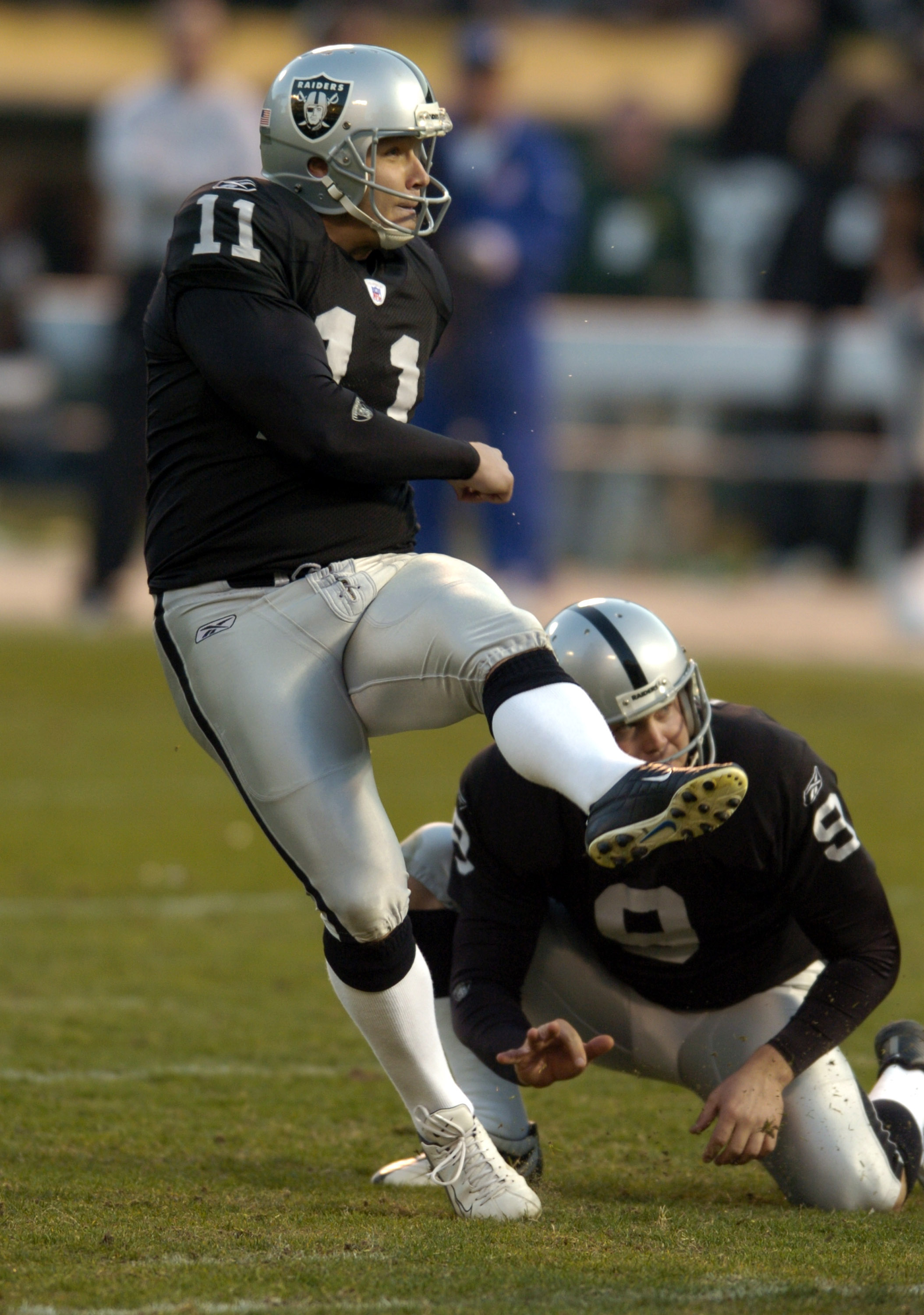
Special teams are special.  Our special teams unit single handily was the most outstanding unit on the field this season, with our punt team and kickoff return team leading all groups.  We returned a school record (and league most) 8 kickoffs for touchdowns this season.  Punting-wise we averaged 43.4 yards per punt in JUNIOR HIGH (yes, my punter was a stud) and we converted EVERY fake we attempted this season (four for four).  We only had to punt a grand total of 10 times this season, which is a third less than last season (34 times).  We did give up one blocked punt this season and had one bad snap, which was our total from a year ago, so we did not get better there.  We did not allow a single kickoff return for a touchdown as we followed the "onside every time" philosophy this year (that's after giving up 4 KOR's for touchdowns the year before).  Now, we did not have a very accurate field goal kicker, so we did not even have a field goal team, but we averaged a dismal 43% on our two-point conversions this season, which must get better.  All in all, I was impressed with our special teams, and our ability to flip the field position on our opponent was second-to-none in our league.


Get everyone involved.  Another lesson I took from Dave Cisar, was to get as many players involved as you can.  Our retention rate was unreal this season.  We had 44 kids show up day one, and by the start of the first game we had all 38 uniforms filled, and did not have to have cuts (we had three kids quit, one get hurt, and two others did not have the grades).  By the end of the season we finished our final game dressing 34 players due to injuries.  NOBODY quit after the initial 38 were selected.  This is after a season in which we finished with 22 kids after starting with 28 (four quit, 1 was kicked off, and 1 was injured).  Our ability to get everyone involved both in practice and in games was essential to this retention rate.  Another thing I implemented was the "Buddy System".  Each eighth grader was responsible for a seventh grade teammate.  They exchanged phone numbers and had to answer weekly questions about their partners in front of the team.  I think the Buddy System really helped our overall team chemistry and kept us from having individual "cliques" within our group of 38. 


Tackle everyday.  The head coach and I disagreed on this originally, but since implementing this in his absence he has seen the light.  We were AWESOME tacklers this season compared to last.  Last year it took three to four guys to slow a ball carrier up, whereas this season we had several guys make solo tackles.  On film, the biggest difference is that the first guy would get the ball carrier down instead of holding on why the others got there.  We literally tackled everyday for the first month of the season.  After that we tackled on Monday and Wednesday with Monday being full bore tackling stations, and Wednesday being fit and freeze only.  The last two weeks of the season we tapered off to just fit and freeze type drills on Monday only. 


Alignment and Assignment and Fit-and-Freeze drills are essential at this age.  I have always been a big team guy.  I want to see reps and I want to see them live.  Well, in researching practice methodology over the past few years, I have found the good ones don't do this.  They do a lot of FNF and AA drills instead.  I cut our live team time on offense in half this season and we rarely went live on defense.  Offensively we did FNF on Monday, with live team on Tuesday and all plays on air on Wednesday, which included simulating game situations.  Defensively, we did FNF on Monday, Inside Drill on Tuesday and Seven-on-Seven on Wednesday.  Now if a team we were facing had very little passing threat we would do a live defensive team on Tuesday and then do Inside Drill on Wednesday.  Special teams we did at least one live per week.  Early on in preseason we did all of them live, but as the season progressed we cut that down to 2 a week, then at the end we did not do any live special teams.  FNF really improved, not only our technique, but our younger players confidence as well.  There's a lot you take for granted when it comes to coaching and one thing was my players level of development, and boy did I undershoot it.  That was clearly evident from my coaching last season.  This season was much better as we took the approach that our players knew absolutely nothing about the game and we were starting at the ground floor. 

The No-Huddle offense is the way to go.  I have dabbled with no-huddle in the past, but not like I did this season.  Now we were no Oregon, but in our live team sessions we averaged about 25 plays a session, which is better than a play a minute.  We had two speeds, regular and 9-1-1.  9-1-1 was our hurry up stuff and we really did well with that.  In three out of our eight games we scored right before halftime using our up-tempo pace and the largest amount of time we had was 1:18.  In game three we scored on a four play 61 yard drive with 55 seconds left in the half and one timeout.  In game five we scored on a five play 77 yard drive with 1:09 left and two timeouts.  In game seven we scored on a five play 48 yard drive with 1:18 left to go and one timeout remaining.  These were points we'd not have gotten last season, and in games four and seven they were the difference in the game.  If you are still huddling, you are wasting a lot of time, and I don't mean in the games.  The benefit we saw from going no-huddle is not in the games, but in practice.  We doubled our reps on practice, by far and in the games you automatically have a two-minute offense built in.  We can't go hurry up because a lot of our players play both ways, but still, we went no-huddle to improve efficiency in practice time and eliminate wasted time. 


Things to Improve On

Practice efficiency.  There was still a lot of wasted time in practice.  Now, mind you, we were practicing for easily two-and-a-half hours a year ago, and cut that down to two hours on average this season.  Still, there are areas where we need to improve and be able to get these kids home at a decent hour.  I have pushed and pushed, but the coaches I have are not really taking to the up-tempo like I am.  I don't have the luxury of firing anyone either as I was glad to have the other two helping me.  Anyhow, I will continue to work with them and push for MAXIMUM efficiency until we get it.

Relaxing.  I have a tough time turning off football, and even though this is Junior High football, I still constantly watched film, breaking things down and even took things so far as creating scouting reports (our league allows us to scout and trade film).  I also have a tough time detaching from the game, even in the off-season.  I simply cannot get my mind off the game, and I have to, or else I'm afraid burn-out is coming.  Any suggestions would be greatly appreciated.


Finding a kicker.  Holy cow, thank goodness we onside every time, or else I'm not sure what we'd have done.  Also, we could have used a couple of field goals, that thankfully didn't come back to haunt us during the season.   I need to learn more about the individual technique of kicking, as to be honest I'm clueless.


Getting over the wall.  Our player development went good for the first six games.  Then we seemed to hit a wall where nobody really improved except for the younger players.  This concerns me, because it's the second year in a row I felt this way.  I even felt as though some of our players went backwards in their development, which is a really bad scenario.  Several players plateaued about that time in the season, and our toughest games were towards the end of the season.  I need to find ways to keep the young men motivated for an entire season, and keep developing their skills.  I know there comes a point in the season where getting any better is slim to none, but you CAN improve at least a little bit every day...right?


Handling a loss.  My favorite quote is one I live by..."I hate to lose even more than I love to win".  This is me in a nutshell.  A win to me is a win, nothing big about it, you did your job, you won.  A loss is failure though, and unacceptable.  I have a hard time coming to grips with losing, and when you lose the league championship on the last game of the season when you've gone 7-0, it really becomes are a hard pill to swallow. 

Dealing with officials.  I guess I'm getting a bit crotchety in my old age, as I had a few of those yeller' hankies thrown on me this season.  However, I must say, our referees made the NFL replacement refs look like officiating scholars.  Anyhow, this does not bode well when teaching young men about dealing with adversity.  I'm sure that official did not need me to bite his head off, I should merely "explain" my point of view, rather than trying to stuff it down his throat.  Point taken!

Do you kiss your mom with that mouth?


Well, that's my 2012 in review.  I feel with what my little guys went through this season, and where they came from, it has been a success story.  I'd love to have a trophy to put in the case (believe me, we need one, that damn thing is bare), but the memories of this season will go down as a special one in my book.  I have to say, watching young men conquer adversity like this bunch did, was quite a site to see.  I only hope next year we can do the same...


Duece

P.S.- For those headed to the playoffs, now's not the time to let up, keep on keepin' on!!!  Good luck!


Rabu, 15 Juni 2011

The Dog Days of Summer


Well, it's as close to summer as we are going to get, and most of you should have your teams in the weight room and on the field running routes and pushing sleds etc.  One of the age-old problems with the summer off-season programs is attendance.  I constantly hear coaches asking "How can I up my attendance at the weight room?".  Well, that's what this post is for!  I'm going to share some things with you, that I have done in the past to "spice" up the summer off-season. 


Spice it up!!!

Let's not forget, summertime, to the high-schooler, is a time for getting away from the usual grind, hanging out with friends, and for some, a chance to make a little extra money.  For your football player, there are going to be a TON of distractions tugging at his schedule, and he is going to have to make choices.  You are in competition with girls, family vacations, hanging out with friends, and making money.  Tough competition to say the least!  If you know this going in, then you will be able to design an off-season program that will let YOUR weight room be THE place to be in the summer.  For those coaches that have the old stagnant ideas of "they should be here", or "if it meant as much to them as it does to me", please, don't read any further.  If you can't expand and adapt your off-season program to the football player of the 2000's, then it's time to hang it up my friend.  I'm going to list some things I've done to increase the participation in the weight room and in my off-season program.  This is NOT a cookbook on how to get kids to come to the weight room, yet a guide that may open up your mind to some of the items your off-season program may need.


I'm going to spread this one out a bit, talking about the following over the next several posts:
  • Facilities
  • Staff
  • Workouts-Mini Camps
  • Competition
  • Team Building
In this post I'm going to talk about facilities and staff.  These are two very important elements in any off-season program.  So, here we go!

Facilities
The first item of importance are your facilities.  Not all of us are blessed with a state-of-the art weight room and practice facilities, so please don't roll your eyes when I mention this.  If you want to compete with your football player's girlfriend, then the weight room needs to at least be appealing to the senses.  Now I'm not advocating everyone head to the A.D. right away to rebuild the weight room, believe me, I've been some places where not only would mentioning revamping the weight room get you laughed at, it would even get you fired!  Make due with what you have.  It doesn't cost that much money to touch up paint on the walls and equipment, or even hang some nice posters on the wall.  Make sure the bathrooms work, and there's a secure place for the players to secure their belongings. 


Make your own posters with slogans for the upcoming season, or have photos from previous seasons.  One thing I did, was I had team photos all around the room in our weight room, with the year and record located on the bottom of each picture.  I also had photos of previous players in their college uniforms hung in an area we called the "Wall of Fame".  These little items will go a long way to giving your weight room that "championship builder" look that kids are searching for.  Also, make sure all the equipment is working and in it's proper place.  Nothing is a bigger turn-off than going to do leg curls, but you can't find the pin to adjust the weights.  Your players should NOT have to improvise when lifting or training.  I cannot stress this enough, all this does is put doubt in their minds as to why they are there instead of at the movies or at the beach.


Nice beach!

Another important item is cleanliness.  The weight room should NEVER be dirty!  All weights and workout components should be put up at the end of each session.  This allows players to get in and get their workout done.  This is very important with older players who may also be trying to manage a summer job.  Time is of the essence, so make sure your weight room is not only clean, but ergonomic as well.  Divide up the weight room into common stations if possible.  Don't make your players travel from one side of the weight room to the other, just to go from squats, to power cleans.  This leads to distractions such as socialization, which deter from the players getting their workouts completed. 


This doesn't look productive

The atmosphere in the weight room is of utter importance when attracting your football players.  Young people nowadays love listening to music.  A stereo system in the weight room is a must.  If you don't have the means for a stereo system, see if one of the players will volunteer one.  If not, at the very least let them listen to their IPOD's, as this keeps them in their comfort zone.  A word of caution though, only allow the players to use one earpiece at a time, that way if you have to give instructions quickly, or to warn of danger etc., your comments will be heard.  Allow the players to pick the music, but only if it's clean.  I usually had them tune in to a local radio station if possible, that way I knew the music would be appropriate for the age group.  This is just another simple "comfort" you can add to your weight room to make your players feel more at home when they are there.


If you have outside facilities such as a track or field, and you have workout components for these areas (sleds, parachutes, cones etc.), then make sure these are stored/located in an area that is easily accessible.  Make sure if you have something planned for the track or field that day, you set it up before hand, again, time is of the essence.  The quicker you can get the players on their merry way, the less of a "task" working out becomes. 


If you use indoor facilities, such as a gymnasium, make sure it is picked up and ready to use.  I've rarely used the gym mostly because I've been at places where the basketball coach was a "touch-me-not" with his gym, but if you have this and can use it, by all means do so!  Again, have everything ready, nothing loses momentum more in a workout (or practice for that matter) than players waiting for you to set up drills.


I could use one of these!

Again, I'm not saying go out and tear down the old weight room for a new one, we all know that is out of the budget of 99% of the coaches who may read this.  Never look at what you CAN'T do, always focus on what you CAN do, this will make things a lot easier.  A simple coat of paint on a sled made some former players of mine think we had gotten something new.  I didn't have the heart to tell them, it was just their old sled with new paint on it!  Whatever it takes right!


Staff
You can't do an off-season program by yourself.  That being said, if you think it's difficult getting your players to the weight room in the summer, try getting your staff there!  I usually inform my staff that their stipend covers off-season workouts.  What I do is try and use simple math for the summer time.  I require the players to make 80% of their lifts in the summer, so the coaches should also have a requirement.  What I usually did was take the total number of lifting days and divide it by the amount of people I had on staff.  The most I ever had on staff was 8 (including myself), so we usually had around 33 lifting days, just take 33 and divide by 7 and that was the required amount of days each staff member was to be present.  This usually worked out to be four to five days, so I simply put it as coaches needed to each make a week.  I let them pick their weeks and we went from there.  Some would be there more than that.  I had an offensive line coach that was there almost every day.  What a lifesaver!  My last season as a head coach I was fortunate enough to have raised enough money fundraising that I could pay a 1/2 stipend to one of my assistant coaches and he was our strength and conditioning coach!  This was a 7 week period with 1 week of vacation.  Fancy title for the small amount of resources we had, but it worked.  It also helped that my coach looked like Arnold McMillan (well, not quite that big, but he was huge)!!! 


I also gave perks to the staff members who made the most days.  The one with the most days had the easiest pre-game assignment throughout the season.  The coaches who chose not to show up, or only show up the minimum amount got the tougher jobs.  You'd be surprised how a season of cleaning the visitor's locker room will motivate staff members to do their summer duty!  I've even given out everything from gift certificates to money for staff members who went above and beyond the call of duty in the summertime.  Coaches need to be rewarded too, remember they have families of their own, and use the summertime to vacation and spend time with loved ones.  I also had coaches that worked other jobs, work with your coaches, not against them.  Facilitate their participation, and they will be more motivated when they are working with the players.  Which leads me to my next point.


Even the "big dawgs" make time for family

Staff motivation in the off-season is key.  Most assistant coaches I've had have not been all that "geared up" for off-season lifting and conditioning.  This, to me, is no different than showing up to practice with a poor attitude.  Stress to your staff, that they need to bring their "A" game when it comes to enthusiasm.  Players feed off their coaches, and they can tell when you don't want to be there.  What does it say to a player, who is already wondering why he ditched the movies with his girlfriend, when he sees you looking unmotivated and lackluster?  It tells him you don't care to be there, then why should he?  I guarantee the next day this player is with his chick rather than in the weight room.  Again, make the weight room the place to be, this includes for the coaches.  I've asked coaches to leave that were withdrawn or unenthusiastic.  I figure your getting paid to be here, make that shit up if you have to! 


Coach Boom knows ENTHUSIASM!

Some of this sound harsh, especially to the assistant coach with the young wife and kids, and all this new free time with summer's off, however put the shoe on the other foot.  Especially those aspiring to be a head coach someday, it is your head on the chopping block on Friday nights.  You would want your staff to be at the weight room, so why do any different for the guy you are working for, remember the door swings both ways!


So now that we have facilities and staff taken care of, in the next post I will look in to the work-outs and doing your own mini-camps (if so allowed), and doing things to create competition.  Again, I'm sure there are many more methods than I have, I'm just sharing.  Heck, post some of your ideas in the comments section, let's see what's out there! 

Special shout out to Coach Hoover for helping me "spice" up the ol' blog logo!  Check out his site here to read more on a great passing concept known as levels

Later!


Til' we meet again!

Duece