Whew! Well, it's over. Having lost the league championship, yet finishing 7-1 on the season, many would say that was a great year. I think, however, that this past season has been one of the most unbelievable rides I've ever been on. I want to take time out to share this with you, and maybe you can see some of my shortcomings and some things we did to take advantage of some of our situations etc. Hell, analyze my situations and see what you'd have done differently, I'm all for that. Whatever you can take from this season, I'd be glad to, and whatever you can add, please, by all means shoot me an email at footballislifeblog@yahoo.com.
Lessons Learned
The first thing I learned is that the Unbalanced Single Wing (UBSW) is a pretty cool offense. My hat's off to Dave Cisar's system as we were able to install it from the ground up and had great success with it. We ended up having the Power series, the Spin series and Jet series in at the start of the season and never really added anything after that. Our Jet series really came alive in the latter part of the season once folks had film on us and knew what we were going to be doing. The other thing is the UBSW is one of the most fun offenses I've ever coached in (yes including Flexbone). The simplicity of it is so simple, yet because so many folks have not seen the offense in decades, it creates quite a bit of confusion for the defense. Anyhow, it was very fun to coach in, and I got numerous questions from parents, coaches and even the officials!
I have had tragedy strike during football season, but none like this season. I've never lost a player, and I've never had this much tragedy strike. Losing two parents, and a player in the span of four days was the most incredibly terrible thing I've had to witness as a human being. Then having to put it all together and put it out there on the field was pretty tough too. I was amazed at the resiliency of the young men I coached. I actually think THEY helped ME deal with it all. Then in the end, we lost a player to a very serious back injury, that may have ended his football career. Thankfully enough, the young man will walk, however football is probably out for the rest of his life. In all this tragedy I felt like the young men were able to keep it together, keep things in perspective and lose themselves in the game, exactly like I would have them do. I can't say enough about the quality of the young men I coached this year, as our character shined through time and time again this season.
I have to learn to enjoy the season more. I have just went through a 7-1 season, in which we set the record for best season in school history, and I feel as though we failed. The season ended two weeks ago, and yet I cannot come to the realization that we did good, despite not winning our league title. I'm not sure how you ever get over what we had happen at the end of the season where we come up short on a goal we set out to accomplish, but if you have any suggestions, send them my way, as I'm still hurting.

The 46 defense is a great defense, but it does have its limitations. I found out exactly what those were this season. The seven technique in that defense nearly got us killed this year and I didn't have that kid to fill that position. A year ago, we in our league we faced no 21 personnel teams whatsoever. The breakdown was as follows:
- 5- 10 personnel teams
- 2- 20 personnel teams
- 3-21 personnel teams
- 1- 11 personnel team
- 3- 10 personnel teams
Be ready for anything. Here I was cruising along as a coordinator, and BAM, all of a sudden I got the head coach title slapped on me. Three weeks before the season comes up, my boss, the head coach, has a mild heart attack. Now, I'm freaking out because this is a guy who has been a mentor of mine for years and is the epitome of a class act. Now I'm sitting there in a hospital room with him telling me, "You're it, go coach em' up kid". To which I dang near soil myself! Now, I've been a head coach in career twice, and I have to say this, I didn't care for it to be honest. The politics, the whining parents, the nagging administration, it just wasn't for me. I like my job as the defensive coordinator as I'm free to do what I want, when I want, and how I want. Sure, you do have some of that freedom as the head guy, but there's just too much political BS involved for my taste. Anyhow, things went smooth and I didn't have much in the way of headaches from the parents, but then again winning cures everything. Just be ready for anything, you never know what you will face, or what you will come up against. In retrospect, looking back on the past season being able to do what we did with the tragedy we had AND an interim coach, I'm really quite amazed.
 |
| Be ready for anything grasshopper... |
Don't do too much. I really put too much on my defense at times. Our offense and special teams won us a lot of games, which is the EXACT opposite of how my other successful teams have won (in the past I've been more like UF is now). Anyhow, winning is winning, so I'll take it, but not playing solid defense came down to me. I have to do better in that department and keep less on the defense and just "let them play".
Special teams are special. Our special teams unit single handily was the most outstanding unit on the field this season, with our punt team and kickoff return team leading all groups. We returned a school record (and league most) 8 kickoffs for touchdowns this season. Punting-wise we averaged 43.4 yards per punt in JUNIOR HIGH (yes, my punter was a stud) and we converted EVERY fake we attempted this season (four for four). We only had to punt a grand total of 10 times this season, which is a third less than last season (34 times). We did give up one blocked punt this season and had one bad snap, which was our total from a year ago, so we did not get better there. We did not allow a single kickoff return for a touchdown as we followed the "onside every time" philosophy this year (that's after giving up 4 KOR's for touchdowns the year before). Now, we did not have a very accurate field goal kicker, so we did not even have a field goal team, but we averaged a dismal 43% on our two-point conversions this season, which must get better. All in all, I was impressed with our special teams, and our ability to flip the field position on our opponent was second-to-none in our league.
Get everyone involved. Another lesson I took from Dave Cisar, was to get as many players involved as you can. Our retention rate was unreal this season. We had 44 kids show up day one, and by the start of the first game we had all 38 uniforms filled, and did not have to have cuts (we had three kids quit, one get hurt, and two others did not have the grades). By the end of the season we finished our final game dressing 34 players due to injuries. NOBODY quit after the initial 38 were selected. This is after a season in which we finished with 22 kids after starting with 28 (four quit, 1 was kicked off, and 1 was injured). Our ability to get everyone involved both in practice and in games was essential to this retention rate. Another thing I implemented was the "Buddy System". Each eighth grader was responsible for a seventh grade teammate. They exchanged phone numbers and had to answer weekly questions about their partners in front of the team. I think the Buddy System really helped our overall team chemistry and kept us from having individual "cliques" within our group of 38.

Tackle everyday. The head coach and I disagreed on this originally, but since implementing this in his absence he has seen the light. We were AWESOME tacklers this season compared to last. Last year it took three to four guys to slow a ball carrier up, whereas this season we had several guys make solo tackles. On film, the biggest difference is that the first guy would get the ball carrier down instead of holding on why the others got there. We literally tackled everyday for the first month of the season. After that we tackled on Monday and Wednesday with Monday being full bore tackling stations, and Wednesday being fit and freeze only. The last two weeks of the season we tapered off to just fit and freeze type drills on Monday only.

Alignment and Assignment and Fit-and-Freeze drills are essential at this age. I have always been a big team guy. I want to see reps and I want to see them live. Well, in researching practice methodology over the past few years, I have found the good ones don't do this. They do a lot of FNF and AA drills instead. I cut our live team time on offense in half this season and we rarely went live on defense. Offensively we did FNF on Monday, with live team on Tuesday and all plays on air on Wednesday, which included simulating game situations. Defensively, we did FNF on Monday, Inside Drill on Tuesday and Seven-on-Seven on Wednesday. Now if a team we were facing had very little passing threat we would do a live defensive team on Tuesday and then do Inside Drill on Wednesday. Special teams we did at least one live per week. Early on in preseason we did all of them live, but as the season progressed we cut that down to 2 a week, then at the end we did not do any live special teams. FNF really improved, not only our technique, but our younger players confidence as well. There's a lot you take for granted when it comes to coaching and one thing was my players level of development, and boy did I undershoot it. That was clearly evident from my coaching last season. This season was much better as we took the approach that our players knew absolutely nothing about the game and we were starting at the ground floor.
The No-Huddle offense is the way to go. I have dabbled with no-huddle in the past, but not like I did this season. Now we were no Oregon, but in our live team sessions we averaged about 25 plays a session, which is better than a play a minute. We had two speeds, regular and 9-1-1. 9-1-1 was our hurry up stuff and we really did well with that. In three out of our eight games we scored right before halftime using our up-tempo pace and the largest amount of time we had was 1:18. In game three we scored on a four play 61 yard drive with 55 seconds left in the half and one timeout. In game five we scored on a five play 77 yard drive with 1:09 left and two timeouts. In game seven we scored on a five play 48 yard drive with 1:18 left to go and one timeout remaining. These were points we'd not have gotten last season, and in games four and seven they were the difference in the game. If you are still huddling, you are wasting a lot of time, and I don't mean in the games. The benefit we saw from going no-huddle is not in the games, but in practice. We doubled our reps on practice, by far and in the games you automatically have a two-minute offense built in. We can't go hurry up because a lot of our players play both ways, but still, we went no-huddle to improve efficiency in practice time and eliminate wasted time.
Things to Improve On
Practice efficiency. There was still a lot of wasted time in practice. Now, mind you, we were practicing for easily two-and-a-half hours a year ago, and cut that down to two hours on average this season. Still, there are areas where we need to improve and be able to get these kids home at a decent hour. I have pushed and pushed, but the coaches I have are not really taking to the up-tempo like I am. I don't have the luxury of firing anyone either as I was glad to have the other two helping me. Anyhow, I will continue to work with them and push for MAXIMUM efficiency until we get it.
Relaxing. I have a tough time turning off football, and even though this is Junior High football, I still constantly watched film, breaking things down and even took things so far as creating scouting reports (our league allows us to scout and trade film). I also have a tough time detaching from the game, even in the off-season. I simply cannot get my mind off the game, and I have to, or else I'm afraid burn-out is coming. Any suggestions would be greatly appreciated.

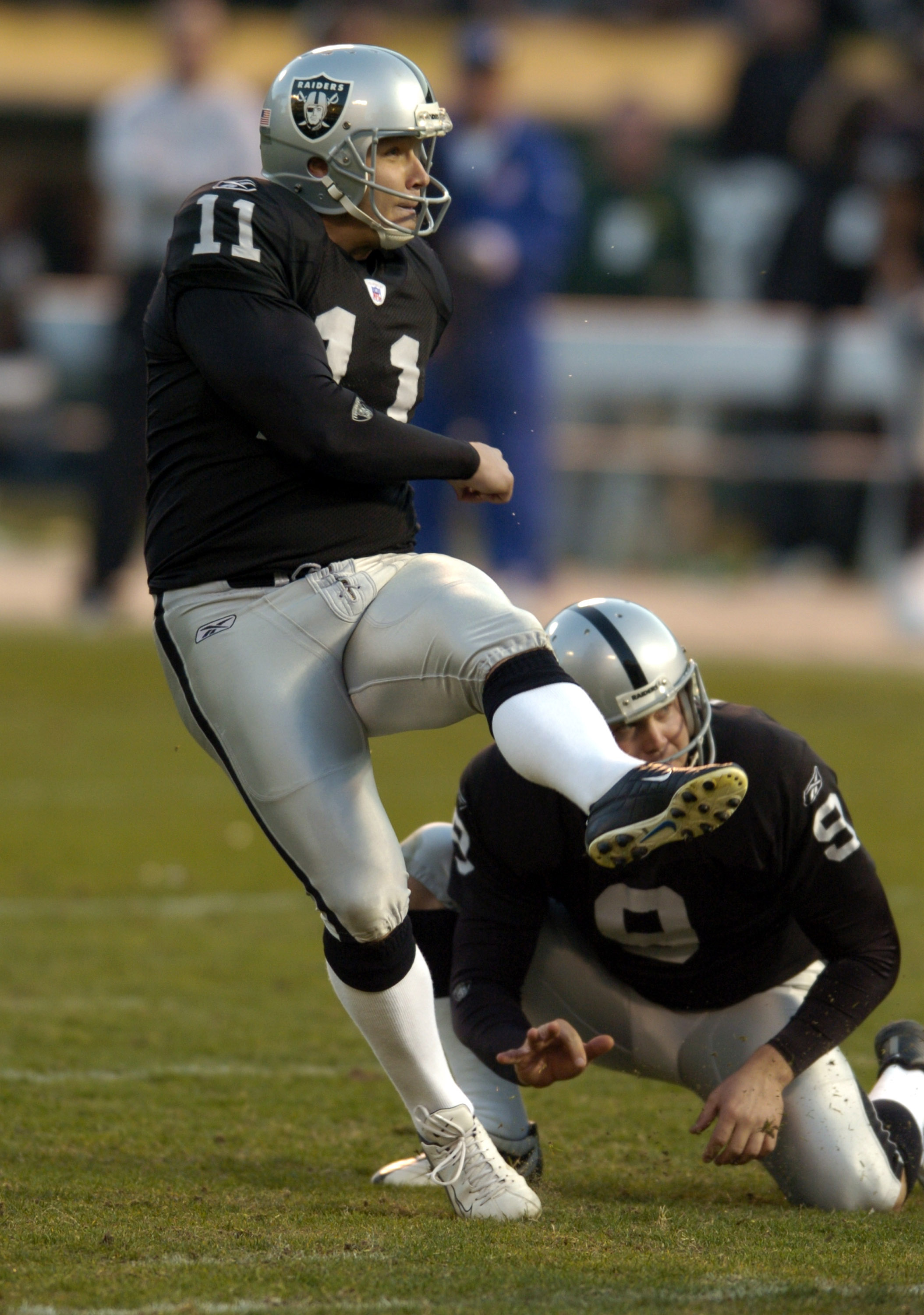
Finding a kicker. Holy cow, thank goodness we onside every time, or else I'm not sure what we'd have done. Also, we could have used a couple of field goals, that thankfully didn't come back to haunt us during the season. I need to learn more about the individual technique of kicking, as to be honest I'm clueless.
Getting over the wall. Our player development went good for the first six games. Then we seemed to hit a wall where nobody really improved except for the younger players. This concerns me, because it's the second year in a row I felt this way. I even felt as though some of our players went backwards in their development, which is a really bad scenario. Several players plateaued about that time in the season, and our toughest games were towards the end of the season. I need to find ways to keep the young men motivated for an entire season, and keep developing their skills. I know there comes a point in the season where getting any better is slim to none, but you CAN improve at least a little bit every day...right?

Handling a loss. My favorite quote is one I live by..."I hate to lose even more than I love to win". This is me in a nutshell. A win to me is a win, nothing big about it, you did your job, you won. A loss is failure though, and unacceptable. I have a hard time coming to grips with losing, and when you lose the league championship on the last game of the season when you've gone 7-0, it really becomes are a hard pill to swallow.
Dealing with officials. I guess I'm getting a bit crotchety in my old age, as I had a few of those yeller' hankies thrown on me this season. However, I must say, our referees made the NFL replacement refs look like officiating scholars. Anyhow, this does not bode well when teaching young men about dealing with adversity. I'm sure that official did not need me to bite his head off, I should merely "explain" my point of view, rather than trying to stuff it down his throat. Point taken!
 |
| Do you kiss your mom with that mouth? |
Well, that's my 2012 in review. I feel with what my little guys went through this season, and where they came from, it has been a success story. I'd love to have a trophy to put in the case (believe me, we need one, that damn thing is bare), but the memories of this season will go down as a special one in my book. I have to say, watching young men conquer adversity like this bunch did, was quite a site to see. I only hope next year we can do the same...

Duece
P.S.- For those headed to the playoffs, now's not the time to let up, keep on keepin' on!!! Good luck!