Tampilkan postingan dengan label College Football. Tampilkan semua postingan
Jumat, 07 Juni 2013
Muck City
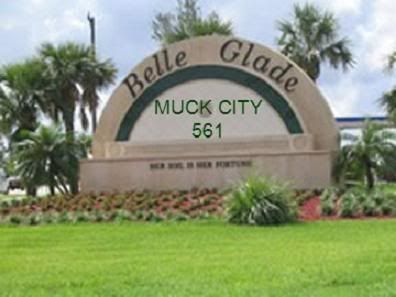
Since taking some time off at the end of spring football, I had a dear friend deliver me a gift. A copy of a book about football in a town like no other. That town is Muck City, as the book is titled, or better known as Belle Glade, Florida. Reading this book was an eye opener to the way of life in Belle Glade. I have coached teams that have played in that area, and even as a player played teams from over there. Never did I know what went on in that area in terms of the history of not only the town, but also the football program. This is no Odessa Texas, or De La Salle by any stretch of the imagination. This is one of the roughest, poorest towns in all of America. It's literally like driving into a third world country when you go there. One thing they do well there is play football.
For those that don't know, "The Muck" is the area around Lake Okeechobee, that boast some of the most fertile soil in the world. However, as much as the land grows, the townspeople taketh away. In reading this book, it is amazing the despair, and the jealousy that abounds in a town like that. One bothered me the most was how when an athlete would "make it", others would try to pull him down, or resent him to the point that many folks felt this star athlete "owed them something". I can remember a quote from a movie, talking about people leaving poverty stricken areas and talking about the people there as "crabs in a bucket". When one crab makes it to the top, the others will climb on his back and pull him back down into the bucket. What's weird to me is, this is NOT the American way. How does one even think like that? I guess I'm wired differently, but the crabs in a bucket analogy, one I thought was just a joke, rings true throughout every ink laden page of the book Muck City.

The author, Bryan Mealer, does an excellent job in the telling of football history, daily life, and overall town history of Belle Glade. He is very detailed in his accounts, and you can tell he spent quite some time living and working in Belle Glade. My hats off to Mr. Mealer for writing such a quality book. The historical parts drag you back to a past that talks of hurricanes and floods, the beginnings of a rough town carved out of the Everglades on the southern border of pristine Lake Okeechobee. He also does an excellent job talking about the football history, even going back to when there was segregation and two schools in the tiny town. The best part is when he describes the games themselves, or being at practice. Mealer does such a good job, as a coach, I think I'm sitting right there with Jesse "The Jet" Hester listening tell the players much needed life lessons. You actually get tensed up and nervous in the parts about the games, because of Mealer's attention to detail when describing them. Mealer even knew the play calls and talked about the game as though he were a legendary coach himself. Again, I have to tip my hat, because Muck City is a very well written book.
The part that hit home, and bothers me the most is the fact that a football coach, such as Hester, who went 34-6 at his time at Glades Central High School was fired six days after appearing in his second state championship. This man had brought a sense of stability to a storied program, he'd make the young men believe in his coaching staff, and more importantly, believe in himself. Only to have a community, one who I'd think would eat their own young if they had to, tear the ground out from underneath him. Again, crabs in a bucket. It is through a book like this, that you finally realize that "misery loves company" and people in despair are that way by choice, not because of some unseen force, or a greedy capitalistic society hell bent on keeping the poor man down, or even by politics. These people are where they are because they do not have the intestinal fortitude to get out of their current situation. It's sickening to read chapter after chapter of players who get out of Belle Glade, only to be ridiculed, made fun of, or even berated to the point of some never wanting to come back and help out there hometowns folk. Who does that? Having not lived it, I can tell you maybe I'm just some snooty outsider who doesn't have a damn clue how things work there, but I'm telling you, there are far worse places in this world that some of our great leaders, athletes and politicians have come from. If they can do it, so can somebody from Belle Glade.
I don't mean to talk harshly about the town, but to be honest, the nature of things there are anti-American. To embrace despair, show jealousy, and downplay the success of others is not what we were founded upon. The one thing is true, some of the absolute fastest of the fastest football players come out of this region. Great names such as Fred Taylor, Jesse Hester, Reidel Anthony, Rickey Jackson, and Anquan Boldin just to name a few. The statistics of NFL players that have come from Belle Glade is staggering. Another disturbing notion in the book is how players nowadays feel entitled to this treatment as though they are gods and all they have to do is "show up" to be recruited. The game, in the book, takes an ugly feel to me. It's not longer a game in Belle Glade, yet a means to an end. This fact, is starting to branch out all across America I'm afraid. What used to be a game among young men, is now a pipeline to money, fortune and fame, and it was trickled down into even our youth programs. I have coached football long enough to see this demise and it is steadily withering away at my love for the game. Coaches, especially head coaches, are now looked upon to facilitate the recruiting process, and severely scrutinized when the process breaks down or the athlete being recruited simply isn't "good enough". The pages of Muck City echo this sentiment, even more than I imagined.
I recommend anyone read this book, but be prepared for an eye opener. I may simply be so naive that I've been holding on to the game, trying to look at the landscape through glasses meant for an earlier time, and this book as slapped these glasses off my head. I look at the game and wonder..."what am I doing here?". I have seen this entitlement change drastically over the past four or five years, and like many I have thought it just a phase, but I'm afraid folks it's here to stay. Several parts in the book have interviews with old war hero's from decades past that talk about the new wave of football players with great concern, and even some disdain. For years I've heard even the old greats around my area talk the same way, and often chalked it up to "they don't understand kids", or "they're just too old to understand", but more and more I'm beginning to believe these old timers and what they are saying. I guess that's because I'm becoming one of them. I see what's happened to our game and the players in it, and see how the money has crept in and made everything about a once beautiful game ugly. Everything has a peak, an apex if you'd say, and I think football is on a downward slope from it's once grand mountaintop. I may be a lone voice, but football, much like our country, is crumbling from the inside-out. The very foundation us as coaches preach has slowly been eroded away to where the whole thing stands to collapse. I mean, read the sports columns everyday and you see where somebody or some team is getting slapped with a violation of some rule. There's a fine here a fine there etc. You can also read the high amount of arrests in both the NFL and college and now people turn a blind eye to it, as though "It's ok, he's a football player". To this I say bullshit. A case in point is the Tyrann Mathieu, better known as the Honey Badger, is now on the Arizona Cardinals roster, simply because "he can play". He was arrested in possession of marijuana and failed numerous drug tests, but because he "can play", he gets entry into what is supposed to be the most hallowed fraternity in all of football, the NFL. Am I the only soul in America that sees this logic as flawed?
I watched a program on Lombardi last night, and Jerry Kramer, legendary guard for the Packers said these words "They don't make men like that anymore", when talking about Lombardi. I was thinking, you know, he's right, they don't. These men are shunned as "old school", and tossed out and away from the game because players don't relate to them. Players don't relate to them because they want everything handed to them, and the only thing Lombardi would hand you is a swift kick in the ass if you felt entitled to ANYTHING! I often wonder what Lombardi would say if he could gaze upon the landscape that has become college and pro football. My thinking is the famous line of "What the hell's goin' on out here!!!" would come to mind. All I can say is, he would be gravely disappointed in us for what football has become.
Like I said, buy the book, it really speaks more volumes about football in general than probably Mealer knows or intended. The book is a great look at football in a dark corner of America, where there are few fairy tales and even fewer happy endings.
Sorry I've been gone so long, but the new gig has me off and running, we have already started our summer stuff, but hopefully I can get some of these archived articles finished up and posted. Have patience with me!
Duece
Jumat, 05 April 2013
University of Nebraska Linebackers Clinic
I had the opportunity, back in December to watch the University of Nebraska practice for their bowl game against the University of Georgia Bulldogs. After that practice, the coaches held a small breakout session that was quite informative. Since I've been a LB's coach over the past 3 seasons, I figured I'd go check out their LB's coach and see what he had to say. Needless to say it was a very informative session, and here are my notes from the clinic. Hopefully you can find some good information in this stuff like I did. If you are interested in their defensive backs, Coach Hoover went and listened to their DB coach speak, and you can check out his post on the matter here.
Linebackers
· Tackling Progression
o start from scratch
· 8 Drill Categories
o Agility
§ General footwork
§ Types of game movements
· Duplicate and repeat game movements
o Watch film to see how to do this (never lies)
· Make players bored with your drills
§ Quick Box
· Align a 5 yard box with LB's facing coach. LB approaches and coach points to cone, LB must get to cone, and then react to coach's next signal.
· Great change of direction drill with constant movement
§ 10 Dots
· Align dots or cones in a series and have LB's try to get through them as fast as possible
§ Flip Hips
· Use a line and stay on that line
o LB must sprint
o Don't make drill predictable
§ 45 Degree Break
· LB drops away from you and reacts to your pointer
· LB should break and open hips when you change the pointer
· If the LB jogs, then simply make him keep running until he gets the idea
o Footwork
§ 1st step is based on the RB's movement
§ They take a lateral step and replace
§ They move with that shuffle until something declares
§ Shuffle Drill
· 10 yards
· LB's shuffle between yard markers (1 yard), back and forth staying between the tick marks (use dummies)
§ Shuffle Break Drill
· Same as shuffle drill, but at the end make them break and intercept a pass, or scoop and score
§ Shuffle with bags
· Good drill with high reps
· 1st LB on command shuffles to end of 1st dummy and reacts to coaches command to either go forward (sprint to the next dummy), or break and cross over to the opposite side.
· Once 1st LB goes, 2nd LB aligns on same side as the 1st LB on 1st dummy. Both will then react to the coach's command.
· The 3rd LB will then repeat what the 2nd LB did, so that you don't have guys standing around waiting on 1 guy to do the drill.
§ Leverage
· Don't give a RB a 2 way go
· Set 1st cone 3 yards deep and 2nd cone 5 yards deep
· Put RB between the 2 cones
· LB aligns on deeper cone
· RB will run to shallow cone and can either cut upfield or cut back (no juking)
· If RB cuts back, LB makes good physical tackle
· If RB cuts upfield, then LB must flatten and run feet, driving like crazy as he has no leverage.
o Drill is done to prevent the cutback
§ Double Leverage Drill
· Same as leverage but now with 2 LB's
o Double the work
o Same reactions for both LB's
§ Space
· LB aligns on hash and WR on top of #'s
· Coach throws ball to WR (can just make motion if you can't throw-better this way b/c WR doesn't have to catch the ball)
o If you don't throw it, have coach hold WR for a second to mimic game speed on fast screen
· LB attacks landmark and does not allow WR to cutback (similar to leverage drill but done in a much larger space)
· WR goal to get 10 yards, LB goal to stop him from getting 10 yards
§ Shuffle-Alley-Shuffle
· RB starts out jogging down yardline, and will alternate between jogging and sprinting (you can control with whistle if need be)
· LB should shuffle when RB jogs (don't give up the cutback, backside leverage) and sprint with shoulders square when RB sprints
· RB has 2 way go after 3 or 4 reps and can cut back or try and out run the LB
o Vs. cutback LB makes tackle, Vs. run away LB runs feet and makes leverage tackle (combo of leverage drills)
o Blocks
§ Shock the blocker (head and hands)
§ Shock and then get off
§ Keep it competitive
§ Shock sled
· Sled they have they use in early season and off-season
§ Shock drill (vs. a man)
· Set up OL and LB with LB in a shade in one direction or the other
· LB/OL should be the same distance apart as they are in a game
· Have OL execute a scoop or zone block, LB should attack (shock) the blocker and then get by with a push-pull move (doesn't care to rip, only after push-pull does he tell his guys to duck their arm under)
· Set up a cone to either side that the LB/OL cannot go outside of
· LB should shock the OL, release and then burst upfield
· Can do this drill in multiple groups
o Tackling
§ Leverage drill
§ 3 yard box
· RB on 1 end, LB on the other of the 3 yard box
· On command RB will move lateral between cones, while LB shuffles to mirror him
· On command, RB attacks LB head up (no juking) and LB must make a face-up tackle and drive legs
o Similar to "mirror drill"
§ Low Tackle
· Tackler wants his body at the center of gravity of the ballcarrier
· Step on the RB's toes
· Wrap and twist once contact made
o Wrap dummy, land on dummy and then roll completely over
o Pass rush
§ Attack the middle of the RB & flip hips to get by
§ LB should slap RB hands down as he's flipping the hips
§ Can create this using a standup dummy and have LB blitz the dummy, slap at the dummy and flip hips to get around the dummy
· Once clear of the dummy LB should accelerate
· Can also do this drill to imitate a blitzer coming off the edge
o Play on Ball
§ Teaches the strip
· "Start the lawnmower"
o Many kids nowadays not familiar with lawnmower tech
§ Key is to lift elbow and punch the ball downward
· Only done when ballcarrier is secured
§ Can add scoop and score to any agility drill
§ Play on Ball
· Reach with long arm, knock ball down and turn back to QB
o Make them do the drill 1-armed -no pass interference
§ Put their near hand in their pants to do this
· Reads
o They key RB's, because when you focus on something further away you can see more than focusing on something that is close
§ OL can give false keys
o If LB's having a tough time reading, vary their depth off the ball
o Make their first step lateral, then have keys that make them attack downhill
§ "Slow til' you know"
§ All their drills are shuffle and read
§ This depends on the leverage of the LB too
· This also depends on what your opponents run
o They see a ton of inside/outside zone
Rabu, 10 Oktober 2012
I'll Be Back...
Well, it's been a crazy ride this season, and with only two games left, things will be over soon and I can get back to posting. Do I ever have some stuff for you guys! I'm working on the following:
- Key mistakes to avoid as a defensive coordinator
- Believe me folks, if anybody has screwed up and NOT followed this protocol this season, it's me. I'm going to share some of those events and how we got the ship righted to finish strong.
- The 8-2-1 kickoff return scheme.
- Using nickel personnel to effectively defend the two back running game.
- Tackling drills.
- The unbalanced single wing and how this offense impacted myself, our coaches, and the players.
These are just a few of the things I've got in store, so don't forget about me. In the meantime you can always check out my other blog, The Twelfth Man, where I get away from X's and O's and go a little more "opinionated". Here are some other things you should be looking at as well.
Brophy has been back and has some great pieces, on Saban, Tony Franklin and La. Tech. As always Brophy writes with a witty purpose, and does a great job explaining things.
Smart Football has been putting up some good stuff on the West Coast offense and how it helped Drew Brees attain his record. Also some great articles on Geno Smith, Dana Holgorsen and some breakdown on the zone blitz coverage. As always, Chris is a very talented writer and has links to several great video clips over on his site.
Well, if you season is ending and you are not looking to the playoffs, once it's over, take a week or two and rest up as the whirlwind we know as the off-season will begin! If your headed to the playoffs, congratulations, now keep your eyes on the prize!!!
Duece
Jumat, 09 Desember 2011
TCU Terms-Defined
I get a LOT of emails asking me about "terms" and "what does this mean" and "what is toro or aim mean". Well, today we are going to have a vocabulary lesson! Here goes:
- Read side- the strong side of the coverage, or the side of the defense that the FS is aligned on.
- Away side- opposite of the read side.
- Slice- "quick to the curl".
- Swing deep of: Means take the receiver running out or out and up through your zone man to man.
- "Me"- Call that has the SS take the out of 2 (swing deep of 2).
- Blue- 2 read coverage where the out of #2 is handled by the corner
- Cover 2- In TCU's system, robber coverage where the out of 2 is still handled by the corner (not traditional robber where the OLB/invert has the out of 2).
- Cover 5- 2 deep squat 1/2's coverage, or what most of us are familiar with as cover 2.
- Special- An "X" out concept against trips where the read side corner is man to man on the #1 receiver and the SS and FS play Blue coverage to the #2 and #3 receivers.
- Solo- An "X" out concept against trips where the read side plays Blue coverage to #1 and #2 while the read side LB has the short wall of #3 and the WS has the long wall of #3.
- Roll- Basically...1/4, 1/4, 1/2.
- Bronco- A modified version of man to man coverage ran on the away side where the corner has all of #1 and the WS has the vertical and out of the #2 receiver.
- Cover 0- Man to man, no man free.
- Cover 0 Free- Coverage used when blitzing and there will be a deep safety free; ie Cover 1 (man free).
- COS- Change of strength.
- Man clue- All of a certain receiver vertical (basically).
- Pound- LB is leaving the box to apex a #2 reciever; may also be telling the DE to that side to spill (vague).
- China- When a route by the #1 receiver is shorter than 5 yards (smash alert).
- Bullets- Both ILB's blitzing.
- Smokes- Both outside safeties blitzing outside.
- Lions- OSS's blitzing 1 gap inside a Smoke blitz.
- Dogs- ILB and OSS blitz
- Bullets Thunder/Lightning- Both ILB's and safety to/away from call blitzing.
- Mob- Bullets and Smokes.
- Cop- DE's man to man on a TE if they get one.
- Fiddle- 2 on 1 coverage.
- Aim- DL slant 1 technique away from call.
- Toro- DL slant 1 technique to the call.
- Spy- Call telling outside rusher to cover back man to man if he attempts to cross his face (peel).
- Fire- Call telling DE to rush one gap inside his alignment.
- Switch- Call made by OSS when he cannot blitz (vs. detached #2), this call tells ILB to blitz side to replace the safety in the blitz.
- Silver- DE's will cover RB man to man if he flares and take pitch on option.
- Flip- Corners over.
- Power- Call by OSS puts DE in a 5 technique.
- Tag- Tackle to A gap.
- Peak- Long stick.
- Army- Slant 1 full gap away from call.
- Tank- Slant 1 full gap to the call.
- Tim- Tackles inside 1 gap.
- Tag- Tackles in A gap.
- MOE- Mike off edge/edge blitz by MLB.
- SOE- Sam off edge/same as MOE but for Sam.
- Fifty- Tackle away from call (most of us call him the nose).
That is nowhere near all the TCU terminology, however it is the bulk of what I receive in emails. Remember folks, it's just "their" language. You can call it anything you like. I moved most of my terminology to theirs as it allowed me less "conversion" when learning the scheme and teaching it. That doesn't mean that some of my old terminology isn't still in my defense, it just means I've adapted more of my stuff to theirs. Whatever you choose, it's up to you! Good luck!
| No need to convert if you don't have to! |
Duece
Senin, 05 Desember 2011
Post Snap Communication in Pattern Reading Coverages
Pattern reading coverages have been the craze hear lately, especially witnessing Gary Patterson's adaptation of the age old Quarters coverage and Nick Saban's Rip/Liz/Mable concepts. One simple issue I think that's missing is how do these players communicate once the snap has occurred? In pattern reading coverages, this is essential to the success or failure of said coverage. I'm going to touch on a way that was recently described to me, that has opened up my eyes to the simplification process in post-snap communication by the defensive secondary. To start, let's look at some of the ways communication can be done.
Vocal Communication via Tags/Terms by Players Post-Snap
Easy enough, however many a defensive back (DB) has made a communication error leaving a defender wide open on a blown coverage. Why? Too many moving parts. I used to use this system, as recently as two seasons ago. In my pattern reading coverage (Cover Blue) the corner and safety worked in tandem to describe what they were seeing. I used basic terms such as "in" and "out", which is all the DB's really need to know once the play begins to develop. However, as all this communication is unfolding, the DB must first hear the communication from the other DB, then relay what he's seeing as well. This can become confusing and often times leads to the wide open six! Boo-ya...NOT pretty. So, how do we fix this, enter in one-way communication? For this article, the coverage used in the example, will be TCU's blue coverage, or better yet known as two read. This is not Quarters coverage, but is very similar.
One-Way Communication
Since most pattern reading coverages are predicated on what the number two receiver does, it is paramount that there be some sort of communication on what exactly this receiver is doing. In today's world of three, four and even five receiver sets, DB's must all be on the same page, or risk giving up the big play. So how do we do it? Let one player make all the reads. What???? Yes, let one player be designated as the communicator. This method, employs less moving parts and allows for smoother reads and transitions as receivers stem into their routes. So how is this done? First, the defender assigned to take all of the number two receiver vertical is a good person to have in charge of this communication. Why you ask? Because this players eyes are already on his key, which is the basis for the pattern reading scheme to begin with. This also allows your corners to play tighter to the number one receiver, which discourages quick throws to the flats, what most offensive coordinators (OC's) do to beat Quarters coverage. So, let's look at the "ins and outs" of what the communication process is based on.
First off, the reads I use for Blue coverage are as follows:
Corner- Man to man on number one anything over five yards. Number one not over five yards call "China" and zone your 1/4.
Safety- All of two vertical. Two not vertical and inside, rob curl to post of one. Two outside man one.
The number two receiver can only do four things, three of which are routes. The first thing the number two receiver can do is block. This issue is easily handled by utilizing no communication whatsoever. The corner in Quarters coverage need not be concerned with the run unless the number one receiver crack blocks.
Second, the number two receiver can go inside, to which the safety will make an "in" call (usually echoed three times). This tells the rest of the defenders their job/role in the coverage. If number two goes inside the corner knows, he has safety help and can play over the top of all routes by number one. He no longer has to worry about the out of number two and is essentially in man to man coverage with inside help. The curl player will now relate to the number one receiver and the hook player can now wall the crosser (number two).
Third, the number two receiver can go vertical. When this happens, the safety gives a "push" call alerting the defense that the number two receiver has blown the top off the coverage and the safety has to take this receiver vertical. The corner now knows, he has number one man to man based on his Blue coverage rules shown above. The curl player knows to expand immediately to the flat and look to relate to number one's route. The hook player can gain depth, and either relate to the back, or work under any deep inside route by number two. Again, the only player relaying anything to these other defenders is the safety. This is an age-old trick by good coaches coined "Multiplicity through simplicity".
Last, the number two receiver can run an outside breaking route. When this happens the safety gives and out call and knows he must now take all of number one. The corner hears the "out" call and comes off the route of one, and plays the out or out and up (swing deep) of number two. The flat player expands and looks for anything expanding to the curl from the backfield or from across the formation. The hook player also will gain depth and look to work under any inside cutting route, or carry a crosser across the formation to the curl player. As you can see, this is why in Blue coverage the corner can play tighter to the number one receiver because the safety is being his eyes and making his read for him. Now the corner discourages the quick throws to the flats by alignment, and adds some confusion to what the quarterback (QB) is seeing pre-snap (is it cover 2 is quarters etc.). Let's look at how this communication system handles some routes that commonly give Blue coverage some trouble.
When the number two receiver goes outside, it can present some problems when two players are allowed to read this route. The number one question I get about Blue coverage is what to do when number two does a deep out and number one is vertical. The answer, leave it in the hands of your safety. Your kids should know their abilities, probably better than you ever will, so they should be the ones making these reads. The safety, if he feels he can get to the vertical of one, will give the out call to the corner. This puts the corner on the out, and the safety on the vertical route by number one. However, if the safety does not feel he can get to the vertical of one, he makes no communication whatsoever and plays the out by number two. Either way, the secondary is right in this situation due to only one player making this read, and it is the player put in the most conflict by this route combination.
The other route combinations are the Post Wheel and the Curl Wheel illustrated below.
The main idea behind this post, is have one guy make your reads and calls. This keeps any miscommunication from happening as receivers are coming into their breaks. It also allows for your corners to play tighter than in previous versions of Quarters and Blue coverages. This technique is not limited to only Blue coverage. This method can easily be applied to other pattern reading coverages as well. The idea here is, have a system that allows for the person making the calls to recognize the pattern and then make a call that will relate all the defenders to that side of the defense to the receiver distribution.
To the guy who gave this to me, who WILL remain anonymous, thanks bro, this has really opened my eyes up to being able to simplify some of the post-snap communication issues I've had in the past!
Well, it's a rematch in the BCS National Championship Game...do we really need to see it again? I'm not in favor of the BCS, however, in this case it has done just what it's designed to do, pitted the number two team vs. the number one team in the country. Oh how the SEC haters will love this one! Happy Bowl Season, get that DVR ready!!!
| What? |
Duece
Selasa, 25 Oktober 2011
Flexbone and the B back, the guy that makes it all go...
Going to do a couple of posts on the B back in the flexbone offense. I get several questions via email and phone calls on the nuances of the Flexbone offense, and one question that comes up time and time again is the fullback position, or what most of us "die-hards" refer to as the B back. This first post is going to be dedicated to what it is you are looking for in a B back and drills you can use in practice to facilitate your search.
Prototypical B back
To be honest, at the high school level, it's hard to hammer things down into what many would consider a prototypical B back. I guess, if all were equal, the B back would be the size of a traditional blocking fullback, but with the speed of a tailback. Basically put, he would be the cliche that you most often hear during NFL and college games, "he's a tailback in a fullback's body".
| Yeah...this guy! |
This is all fine and dandy if you are in college where you can recruit, however those of us at the high school level are not afforded the luxury of hand picking our players (well, most of us anyhow). So, what are you looking for in your B back, especially when you cannot recruit him? Here's the list:
- Physical Toughness: Yes I know, coaches use this "catch phrase" all too often, however with this position toughness is a MUST! The B back in the Flexbone offense will get hit on every play, whether he has the ball or not. The B back must be able to get up from every collision and be able and willing to go and do the exact same thing again. A B back that cannot withstand this punishment will wither and not be as strong in the fourth quarter, when you need your B back the most. Look for players who "take a licking and keep on ticking". This is the first step in finding the right player to play B back in your offense.
- Quickness: B backs must possess a great first step and be able to get off the ball quickly. I have had B backs who turned right around on defense and played defensive end (DE) or defensive tackle (DT). A quick get-off is a must for a B back as the base play (the inside veer) must be run with an explosive B back.
- Tackle breaker: Sounds simple, but this is very important too. The B back HAS to run through arm tackles. If you have a back that goes down on first contact, regardless of his toughness or quickness, he is NOT a B back. A B back that can run through contact is a MUST for a young triple option QB just learning the system, as there will be misreads. If you don't want to be looking at second-and-ten, then find a B back that can run through tackles.
Finding the Right Man for the Job
Looking for the three qualifications listed above takes some doing, but it's not rocket science. I'm going to take you through some drills we utilized to help us find our B backs during pre-season camp.
- Circle of Life/Oklahoma/Eye Openers: What??? Yes I know, doesn't sound like a list of drills where you find a fullback does it? Well, hear me out! Circle of Life is a drill I stole from Urban Meyer at the University of Florida (he's used it everywhere he's been) and it involves circling the team up and pitting two players against each other. The idea is to do whatever it takes within the game of football to get the opposing player out of the circle. It's intense and the players love it. What I look for here is guys that continually win, or want to keep going. This is a tough character, because this drill will wear you down. Oklahoma is no different. The guys who continually want to go, love contact, and are tough. These are the first qualification to being a good B back. Eye Openers is the same thing, if you have a guy who wants to run the ball a lot in this drill, give him a look at B back, he might just surprise you.
- Short Sprints: I used the ten and 20 yard sprint to see who my quickest guys were. Change of direction quickness drills don't measure what you need when looking for your B back, as most plays for the B back in the Flexbone offense are straight ahead. Run these with a stopwatch on and see who your quickest 3 players are. A tip is to put your backs in the linemen chutes so they have to stay low when coming out of their stance and still be quick.
- The Gauntlet: I've been fortunate to have one of these most everywhere I've been, but if you don't use your running backs to hold dummies and let the ball carrier run through them. Have them try to knock him down with the pads when he runs through them. If you have a gauntlet then run them through and look at these two factors:
- Overall speed through the drill- Time each back to help you with this, and go so far as recording this data. This lets you know who runs within their pad level and has good tackle breaking ability.
- Movement through the drill- Some of my best B backs hit the gauntlet and never slowed down coming all the way through in what looked like one seamless motion. This is your guy! At worst he should stutter a moment upon contacting the gauntlet and be able to stay upright through the length of the drill.
These are just a few drills you can use to help find you a B back for your offense. More often than not you find that if you are changing from a one back or pro style offense, one of these guys is your tailback. Find AT LEAST two, preferably four of these guys, as they do take a pounding. Rotate them to keep them fresh as well.
In Addition
Lastly, a criteria I did not add to the first list, but is one everyone looks for in a good running back, and that is ball security. The Flexbone offense requires a great deal of ball handling, and the B back must be able to carry the rock. I did not add this to the original list because in my opinion, this is a qualification for any player who possess the football. If you have a guy that fits all three criterion, but fumbles, he cannot play B back. The B back is NOT a fumbler, and neither should ANY of your running backs be known as a fumbler.
Mentally, I would add that most B backs I've had, are not selfish ball players. They are usually guys that love playing the game for what the game is all about, running and hitting. They usually care little about stats, and just want to play. I know that's not a criteria, but as you find these players, this usually seems to be the trend.
The next post is going to be teaching the stance, and the start on the Flexbone's base play...the Inside Veer!
Duece
Langganan:
Postingan (Atom)