Tampilkan postingan dengan label paul johnson. Tampilkan semua postingan

Minggu, 29 Juli 2012

Why or Why Not? Choosing the Right Offense


Been a while since my last post and for great reason.  I've been doing some research on various offenses and the nuances surrounding each of these offenses.  As you can imagine, this research can by no means cover EVERY offense out there, so what I did was to group many of these offenses into categories and go from there.  What I asked coaches to share with me was why should I run the offense you run and then why shouldn't I.  What I got was a deep look in many offensive coordinator's (OC's) heads as to what they felt made their offenses tick.  So, let's take a look at the research and dig into the whys and why nots!

Pro I
The pro I has been around for many years, and is a very simple offense to run and install.  Finding I formation coaches to talk about this offense didn't take too long, here's what the consensus was on the Pro I offense.


Why
Why the I formation?  Well, the I can be many things to many people.  There are I formation teams that zone block and others that man block, or even use a version of Wing-T blocking in their I formations.  The I formation is a great way to feature a stud running back (RB) at the tailback (TB) position.  Playaction is a great tool the I offense utilizes to keep the pressure off this stud RB.  The I offense can also add the option game very easily to its repoitre.  Although the I formation has fallen somewhat by the wayside with the spread offense gaining so much popularity here lately, you can still see even spread teams using the I formation when they need the tough yards, or in goal line situations.

Why Not
Unanimously agreed upon was lack of a real threat at TB.  The offense just doesn't do much, unless you run option, without a first rate TB.  A good tight end (TE) is a must as well.  The TE, and the playaction passing game are a major way many I formation teams take pressure off the RB position.  Also, having a good lead blocking fullback (FB) was considered by many coaches as a must.  Most I formation coaches interviewed didn't really ask the FB to be much of a runner, but he had to be willing to lead block.  Also, an offensive line (OL) who can really move people is a must, because the I formation is not the greatest at deception, and if you don't run the option out of it then all players must be accounted for in the blocking scheme. 
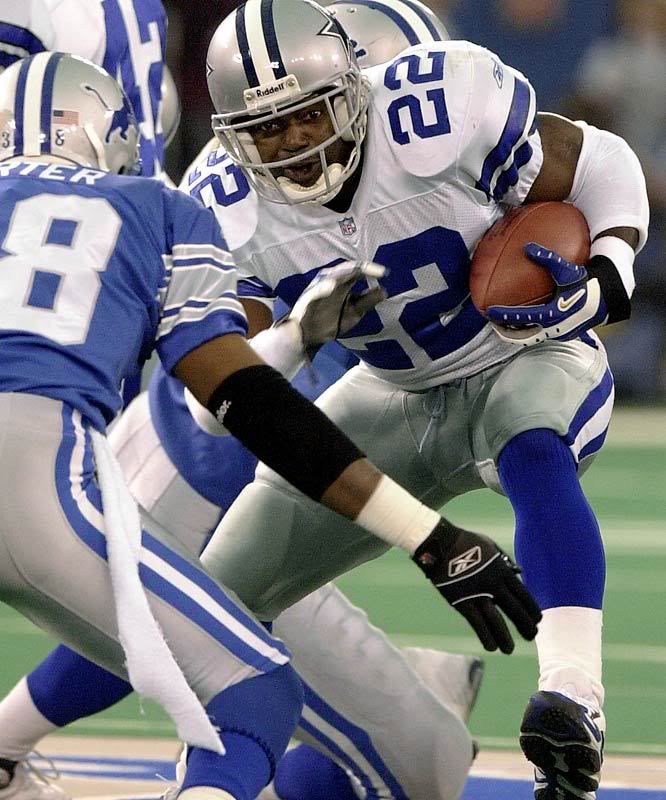
Helps to have guys like this at tailback!


In summary, a lot of I formation teams have moved on to the spread, for various reasons, and haven't forgotten their roots.  There are still some teams that have kept the I as their base, and without a doubt, the I is a very simple offense to install, that has limitless possibilities.

Split Back Veer
The Split Back Veer (SBV) is an offense that has been around since the Houston Veer days and has really been kept alive by the success of Carson Newman University.  However, you still don't see many SBV teams (In the past six years I've faced one, one time in the playoffs).  I must admit, when run well, the SBV offense is a beautiful thing to watch.


Why
Reading people and not blocking them is always easier!  Most option coaches agreed to this statement wholeheartedly.  Being able to run a large variety of options such as midline, inside veer (ISV) and outside veer (OSV) are also big reasons to run the SBV.  The added fact that installing a pro style of run game with isolation, power and trap at your disposable adds to the destructive power of the SBV offense. 

Why Not
Option quarterbacks (QB's) do not always grow on trees, and when running an option oriented offense the QB is the focal point whether you like it or not.  Most SBV coaches agreed that in years where they were grooming young QB's or QB's who struggled to make their reads, records suffered.  Turnovers can also be a major limiting factor to why somebody would want to run the SBV.  Most option offenses do have a tendency to have higher turnover ratios that more traditional offenses do.  The versatility of the RB's was another issue many SBV coaches talked about.  Both halfbacks (HB's) have to be able to run inside the tackles, lead block, and run outside in order to fully open up the offense's potential.  Lacking one of these traits can severely limit the SBV offense. 

In summary the SBV offense is not for everybody. I takes a ton of discipline to run this offense, as does any option oriented offense. The major benefit of SBV over other option offenses is the ability to leave the option for a more pro or traditional style run game whenever needed.

Wing-T
The Wing-T has many versions, but for the purpose of this post, I've lumped them all into one category here.  I'm sure that will tick off many a Hybrid Wing-T coach, and my apologies to all the Wes Elrods out there!


Why
The number one reason for the coaches choosing the Wing-T was deception.  The offense keeps defenses off balance by the use of deception with backfields that criss-cross and traps and counters galore.  The lack of the need for a great feature back was also a big plus for all Wing-T coaches interviewed.  Also, the lack of a dominant OL was considered by many a huge factor when choosing the Wing-T as a base offense.  With the advent of the Shotgun Wing-T, now the offense has been opened up even more than its predecessors.  Another good reason for selecting the Wing-T is that your QB does not have to all-world or even have a great arm for that matter.

Why Not
If you don't have a couple of guards that can run and block in space, you need to look elsewhere.  Most Wing-T coaches agreed, the guards make that offense go, and without a couple of guys that can pull and block in space, the offense becomes bogged down with little options to go to in order to help alleviate the problem.  A lot of Wing-T coaches also agreed that a good TE was needed to really stress defenses.  The TE side of the offense gets a lot of the run game, so the need for a blocking TE is a necessity.  The TE can also hurt defenses in the playaction passing game as well, so the need for a versatile TE was very popular amongst Wing-T coaches interviewed.
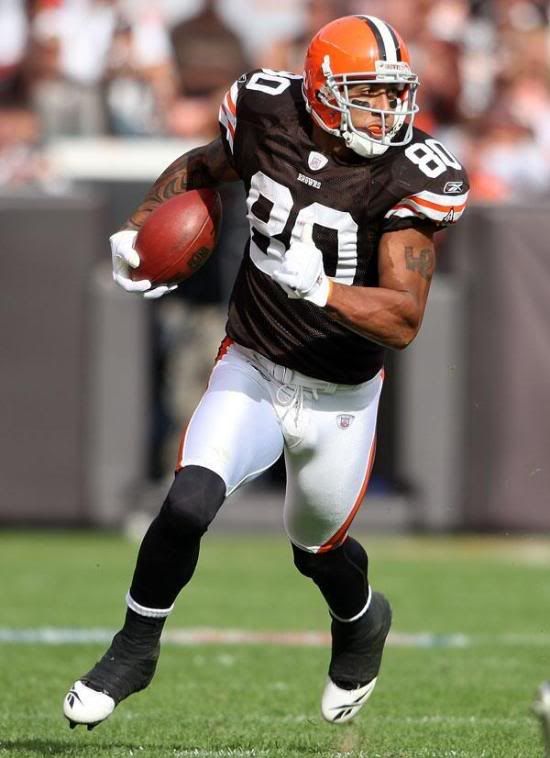


In summary, the Wing-T is as old as the hills and is very popular in high school football (some in college if you look at what Gus Malzahn does).  You need some pulling guards and a decent TE to really be able to do damage with this offense, but the lack of specialization has many coaches going to this format of offense.

Double Wing
The dreaded Double Wing (DW) offense has been at the heart of many turnaround stories, yet is still not all that popular of an offense.  Most coaches look down their noses at an offense that doesn't spread the field anymore than the DW does, however, those that run this offense swear by it, and here's why.


Why
No need for a dominating OL.  With foot-to-foot splits and a large portion of the blocking scheme being angle blocks and double teams, the OL does not have to be this massive road grader that each player can move defenders at will.  Most DW OL are not very big, but they do get the job done.  You also don't need Peyton Manning to QB the DW offense either.  Since this is a run oriented offense, the QB is merely your manager of the game, which is also a quite appealing factor to the DW offense. 

Why Not
You won't go far without a fairly dominating FB, or wingbacks (WB's) that can block.  The FB gets a large bulk of the carries in the offense and is asked to do some blocking, so this player needs to be pretty good in order to help make the offense be as potent as intended.  WB's that will not block can hurt any offense, but the DW having two of these guys that won't block, or struggle blocking is a no-no.  Also, a lot of DW coaches, or coaches who had run the DW offense, said having a QB willing to do more than just hand off was a must.  Many coaches rely on the Super Power Sweep and other run plays that involve using the QB as a lead blocker.  If you have a pre-Madonna QB, this might not be the offense for him, or your team for that matter.  Lastly, the lack of the down field passing game has scared away more than one coach on occasion.  Most DW coaches would argue, you don't need the vertical passing game because playaction is usually so open, and I would tend to agree.

Without a doubt many folks claim the DW to be contrarian, however there are enough successful programs running it for me to disagree.  The need for a solid FB a tough QB and some good blocking WB's is not enough deterrence, in my mind, to outweigh the advantages of running the DW offense.

Flexbone
We all know I like the Flexbone, but the "original spread offense" does have some drawbacks.  Still, there's nothing better than kicking back on the couch on a Saturday afternoon and watching Navy and Georgia Tech. giving people fits running the vaunted Flexbone Triple Option Attack.


Why
As with any option offense when you can read them and not block them you are opening up a whole load of positives.  The lack of a need for a dominant OL is another reason, since there are double and triple teams designed at the point of attack (POA) on most option plays.  Not needing a true "feature back" as some offenses do is also a plus in many coaches minds.  With the potential of four guys getting the ball on any one play, it becomes very difficult for defenses to just "tee-off" on Flexbone teams.  Having an option offense centered around a vertical based passing formation is also a plus.  Sure, very few Flexbone teams are known as great passing teams, however you have to honor any offenses ability to throw the ball when they line up in the Run-N-Shoot base formation! 

Why Not
In Federation governed states, the inability to cut block on the perimeter of the offense is much akin to giving an alcoholic Odoul's.  Why it tastes like and smells like beer, it ain't the real thing!  Watch Navy or Georgia Tech. and you will see perimeter defenders fighting to stay on their feet on every play.  Losing this aspect has really hurt the transition of this offense from college to high school.  The QB and FB are two major components that if lacking in any one of them can severely strain the offenses ability to attack all areas of the defense.  Having a QB that struggles making the reads, and making them coolly can effect the offense drastically.  Slots that will not block or are not good blockers on the perimeter can limit the offense as well.  When these players can cut, the lesser athlete has the upper hand, however with an inability to cut in most states, these slot backs have to be decent blockers in the open field, or the offense simply will not function properly.

I am biased here as I think the Flexbone is the ultimate option offense, however without the a good threat at QB and FB, you really can see the offense fall off.  Also, the inability to cut down field has greatly reduced the Flexbone's presence at the high school level.

Spread
Wow, what do we mean by spread?  Yes, I know there are a myriad of offenses called the "Spread", however I'm talking about any offense that is 1 back, or empty and comes in two distinct varieties.  You have the spread to run, and spread to throw offenses.  I know, there's Air Raid, Tony Franklin, Gus Malahn and Dan Mullen spread offenses out there, but they all do have some things in common, so hear me out.


Why
Puts athletes in space, and makes the defense defend the entire field.  How many times have we heard that?  However, when interviewed, most spread coaches made this statement and it is so very true.  Unlike the DW or Wing-T offenses where a defense can gang up and but eight, nine or even ten defenders in the box, the spread does not allow for this.  The defense must move defenders out to cover the split receivers or risk being outflanked.  How many defenders is also always a question.  Do you go for a full three on two, or four on three advantage, and reduce numbers in the box, or do you keep box players closer to their assignments?  These questions are asked by defensive coordinators (DC's) daily.  Not having to have a feature back was another positive for most spread OC's.  Sure, having a RB that can stress the defense is a must, but not a necessity.  The added danger of being able to run simple option plays such as zone read, dart, midline and ISV have made the spread even more dangerous in recent years.

Why Not
Gotta have a QB.  If you are going to parade around in a passing formation, you eventually are going to have to show you can throw the ball. Even if it's just screens or three step passes, you need to keep the defense honest by being able to throw the football.  If you have a QB that can't do that, or doesn't do it well, then the defense can simply go back to loading the box and stuffing your run game.  Also, if you are a spread option team, look under the Flexbone section, the rules also apply for spread option QB's as well.  These guys must be able to make these decisions in a split second and be correct at least 70 percent of the time, or else the offense will be hampered.  The need for an offensive line that is versatile is a must as well.  Spread OL's, whether they be spread to run, or spread to pass, must be very versatile.  Wing-T, DW and Flexbone OL don't have to be great pass protectors due to playaction being a large part of their passing game.  Many spread teams don't base off the playaciton pass like other offenses do, so having an OL that can protect the QB, but also open up holes in the run game is a must.  Another huge component, often overlooked by coaches making the switch to the spread is the need for athletes on the perimeter of the offense.  Many coaches feel that they can hide a weak OL by being spread and using a lot of screens to get the ball out of the QB's hands quickly.  This works if two things are present.  First the receivers in your offense must be good at blocking, because there's nothing worse than running a screen for a two yard loss.  Second, the athletes you are throwing the ball to, need to be able to do something with it once the ball is caught.  If your best receiver runs a 4.9 forty time, in a league of 4.5's at DB, you might want to reconsider your choice of offense.  For those spread teams than use 11, and 12 personnel, the TE is a critical position to find.  Having a TE in the spread can really create match up issues for the defense, however, not having a threat at TE can be just as dangerous.  Also having a TE that can run and pass block was many coaches key factor to determining what their base personnel would be that year.  One coach I talked to made the comment that in years they had TE's they did more 11 and 12 personnel stuff and when they didn't have these players they went to more 10 and empty personnel formations.  Lastly, having a center who can consistently make a shotgun snap is a must for those spread teams that choose to base out of shotgun formations.


Basically put, the spread ain't for everybody.  You need a decent gunslinger at QB and an OL that is pretty versatile.  Many teams are going the way of the spread, but probably too many are finding out it's not their cup of tea.  If you have the components though, this offense is the hottest ticket in all of football.

Single Wing
The Single Wing (SW) whether balanced or unbalanced is an offense that many coaches claimed died 30 plus years ago.  However, there are many coaches, who would argue that the offense didn't die, it simply went underground to get some major improvements.


Why
The number one reason SW coaches said they ran this offense was the lack of a need for a true QB.  Since any one of the RB's in the SW offense can throw the football, the need for one pure passer becomes obsolete.  Several coaches FOUND the SW offense by not having a QB and switching to the offense to give their kids a chance to compete.  Running a close second behind the first reason to run the SW was the lack of a need for a dominating OL.  Similar to the DW in these regards, the SW uses a lot of double teaming and down blocks which don't take are great amount of skill or strength to execute.  Deception is another major reason to select the SW offense as your vehicle of choice for attacking your opponents.  There is no single more deceptive series in all of football than the spin series in the SW offense.  One coach even remarked that the SW offense was the most deceptive offense in all of football.  Lastly, simplicity of the offense and ease of install was listed by many coaches I talked to.  The offense is not flashy, and even so, it can be deadly when run properly.

Why Not
The reason here is similar to the Wing-T in that you need at least two players who can move and block in space.  The pulling guard, or power guard as some call him and the blocking back (BB) are two players that are at the heart and soul of most SW offenses.  For those that ran the unbalanced version of the SW offense, the need for a dominant blocker at the outside tackle was sometimes mentioned also.  The need for a good center who can make all the snaps needed in the SW offense was also a concern amongst most SW coaches interviewed.  The center need not be a great or dominant blocker, yet he does have to make a wide variety of shotgun type snaps in the SW offense.

The lack of a vertical passing game and the need for two mobile blockers are not enough deterrence to the "lifers" when it comes to the SW.  SW and Flexbone both are almost "cult-ish" when it comes to their offensive style.


Obviously not all offenses fit into the neat little boxes I've put them in.  This is just a somewhat comprehensive list of some popular offenses that I sought out coaches to talk to.  Obviously there are many, many offenses I did not list.  I looked for the most popular ones, and talked to those coaches as I didn't really want to deal with anything "contrarian".  Anyhow, just some side research I was doing over the past few months, thought I'd share.  Season is upon us, no time like now right?!


Duece

Rabu, 06 Juni 2012

More Flexbone Passing


Going with the theme from the last post, here's some drop back stuff that might interest some of you flexbone nuts!  I used to keep things simple and mirror my routes to either side in the flex, however, with the Air Raid craze that has taken over the football landscape, there is a need to evolve the flexbone passing game.  I'm going to show you some simple concepts, both Air Raid and Run and Shoot you can add to your arsenal of weaponry with little teaching time so that your team can still master the triple option.  This concept of teaching time is very important to flexbone coaches, as the attention to the passing game gets lost due to the intricate time needed to spend working and perfecting the reads in the run game.  However, this does not mean you cannot have a good passing game in the flexbone.  I think the concepts you choose need to be limited, very simple, and little to no reads on the part of the QB (he has enough on his plate already). 


Levels
Levels has been written about tons of times (as seen here and here), so I'm not going to go into grave detail on the subject, other than this concept fits the flexbone very well.  Since the flex, is a 2x2 offense in the base formation, the concept is very simple.  There are two sides to the play, the clear out side and the "in" side.  These concepts must be tagged so I would tag the clear out side by simply calling "right" or "left" and that call (ie. Levels Left) would dictate what side of the offense was going to be the clear out side.  To the clear out side, the wide receiver runs a takeoff and the slot will attempt to bust the middle of the coverage wide open.  Here's the key to the success of the play is the clear out side slot's read.  He's the only receiver reading anything, and all he does is "run to daylight".  So if the defense is MOFO (2 high safeties), the slot is going to run a skinny post splitting the safeties.  If the defense is MOFC (1 high safety),  then the slot will run right up the hash mark.  To the "in" side, the inside slot is basically running a five yard "in" route while the wide receiver will run his "in" route at a depth of 10 to 12 yards.  The B back, will release to the call side flats on an arrow route and look for the ball immediately if call side LB blitzes.  Here is the concept drawn up out of the base set:


This would be the route combo vs. MOFO defense


This concept can also be run out of trips as well, with the A and Z backs switching their assignments.  The A back will now clear out the middle of the coverage with the Z back running the five yard "in" route.


Levels from a trips set

NCAA
A real popular route combination is the NCAA route.  As most know, the reason for the naming is because of the commonality of the passing concept in college football.  The NCAA concept is another passing concept that with a few tweaks can be formulated to fit into the flexbone passing game. 

The NCAA routes involve a post, a dig, and two drag routes.  In my mirrored route scheme, I had double post and double drag (shown below) tagged as the "six route".  Any time we wanted to run the NCAA combo, I simply tagged which WR was going to run the dig route.


6 Route
In the play below, I simply called "Y Dig" and you come up with the NCAA concept.


The NCAA concept can also be run from the trips formation as well.  When doing this though, I recommend having the A back convert his route into a wheel route.


Shallow Cross
Shallow cross is another passing concept that works well in the flexbone offense.  This concept is very similar to Levels, but with a few different route combinations.  Again, in 2x2 I recommend tagging the side of the offense that will be running the shallow cross, to keep things from being too confusing for the players.  In the diagram below, you can see the route combinations set up as follows; the Y will run the shallow cross, basically being a drag in front of the LB's.  The slot to the tagged side runs a corner route, 10 yards in depth.  Away from the call side the A back is going to run a five yard "in" route.  The receiver away from the tagged side will run a deep post route.  Shallow cross attacks the bottoms and tops of every zone the defense is playing, thereby making a zone dropping defender's job much more difficult because there is a decision to be made.  Defenders do not like to have choices, they want to react and attack and concepts such as the Shallow cross do not allow defenders to attack, because if they do, then receivers are open.


Shallow Cross from trips
As you can see the concept can be run from either the base set, or the trips set.  Another good "change up" is to switch the assignment of the call side receivers.  Have the Y run a clear out or fade, and have the slot run the crossing route.


Run and Shoot
A lot of people ask me "What routes go best with the flexbone", and my usual answer is "Run and Shoot".  The problem with the shoot is that it is a very time intensive passing attack to install.  Flexbone QB's are not going to have the time to learn the reads and routes that a true RNS QB will have.  However, there are some very good concepts that can be utilized in the drop back passing game (some of these concepts have been discussed before).

I'm not going to elaborate much here as there are some really good reads on RNS passing, what I am going to tell you is that you will not have the time you need to dedicate to truly run RNS passing in it's purest form.  However, you can use the concepts, with some tags to put your team in a position for success with very little coaching time involved.  Check the links below for more RNS passing information.

Understanding the Trickeration
Smart Football's Run and Shoot Articles (Chirs does an excellent job of dumbing down the RNS concepts).
Another concept that works well with the flexbone is spacing.  I won't write much about the spacing concept, as it has been documented quite well over the years as well.  However, I will tell you what I did in the past to make spacing a simple concept that the kids could easily run (this comes from the RNS background of "get open" and is easy to put in).

The zero route in my offense meant exactly that, no route was called and the receivers were to listen for the tags.  Some concepts I ran were comeback, slant, and hitch.  If the zero route was called and then "comeback" was added to it, then the receivers would all run comebacks, as shown below.


Comebacks

Here are the others also:


Hitch


Slant


Out


Looks like we were real original with the names right?!  The coaching point for the flexbone coach using the spacing concept is to teach receivers to move around into open areas once they run their routes (this is not how spacing is taught in "mainstream" passing offenses, there, the receivers run to the voids and make reads on the run much like RNS receivers do).  I only did this the two years I had what I would have considered a "good passer", but it was an easy install, as we had some pretty good wide receivers to go along with our gunslinger that year.


Conclusion
Mirrored routes are great in the flexbone, and an offense can go along way by utilizing this simple concept.  However, if you want more out of your passing game in the flex, I suggest adding one, maybe two of the above concepts.  The reason I would keep that number so low is the fact that any addition to the passing game requires time to install, and any time taken from the run game, in the flexbone, can be dangerous.  Another item to consider is pass protection, as the above concepts are all drop back in nature, the OL will have to protect more than usual.  I think the flexbone OC should have at lease one of these concepts under his arm going into every season (mine was Levels), and then only add some if he feels his team absolutely needs them.

Duece

Rabu, 30 Mei 2012

Flexbone Passing Tidbits


Looks like it's time to throw the ball


Just thought I'd switch over the offensive side here for a moment and drop off some passing tidbits in the flexbone offense.  I know, the flex is mainly a run oriented offense and most coaches want to hear about veer or midline.  However, the flexbone offense can be a very dangerous passing offense as well, when used correctly.  I'm going to build on some concepts I discovered while running this offense, and hopefully you can use these as well.


I constantly here the statement by defensive coaches "The idea that the flexbone can attack with four vertical routes is absurd!".  Well, I'm here to tell you that the four vertical combination is alive and well in the flexbone offense.  Why most coaches who run the flexbone, will tell you that the idea that four verticals is this "magic pill" is somewhat skewed, the threat is always there for this play to be run.  Another one I get is that the defense can be ready for four verticals because the offense can't run motion AND run four verticals.  What I'm going to show you in this post, is how to make four verticals a more deadly weapon, and how you CAN run four verticals with motion, and even run the play off of playaction!


Run and Shoot Concepts
Just because you run for verticals does not mean you have to run the routes straight down the field.  There are many good variations on four verticals you can run that it can be mind boggling.  The Run and Shoot Streak Package is the best way to work on a defense with four verticals.  Heck, you could base your entire passing game off this one concept in the flexbone and not have to burn too much time during the week working on the passing game.  This is jut one way to get more mileage out of your four verticals package in the flexbone offense.

Adding Four Verticals to the Playaction Passing Game
How I stumbled across this concept, was as usual, by accident.  I had a play that I stole from when I worked under a split back veer (SBV) coach, that is shown below.


The A back was usually wide open and a key coaching point was to turn this into a wheel route if the QB didn't throw the ball immediately.  In the flexbone the play looks like this:


Same concept, and I had decent success with it, but the play did not seem to time up as well from the flex as it did from split backs.  I think this was mainly due in part to the motion by the slots not always being as consistent as the alignment of the halfback in the split back system.  Anyhow, one day, I called triple pass with all vertical routes (shown below) and a rookie slot back goes in twirl motion and runs the vertical route away from his normal assignment (blocking outside the B back's block).  Well, needless to say the slot was WIDE OPEN, even though he didn't get the ball thrown to him.  I got in the huddle and told the offense to run the very same play, but this time I told the QB where to throw the ball.  BAM!  It goes for a TD, nobody even touched the backside slot.  It was an easy pitch-and-catch for a touchdown, and the play we simply called "14 Veer Pass Streaks" was born!


All the receivers ran their normal routes, but the backside slot would go in twirl motion (three steps) and on the snap would wheel around and run his vertical route as well.  Now I know what you are thinking "four verticals is supposed to have all four routes on the same level if it is to stress the defense!".  Well, when you add in playaction, this is not the case.  This is an excellent play vs. defenses that like to rotate their coverage and against overaggressive LB's on the backside of plays.  For an interactive look at the play go here, otherwise the play is shown below against a 4-3 defense.


Before


After
 As you can see, the playaction holds the LB's and allows the backside slot to "slip" out undetected by the defense.  The other reason this technique works so well, is that the corner, seeing the backside vertical by the number one receiver, and having saw the slot go in motion, is now playing off of his divider and cannot play the inside throw.  The rotated middle third safety is also out of position and in a quandary.  If he rotates back he runs the risk of leaving the front side vertical open, however if he doesn't rotate back or doesn't see the backside vertical, then the back side slot is wide open. 

The benefits of this play are two-fold.  First, it can be a serious home run for the offense, especially if you don't overrun it during the course of a season.  Secondly, this play HAS to hold either the backside safety, which will keep the offense from jumping your motion, or it will hold the backside LB, opening up the triple option once again (which is EXACTLY what every play in the flexbone offense is designed to do).  This is a great play, that is "cheap" to add when it comes to time to install and develop this play.  Who knew when one backup slot did the wrong thing, it would lead into a very dangerous weapon for the flexbone offense?!

Playaction Four Verticals and the Trips Formation
Probably one of the most under used concepts in the four vertical scheme is to throw playaction from the Trips formation.  If we remember the Veer "Q" play, this is a deadly double option out of the Trips formation that requires very little time to adapt to your offense.  Playaction off of this look is no different, in that it is a very simple addition to the offense, that requires little to no new teaching time to install.


Playaction Screens
I have always been a big fan of the screen game.  Whether it be quick screens, running back screens, or simply a jailbreak screen, screens have always been a big part of my passing game.  Here are some that I have run off of playaction that are some pretty nasty little compliments to the flexbone running game.

Triple Pass Jailbreak
The jailbreak screen takes a bit of time to implement, but when you run it off of playaciton, you can really gut a defense's backside.  Most defenses are hell bent on getting players across the midline to stop the triple option and this is their downfall, especially those that rotate coverage.


I particularly liked to use this play when I had WR's that could move in space.  The QB sells the triple and drops off on the pass and instead of his normal one and a half steps off the mesh, he takes another one and a half steps and turns and delivers the football to the backside receiver.  The blocks by the front line do not have to be devastating, but the key coaching point here is to force the defender into an outside release (which is why this play is best run to the three and five side of the defense).  Anyhow, again, not a huge time intensive play  to add to your playaction passing game.

Screens off Rocket Toss
Rocket toss is one of the toughest plays in all of football to defend because of how quickly the play attacks the flank of the defense.  In order to stop the play, the defense must pursue, and pursue quickly.  In order to slow this pursuit down, use the rocket screens shown here.

The first screen is a screen to the B back off rocket action.  This is a flow screen that works to counteract the overreaction by the defense to the rocket.


Another good one off of the Waggle play (off Rocket action) is the throwback screen to the slot.  Here the QB will sell Rocket, then roll to set up Waggle.  Once clear of the "box" he then turns and throws back to the slot that went in motion.  Talk about having the defense's head spinning!


These are just a few ways you can "spice" up your passing game in the Flexbone offense.  The book should show more of these and go into greater detail on playaction passing in the Flexbone.  Anyhow, I'd written about defense enough, thought I would get into some of the offensive side of the football for a while.


See, I can be offensive

Take care,

Duece

Jumat, 27 Januari 2012

"The Most Hated Man in West Texas"...and other news...


Best headline I ever saw!  Craig James is running for U.S. Senate, and it looks like Horatio Sands would have a better chance of winning a marathon than James winning a seat in Congress.  I find this a fitting scenario given James track record with legendary Air Raid coach Mike Leach.  I will not go into Leach's book, or the scandal, as most know what this is all about.  Obviously, Leach has moved on and is surely going to do well at Washington State.  The future of Craig James looks bleak though, and I can't say I didn't smile a bit when I read this headline.


Living the good life...
 We've all had those dad's that just think their son is the greatest thing since the invention of the DVR.  James is no different, yet he's worse in many ways, because of the grand scale on which James portrayed this annoying habit.  "Helicopter dads" are awful, but when they are someone the scale that James is, I'm sure it can be quite disturbing.  Although I don't necessarily condone Leach for what he did, I do like the fact he stuck to his guns, and now he can look both Craig James and the trustees at Texas Tech. University in the eye and say "I told you so!".  That's a very fitting end to this saga in my humble opinion!


Well, in other news those that are wondering about the progress with the book, all the chapters are written!  I still have some illustrations and editing to do, but things are moving along nicely.  I will keep you updated as things progress, so keep those fingers crossed.


I'm sure Kyle Williams doesn't open his mail very much these days, but this was a very heartwarming story about the letter one young man decided to write the belittled football player.  Sure wish more people thought this way...death threats...really?


Speaking of the 49'ers could coach Jim Harbaugh get any hotter right now?  I'm very impressed with what he's done, and I think the Bay Area should be ready for some familiar "January football" once again.  Here's an article by Brophy that shows Harbaugh doing what he does best...coach the quarterbacks.


These days could be closer than you think!

Coach Hoover continues his dissection of the Fire Zone blitzes here.  Good article buddy, keep em' coming!

Here's a good post by Student of the Game, piggybacking an earlier post I had on Coach Paul Johnson's "If/Then" methodology of calling plays in the Flexbone offense. 

I just got my first "moderator" gig over at the Single Wing Forum.  This is a great forum, well thought out, clean and easy to use.  For you "single wingers" come on over and check this place out.  I think you'll like the format, and hey, I'm one cool ass moderator! 


Well, I've joined up with Full Throttle Football and you can read some of my articles over there if you'd like to.  Full Throttle is a very neat site with excellent articles, video and instruction.  You can spend hours on that one site alone, so check it out!

Direct Snap Football has a nice little piece on a shotgun running game some of you "spread" guys might be into.  This is a good site for anything direct snap and single wing.  Check out Direct Snap Football for more information on the spread and single wing offenses.

I found this site while perusing the Huey board the other day.  A very well thought out site with good illustrations and video on the Flexbone offense. 

Anyhow, I will continue with more 46 Nickel stuff here in the near future, so be patient with me!!!!

Duece

Kamis, 03 November 2011

Flexbone and the B back-The Running Game


After our first installment on the B back, we now know what we need for the position, but we now need to give him a job description.  I do this with all positions whether offense, defense, or special teams.  So, what is the B back's job description?  Well, the B back's main role in the offense is the dive back on the triple option.  A typical fullback is usually not utilized as a runner, and you will find that blocking is not a top priority of the Flexbone B back.  Being able to run option plays such as midline, inside veer (ISV) and outside veer (OSV) are essential (again this goes back to the first post on what we are looking for in our B back).  The B back is not a "driller" either, he must be able to cut back and make quick cuts on the zone dive play.  I have also utilized the B back as an outside runner on option plays as well.  Lastly the B back does need to block some.  He will be called on a lot in pass protection as he makes up the 6th in our 6 man protection schemes.  He's also the C gap blocker on sprintout passes as well.  The B back, for me, has also needed the ability to catch passes as I run the waggle off the Rocket toss play as well as middle and off tackle screens to the B back.  As you can see, the B back in the Flexbone must be a pretty versatile player.  Let's look closer and some of the common run plays the B back is involved in, and also plays used to keep the B back involved in the game.


Option Runs
The B back is involved in several of the Flexbone option runs.  These include the following, midline, ISV, OSV and speed option.  For those that run trap and trap option, the B back is obviously a part of this as well. 

Inside Veer/Triple Option
The B back is the crux of the triple option.  He is the man that you must get established to make it all go.  The defense must honor the give to the B back.  Listen to any good circle of defensive coaches, and you will hear the phrase "You must take away the dive".  Nobody wants to get beat by a running back (RB) pounding it up the middle on you all night, well, this is EXACTLY what the B back is for.  Quickness and toughness are essential to any B back if they are going to helm make the best play in football go!


Midline
Midline, is my favorite play in all of football.  I don't believe there is another play out there that hits with the quickness of the  midline out of the Flexbone offense.  This is where the B back's quickness comes into play.  Toughness is also shown here, as the B back will be running right into the teeth of the defense.

Outside Veer
Though not a staple of many Flexbone offenses, the OSV is one the B back must be able to run.  With the modern day twist on defense switching back to that of the odd front, the need is there for a TE flank and the ability to run OSV putting the defense in conflict.  The B back's role on OSV compared to ISV is no different, especially the way I run it (for a later post, email me to discuss if you'd like).  Nonetheless, the B back still has to utilize his strength and quickness when running the OSV, just as he does with midline and the ISV.


Speed Option
Johnathan Dwyer at Georgia Tech made a living on the speed option, due in part to him being such a fantastic athlete.  If you've watched Paul Johnson's teams as long as I have, you know the speed option is a great play, when your B back is a home run hitter.  A few years back I had a B back that could fly, he was small but super explosive and ran the ball well inside or out. I dusted of the speed option, to a tune of a 7.7 yard per average carry on that single play alone and 9 touchdowns that year.  Our QB was a good runner too, so it was truly a double option threat!  If your B back is more of a straight-ahead power runner, then the speed option might not be for you.  However, if you think your B back would do good out on the edge of the defense, I suggest you run this complimentary play.


Complimentary Plays
Any good defense is going to take away the B back at some point during the season.  Having complimentary plays is what keeps the B back involved in the run game, and a viable threat when running the triple option.  I'm going to list some plays you can use to help keep the B back involved in the run game when the defense is taking him out of the triple option equation.

Zone Dive
The zone dive is the play that is designed to keep the B back involved in the run game when the defense has done a good job of taking away the dive portion of the triple option.  Very simply put, the zone dive is the Flexbone's inside zone play.  There is no read, and all the OL zone block, including the PSSB.  The BSSB goes in motion just like the regular triple option play and runs his normal pitch course.  The B back will take a flat step, instead of a straight ahead attack step as he does on the triple option.  This is so the B back can get a good read on the playside guard's (PSG's) block.  Once this "read step" has been made the B back squares his shoulders and either stays on track or cuts back, but must NEVER bounce to the outside.  The QB will bring the ball back as deep as he can so the ball is in the B back's hands as long as possible to help with the B back's read on the defense.  This also helps with the illusion of the play being the standard triple option play.  Once the QB disconnects with the B back, he then carries out his option fake. 


Iso
Iso is a play I got from the University of the Cumberlands staff about three years ago.  It is zone dive, and OSV wrapped into one package for them.  They have used it with great success in recent years, and I took it and completely removed the Zone Dive from my playbook.  Iso blocking was something my players know from running the counter-iso play.  So, there was no new teaching for anybody on the offense.  The only new teaching came from the footwork of the B back, and the QB not having to read anyone.  The QB delivers the ball as deep as he can to the B back, the exact same way the zone dive is run.  Once the ball is seated, then the QB and backside slot (BSSB) carry out their option fake.  The playside slot (PSSB) folds underneath and blocks first LB to the playside.  The OL is iso blocking to the playside and scooping to the backside.  The only difference from ISV to the Iso play is the first step of the B back. Instead of attacking downhill, the B back will take a lateral step, and then attack the outside hip of the playside guard (PSG).  This allows the B back to read the blocks and be prepared to make a cut quickly, just as the Zone Dive does, but without having to teach zone blocking.  This is a very good play, and I recommend that you add it to your playbook...TODAY!!!!


Trap
I've never been a big proponent of trap or trap option, however it is a part of many Flexbone schemes.  My guards have always been the large immovable objects on my OL, and not usually known for pulling well, so I've strayed away from running trap or trap option.  If you have the guards to do so, and you run a lot of midline, I suggest adding the trap in, especially if you are facing a hard to read three technique.  The trap puts a "squatting" or "sitting" three technique in conflict as with the trap block it automatically declares the tackle to be a B gap player.  Again, if you've got the guards, and you run a lot of midline, I suggest adding trap to your repertoire.


Draw
A great play off sprintout action is the sprint draw.  In years where my B back was more of a rushing threat than my QB, I have used this very play.  It's very successful, and can really crease the defense if you are good at sprintout passing from the Flexbone.  The B back sets up as if to block on the play, but then quickly slashes back running to daylight.  I have seen huge gains off this play from both the B back and the QB.  Even though it's not known as a passing offense, a good draw play is a must in any playbook.

There are many other ways to keep the ball in the hands of the B back, you can use screens and quick passes to him coming out of the backfield.  The plays listed above are ones you can use to keep your play maker involved in the game, even though the defense is taking him away from the bread and butter option plays.  You can also use the complimentary plays to hurt over-aggressive defenses who are being unsound against your option plays.  This ability to keep the defense honest, will allow you to run your base triple option plays successfully.


I certainly hope you enjoyed the installment on one of the key elements to any Flexbone triple option attack...the B back!

Duece
Selasa, 01 November 2011

Flexbone and the B back, Teaching the Stance and Start


Ok, so you've got your B back's, now how to teach them to do what you need them to do...get off the ball quick and run to daylight based on quick reads.  So how to do this?  It's not complicated, but like anything in football, you must start off with good fundamentals, or the rest of the teaching will be flawed.

Alignment
The B back aligns directly behind the QB with his down hand approximately six feet from the heels of the QB.  I use this rule, because it's a shorter distance to estimate for the B back.  A lot of coaches say put the heels of the B back at five yards from the tip of the ball, I'd rather use the hand method as all of this is "seen" by the B back.  The key element here is that the mesh happens FAST.  The QB cannot be waiting on the B back in the mesh, or "bubbling" around the QB in the mesh, as this causes problems with the pitch phase of the triple option. 

Stance
The stance of the B back is the critical part of being able to utilize your players assets you found utilizing the drills we talked about in an earlier post.  The stance of the B back is typical to that of a defensive end in a four man front.  To start, the B back has his feet shoulder width or even slightly narrower.  They can drop their off foot back as well if need be.  Now, I've even had them get in a four-point stance if they felt more comfortable doing so.  Not what I'd do every time, but there are times when a B back wants to "pop" up out of his stance rather than exploding forward that going to the four-point will help this.  Anyhow, once the feet are where you want them, have the player rock forward and put a large majority of his weight on his down hand  The buttocks should be higher than the head and the back is straight.  Due to arm length, some kids buttocks will not be above their heads, it will be parallel with it, and this is ok.  What you don't want is a kid that has his buttocks below his head as this will make him "pop" up, or become what I always labeled a "Jack in the Box".  Anyhow, you have just effectively taught the prototypical B back stance! 


Start
The start is very important to the B back, just like any other position in football.  The B back will use a short six inch power step on the snap, stepping in the direction of the play.  During this step the shoulders will slightly elevate, but hey should not come straight up.  Once the first step is in the ground, the second step will be utilized to gain ground toward the point of attack.  I always used the middle of the guard as the aiming point on the inside veer (ISV), so that was where we were pointed once the second step was in the ground.  Sometimes you had to correct B backs that were going forward and on the second step changing direction to get in the mesh.  This is not good as the QB can bump into or connect too early with the B back, thereby making the play not as effective.  The B back and QB should mesh as seamlessly as possible.

In the Mesh
Once the B back is in the mesh, or if you are a no mesh team, once he's on his veer path, the B back's pads should remain low, rising no more than 12 inches or so from their original position.  The B back makes the traditional pocket that running back's (RB's) do with his inside arm up.  In a ride and decide system, the B back will feel the QB seat the ball in his belly.  He MUST NOT clamp down at this point, however as the QB is still in the process of making his dive read.  Once the B back feels the QB apply pressure to the B back's abdomen (this means the QB has straightened his arm and has stopped the riding process), the B back must clamp down on the football.  In the milliseconds while the read is happening the B back should be reading the guard's block to his side, especially if running the ISV to a three technique.  This allows the B back to cut or run to daylight when the QB gives the football.  Once the football is secure, the B back then makes his cut and gets in what I call the "crease".


If you are a no mesh, or Point Method guy, the B back, while on his crease path, makes his normal pocket for the QB.  Once he feels the football, he clamps down on it immediately as he knows if the QB leaves the ball out there, by the time the B back gets the football, it's his.  The same reads apply for the B back in that he should be reading the guard's block as to where to cut to once he has the football given to him.

In both mesh and no mesh systems, if the QB does not give the ball, the B back should be in a great position to absorb the hit coming from the handoff key (HOK).  The back should look to take this tackle on low and hard, and even step into the tackle if possible.  This will keep the HOK occupied so he cannot slip off and play both the QB and the B back.  The B back should keep his arms in front of him, as though he got the handoff and should barrel ahead into the tackle.  If the QB misreads the play, the B back should run through the crease and look for the first opposite colored jersey he sees and block it.


Running with the Football
Once the ball is given, the B back is not a prototypical runner at this point.  He must make his cut and stick with his decision.  "Dancers" are not allowed at the B back position.  These guys must be able to make a quick cut and go.  This is less imperative if you do not run ISV at a three technique as more than likely, the B back will be able to stay on track, and run the crease.  One effective technique on both ISV and midline is to have the B back "bend" back in behind the HOK, as there is a natural void there due to the HOK not squeezing down to take the B back. 


Please...no dancers...

The B back should keep two hands on the football at all times when in traffic.  If he breaks out, then he can tuck the ball away with one hand.  This is important as the B back's first five to ten yards are going to be in the belly of the defense where there are plenty of opportunities to get hit and fumble the football.  Another coaching point is the B back NEVER looks back!  If he feels the QB pull the ball and knows it was a fumble, he must keep running.  This does two things, it gets a body out of the way so the QB can find and jump on the football, and it looks, to the HOK, like the B back still has the football.  This part is sometimes easier said than done, but by explaining to your B back's they are like a missile on every play, they should get the idea that they are to not look back once they take off.

Problems and Coaching Points
  1. Mesh is too slow/QB bubbling off mesh- Move the B back up closer to the QB.  Too close and you don't have a good mesh angle.  If you have to move the B back more than a foot, he should be playing offensive tackle. 
  2. Mesh too quick, QB not getting a good read- While I argue this is a moot point and your QB should learn to read it quicker, you can back the B back up a bit, but again, one foot is the mark.  If moving him back doesn't work, find you a new QB.
  3. B back bending into the mesh- This happens a lot with younger, more inexperienced players for some reason.  Look at the B back's feet and make sure he's stepping with his playside foot first in the direction of the aiming point.  Sometimes younger players rely on their dominant hand or foot and you will find that they tend to run the play good in one direction but not the other.  If this is the case, rep your back doing it do his weak side twice as much to his strong side.
  4. Ball being placed too low on B back's body- This comes from your B back running upright.  One good place to rep your B back's are in the linemen chutes (if you have them).  This teaches them to come out low and hard, with the best application being a "battleground chute". 
  5. Fumbles in the mesh- This problem can go two ways, as it could be your QB.  The first thing to look at is, does the B back seem to be pulling or tugging at the ball in the mesh.  If so, he's not understanding what he's supposed to be feeling.  Mesh drill is a good way to work on this, but slow it down if having problems.  Let the B back know it's going to be a give or a pull and have the QB follow your instructions so they can both feel how each is supposed to feel. 
  6. B back off track- This happens quite a bit, even when utilizing a fire hose for your linemen splits.  The best thing is to build a "Mesh Board" as I call it.  It's two pressure treated 2x6's made in a V.  They are attached at the V with a bolt, two washers and a wing nut (for easy removal and storage).  About midway up is a piece of chain, measured to the right length to accommodate your linemen's splits.  These boards are only four feet long and when laid on the ground form a "V".  The B back places his hand in the middle of the V (see mesh drill video above) and runs along the board to stay on course. 
  7. B back stops on contact- There are going to be misreads, or even close reads where the B back is going to get hit or partly hit by the HOK.  If the B back is stopping on contact, work the gauntlet drill continuously or work the veer drill with an offensive tackle and defensive linemen to simulate "live" situations.  This may also be the player, and you may need to reevaluate whether or not this player is suited to play B back.
The B back's initial alignment, stance and get off are imperative to the success of the triple option in the Flexbone offense.  Do not leave these details alone, and "hope" they will get coached.  If you see problems arising, work on them immediately as the success of your offense hangs in the balance!


For the next installment, I will discuss the B back and his role in the running game in the Flexbone offense.


1. Fear the Veer...check!

Duece