Tampilkan postingan dengan label mike leach. Tampilkan semua postingan

Minggu, 29 Juli 2012

Why or Why Not? Choosing the Right Offense


Been a while since my last post and for great reason.  I've been doing some research on various offenses and the nuances surrounding each of these offenses.  As you can imagine, this research can by no means cover EVERY offense out there, so what I did was to group many of these offenses into categories and go from there.  What I asked coaches to share with me was why should I run the offense you run and then why shouldn't I.  What I got was a deep look in many offensive coordinator's (OC's) heads as to what they felt made their offenses tick.  So, let's take a look at the research and dig into the whys and why nots!

Pro I
The pro I has been around for many years, and is a very simple offense to run and install.  Finding I formation coaches to talk about this offense didn't take too long, here's what the consensus was on the Pro I offense.


Why
Why the I formation?  Well, the I can be many things to many people.  There are I formation teams that zone block and others that man block, or even use a version of Wing-T blocking in their I formations.  The I formation is a great way to feature a stud running back (RB) at the tailback (TB) position.  Playaction is a great tool the I offense utilizes to keep the pressure off this stud RB.  The I offense can also add the option game very easily to its repoitre.  Although the I formation has fallen somewhat by the wayside with the spread offense gaining so much popularity here lately, you can still see even spread teams using the I formation when they need the tough yards, or in goal line situations.

Why Not
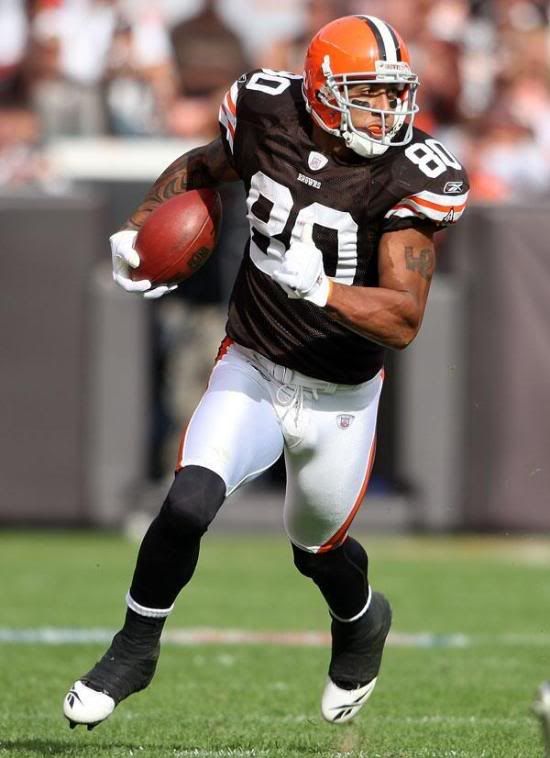
Unanimously agreed upon was lack of a real threat at TB.  The offense just doesn't do much, unless you run option, without a first rate TB.  A good tight end (TE) is a must as well.  The TE, and the playaction passing game are a major way many I formation teams take pressure off the RB position.  Also, having a good lead blocking fullback (FB) was considered by many coaches as a must.  Most I formation coaches interviewed didn't really ask the FB to be much of a runner, but he had to be willing to lead block.  Also, an offensive line (OL) who can really move people is a must, because the I formation is not the greatest at deception, and if you don't run the option out of it then all players must be accounted for in the blocking scheme. 
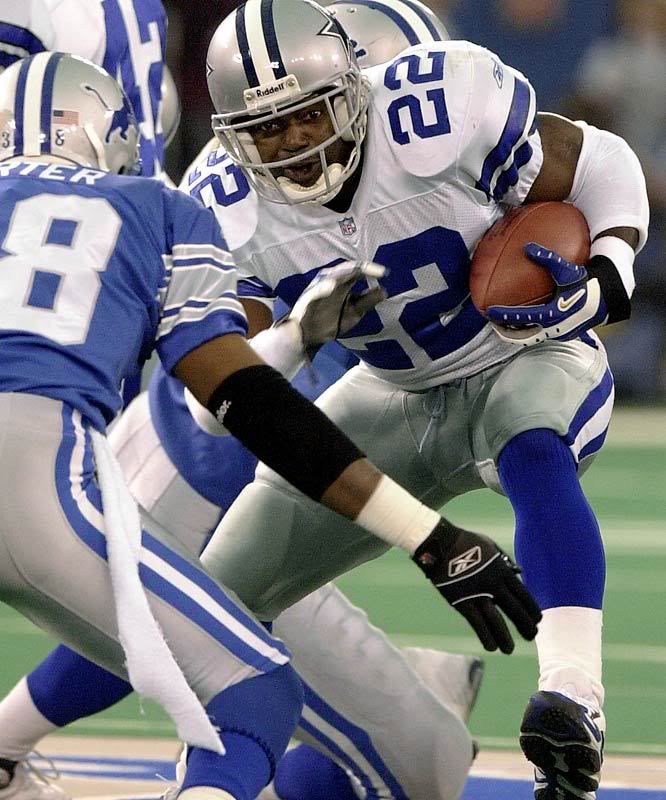
Helps to have guys like this at tailback!


In summary, a lot of I formation teams have moved on to the spread, for various reasons, and haven't forgotten their roots.  There are still some teams that have kept the I as their base, and without a doubt, the I is a very simple offense to install, that has limitless possibilities.

Split Back Veer
The Split Back Veer (SBV) is an offense that has been around since the Houston Veer days and has really been kept alive by the success of Carson Newman University.  However, you still don't see many SBV teams (In the past six years I've faced one, one time in the playoffs).  I must admit, when run well, the SBV offense is a beautiful thing to watch.


Why
Reading people and not blocking them is always easier!  Most option coaches agreed to this statement wholeheartedly.  Being able to run a large variety of options such as midline, inside veer (ISV) and outside veer (OSV) are also big reasons to run the SBV.  The added fact that installing a pro style of run game with isolation, power and trap at your disposable adds to the destructive power of the SBV offense. 

Why Not
Option quarterbacks (QB's) do not always grow on trees, and when running an option oriented offense the QB is the focal point whether you like it or not.  Most SBV coaches agreed that in years where they were grooming young QB's or QB's who struggled to make their reads, records suffered.  Turnovers can also be a major limiting factor to why somebody would want to run the SBV.  Most option offenses do have a tendency to have higher turnover ratios that more traditional offenses do.  The versatility of the RB's was another issue many SBV coaches talked about.  Both halfbacks (HB's) have to be able to run inside the tackles, lead block, and run outside in order to fully open up the offense's potential.  Lacking one of these traits can severely limit the SBV offense. 

In summary the SBV offense is not for everybody. I takes a ton of discipline to run this offense, as does any option oriented offense. The major benefit of SBV over other option offenses is the ability to leave the option for a more pro or traditional style run game whenever needed.

Wing-T
The Wing-T has many versions, but for the purpose of this post, I've lumped them all into one category here.  I'm sure that will tick off many a Hybrid Wing-T coach, and my apologies to all the Wes Elrods out there!


Why
The number one reason for the coaches choosing the Wing-T was deception.  The offense keeps defenses off balance by the use of deception with backfields that criss-cross and traps and counters galore.  The lack of the need for a great feature back was also a big plus for all Wing-T coaches interviewed.  Also, the lack of a dominant OL was considered by many a huge factor when choosing the Wing-T as a base offense.  With the advent of the Shotgun Wing-T, now the offense has been opened up even more than its predecessors.  Another good reason for selecting the Wing-T is that your QB does not have to all-world or even have a great arm for that matter.

Why Not
If you don't have a couple of guards that can run and block in space, you need to look elsewhere.  Most Wing-T coaches agreed, the guards make that offense go, and without a couple of guys that can pull and block in space, the offense becomes bogged down with little options to go to in order to help alleviate the problem.  A lot of Wing-T coaches also agreed that a good TE was needed to really stress defenses.  The TE side of the offense gets a lot of the run game, so the need for a blocking TE is a necessity.  The TE can also hurt defenses in the playaction passing game as well, so the need for a versatile TE was very popular amongst Wing-T coaches interviewed.


In summary, the Wing-T is as old as the hills and is very popular in high school football (some in college if you look at what Gus Malzahn does).  You need some pulling guards and a decent TE to really be able to do damage with this offense, but the lack of specialization has many coaches going to this format of offense.

Double Wing
The dreaded Double Wing (DW) offense has been at the heart of many turnaround stories, yet is still not all that popular of an offense.  Most coaches look down their noses at an offense that doesn't spread the field anymore than the DW does, however, those that run this offense swear by it, and here's why.


Why
No need for a dominating OL.  With foot-to-foot splits and a large portion of the blocking scheme being angle blocks and double teams, the OL does not have to be this massive road grader that each player can move defenders at will.  Most DW OL are not very big, but they do get the job done.  You also don't need Peyton Manning to QB the DW offense either.  Since this is a run oriented offense, the QB is merely your manager of the game, which is also a quite appealing factor to the DW offense. 

Why Not
You won't go far without a fairly dominating FB, or wingbacks (WB's) that can block.  The FB gets a large bulk of the carries in the offense and is asked to do some blocking, so this player needs to be pretty good in order to help make the offense be as potent as intended.  WB's that will not block can hurt any offense, but the DW having two of these guys that won't block, or struggle blocking is a no-no.  Also, a lot of DW coaches, or coaches who had run the DW offense, said having a QB willing to do more than just hand off was a must.  Many coaches rely on the Super Power Sweep and other run plays that involve using the QB as a lead blocker.  If you have a pre-Madonna QB, this might not be the offense for him, or your team for that matter.  Lastly, the lack of the down field passing game has scared away more than one coach on occasion.  Most DW coaches would argue, you don't need the vertical passing game because playaction is usually so open, and I would tend to agree.

Without a doubt many folks claim the DW to be contrarian, however there are enough successful programs running it for me to disagree.  The need for a solid FB a tough QB and some good blocking WB's is not enough deterrence, in my mind, to outweigh the advantages of running the DW offense.

Flexbone
We all know I like the Flexbone, but the "original spread offense" does have some drawbacks.  Still, there's nothing better than kicking back on the couch on a Saturday afternoon and watching Navy and Georgia Tech. giving people fits running the vaunted Flexbone Triple Option Attack.


Why
As with any option offense when you can read them and not block them you are opening up a whole load of positives.  The lack of a need for a dominant OL is another reason, since there are double and triple teams designed at the point of attack (POA) on most option plays.  Not needing a true "feature back" as some offenses do is also a plus in many coaches minds.  With the potential of four guys getting the ball on any one play, it becomes very difficult for defenses to just "tee-off" on Flexbone teams.  Having an option offense centered around a vertical based passing formation is also a plus.  Sure, very few Flexbone teams are known as great passing teams, however you have to honor any offenses ability to throw the ball when they line up in the Run-N-Shoot base formation! 

Why Not
In Federation governed states, the inability to cut block on the perimeter of the offense is much akin to giving an alcoholic Odoul's.  Why it tastes like and smells like beer, it ain't the real thing!  Watch Navy or Georgia Tech. and you will see perimeter defenders fighting to stay on their feet on every play.  Losing this aspect has really hurt the transition of this offense from college to high school.  The QB and FB are two major components that if lacking in any one of them can severely strain the offenses ability to attack all areas of the defense.  Having a QB that struggles making the reads, and making them coolly can effect the offense drastically.  Slots that will not block or are not good blockers on the perimeter can limit the offense as well.  When these players can cut, the lesser athlete has the upper hand, however with an inability to cut in most states, these slot backs have to be decent blockers in the open field, or the offense simply will not function properly.

I am biased here as I think the Flexbone is the ultimate option offense, however without the a good threat at QB and FB, you really can see the offense fall off.  Also, the inability to cut down field has greatly reduced the Flexbone's presence at the high school level.

Spread
Wow, what do we mean by spread?  Yes, I know there are a myriad of offenses called the "Spread", however I'm talking about any offense that is 1 back, or empty and comes in two distinct varieties.  You have the spread to run, and spread to throw offenses.  I know, there's Air Raid, Tony Franklin, Gus Malahn and Dan Mullen spread offenses out there, but they all do have some things in common, so hear me out.


Why
Puts athletes in space, and makes the defense defend the entire field.  How many times have we heard that?  However, when interviewed, most spread coaches made this statement and it is so very true.  Unlike the DW or Wing-T offenses where a defense can gang up and but eight, nine or even ten defenders in the box, the spread does not allow for this.  The defense must move defenders out to cover the split receivers or risk being outflanked.  How many defenders is also always a question.  Do you go for a full three on two, or four on three advantage, and reduce numbers in the box, or do you keep box players closer to their assignments?  These questions are asked by defensive coordinators (DC's) daily.  Not having to have a feature back was another positive for most spread OC's.  Sure, having a RB that can stress the defense is a must, but not a necessity.  The added danger of being able to run simple option plays such as zone read, dart, midline and ISV have made the spread even more dangerous in recent years.

Why Not
Gotta have a QB.  If you are going to parade around in a passing formation, you eventually are going to have to show you can throw the ball. Even if it's just screens or three step passes, you need to keep the defense honest by being able to throw the football.  If you have a QB that can't do that, or doesn't do it well, then the defense can simply go back to loading the box and stuffing your run game.  Also, if you are a spread option team, look under the Flexbone section, the rules also apply for spread option QB's as well.  These guys must be able to make these decisions in a split second and be correct at least 70 percent of the time, or else the offense will be hampered.  The need for an offensive line that is versatile is a must as well.  Spread OL's, whether they be spread to run, or spread to pass, must be very versatile.  Wing-T, DW and Flexbone OL don't have to be great pass protectors due to playaction being a large part of their passing game.  Many spread teams don't base off the playaciton pass like other offenses do, so having an OL that can protect the QB, but also open up holes in the run game is a must.  Another huge component, often overlooked by coaches making the switch to the spread is the need for athletes on the perimeter of the offense.  Many coaches feel that they can hide a weak OL by being spread and using a lot of screens to get the ball out of the QB's hands quickly.  This works if two things are present.  First the receivers in your offense must be good at blocking, because there's nothing worse than running a screen for a two yard loss.  Second, the athletes you are throwing the ball to, need to be able to do something with it once the ball is caught.  If your best receiver runs a 4.9 forty time, in a league of 4.5's at DB, you might want to reconsider your choice of offense.  For those spread teams than use 11, and 12 personnel, the TE is a critical position to find.  Having a TE in the spread can really create match up issues for the defense, however, not having a threat at TE can be just as dangerous.  Also having a TE that can run and pass block was many coaches key factor to determining what their base personnel would be that year.  One coach I talked to made the comment that in years they had TE's they did more 11 and 12 personnel stuff and when they didn't have these players they went to more 10 and empty personnel formations.  Lastly, having a center who can consistently make a shotgun snap is a must for those spread teams that choose to base out of shotgun formations.


Basically put, the spread ain't for everybody.  You need a decent gunslinger at QB and an OL that is pretty versatile.  Many teams are going the way of the spread, but probably too many are finding out it's not their cup of tea.  If you have the components though, this offense is the hottest ticket in all of football.

Single Wing
The Single Wing (SW) whether balanced or unbalanced is an offense that many coaches claimed died 30 plus years ago.  However, there are many coaches, who would argue that the offense didn't die, it simply went underground to get some major improvements.


Why
The number one reason SW coaches said they ran this offense was the lack of a need for a true QB.  Since any one of the RB's in the SW offense can throw the football, the need for one pure passer becomes obsolete.  Several coaches FOUND the SW offense by not having a QB and switching to the offense to give their kids a chance to compete.  Running a close second behind the first reason to run the SW was the lack of a need for a dominating OL.  Similar to the DW in these regards, the SW uses a lot of double teaming and down blocks which don't take are great amount of skill or strength to execute.  Deception is another major reason to select the SW offense as your vehicle of choice for attacking your opponents.  There is no single more deceptive series in all of football than the spin series in the SW offense.  One coach even remarked that the SW offense was the most deceptive offense in all of football.  Lastly, simplicity of the offense and ease of install was listed by many coaches I talked to.  The offense is not flashy, and even so, it can be deadly when run properly.

Why Not
The reason here is similar to the Wing-T in that you need at least two players who can move and block in space.  The pulling guard, or power guard as some call him and the blocking back (BB) are two players that are at the heart and soul of most SW offenses.  For those that ran the unbalanced version of the SW offense, the need for a dominant blocker at the outside tackle was sometimes mentioned also.  The need for a good center who can make all the snaps needed in the SW offense was also a concern amongst most SW coaches interviewed.  The center need not be a great or dominant blocker, yet he does have to make a wide variety of shotgun type snaps in the SW offense.

The lack of a vertical passing game and the need for two mobile blockers are not enough deterrence to the "lifers" when it comes to the SW.  SW and Flexbone both are almost "cult-ish" when it comes to their offensive style.


Obviously not all offenses fit into the neat little boxes I've put them in.  This is just a somewhat comprehensive list of some popular offenses that I sought out coaches to talk to.  Obviously there are many, many offenses I did not list.  I looked for the most popular ones, and talked to those coaches as I didn't really want to deal with anything "contrarian".  Anyhow, just some side research I was doing over the past few months, thought I'd share.  Season is upon us, no time like now right?!


Duece

Rabu, 06 Juni 2012

More Flexbone Passing


Going with the theme from the last post, here's some drop back stuff that might interest some of you flexbone nuts!  I used to keep things simple and mirror my routes to either side in the flex, however, with the Air Raid craze that has taken over the football landscape, there is a need to evolve the flexbone passing game.  I'm going to show you some simple concepts, both Air Raid and Run and Shoot you can add to your arsenal of weaponry with little teaching time so that your team can still master the triple option.  This concept of teaching time is very important to flexbone coaches, as the attention to the passing game gets lost due to the intricate time needed to spend working and perfecting the reads in the run game.  However, this does not mean you cannot have a good passing game in the flexbone.  I think the concepts you choose need to be limited, very simple, and little to no reads on the part of the QB (he has enough on his plate already). 


Levels
Levels has been written about tons of times (as seen here and here), so I'm not going to go into grave detail on the subject, other than this concept fits the flexbone very well.  Since the flex, is a 2x2 offense in the base formation, the concept is very simple.  There are two sides to the play, the clear out side and the "in" side.  These concepts must be tagged so I would tag the clear out side by simply calling "right" or "left" and that call (ie. Levels Left) would dictate what side of the offense was going to be the clear out side.  To the clear out side, the wide receiver runs a takeoff and the slot will attempt to bust the middle of the coverage wide open.  Here's the key to the success of the play is the clear out side slot's read.  He's the only receiver reading anything, and all he does is "run to daylight".  So if the defense is MOFO (2 high safeties), the slot is going to run a skinny post splitting the safeties.  If the defense is MOFC (1 high safety),  then the slot will run right up the hash mark.  To the "in" side, the inside slot is basically running a five yard "in" route while the wide receiver will run his "in" route at a depth of 10 to 12 yards.  The B back, will release to the call side flats on an arrow route and look for the ball immediately if call side LB blitzes.  Here is the concept drawn up out of the base set:


This would be the route combo vs. MOFO defense


This concept can also be run out of trips as well, with the A and Z backs switching their assignments.  The A back will now clear out the middle of the coverage with the Z back running the five yard "in" route.


Levels from a trips set

NCAA
A real popular route combination is the NCAA route.  As most know, the reason for the naming is because of the commonality of the passing concept in college football.  The NCAA concept is another passing concept that with a few tweaks can be formulated to fit into the flexbone passing game. 

The NCAA routes involve a post, a dig, and two drag routes.  In my mirrored route scheme, I had double post and double drag (shown below) tagged as the "six route".  Any time we wanted to run the NCAA combo, I simply tagged which WR was going to run the dig route.


6 Route
In the play below, I simply called "Y Dig" and you come up with the NCAA concept.


The NCAA concept can also be run from the trips formation as well.  When doing this though, I recommend having the A back convert his route into a wheel route.


Shallow Cross
Shallow cross is another passing concept that works well in the flexbone offense.  This concept is very similar to Levels, but with a few different route combinations.  Again, in 2x2 I recommend tagging the side of the offense that will be running the shallow cross, to keep things from being too confusing for the players.  In the diagram below, you can see the route combinations set up as follows; the Y will run the shallow cross, basically being a drag in front of the LB's.  The slot to the tagged side runs a corner route, 10 yards in depth.  Away from the call side the A back is going to run a five yard "in" route.  The receiver away from the tagged side will run a deep post route.  Shallow cross attacks the bottoms and tops of every zone the defense is playing, thereby making a zone dropping defender's job much more difficult because there is a decision to be made.  Defenders do not like to have choices, they want to react and attack and concepts such as the Shallow cross do not allow defenders to attack, because if they do, then receivers are open.


Shallow Cross from trips
As you can see the concept can be run from either the base set, or the trips set.  Another good "change up" is to switch the assignment of the call side receivers.  Have the Y run a clear out or fade, and have the slot run the crossing route.


Run and Shoot
A lot of people ask me "What routes go best with the flexbone", and my usual answer is "Run and Shoot".  The problem with the shoot is that it is a very time intensive passing attack to install.  Flexbone QB's are not going to have the time to learn the reads and routes that a true RNS QB will have.  However, there are some very good concepts that can be utilized in the drop back passing game (some of these concepts have been discussed before).

I'm not going to elaborate much here as there are some really good reads on RNS passing, what I am going to tell you is that you will not have the time you need to dedicate to truly run RNS passing in it's purest form.  However, you can use the concepts, with some tags to put your team in a position for success with very little coaching time involved.  Check the links below for more RNS passing information.

Understanding the Trickeration
Smart Football's Run and Shoot Articles (Chirs does an excellent job of dumbing down the RNS concepts).
Another concept that works well with the flexbone is spacing.  I won't write much about the spacing concept, as it has been documented quite well over the years as well.  However, I will tell you what I did in the past to make spacing a simple concept that the kids could easily run (this comes from the RNS background of "get open" and is easy to put in).

The zero route in my offense meant exactly that, no route was called and the receivers were to listen for the tags.  Some concepts I ran were comeback, slant, and hitch.  If the zero route was called and then "comeback" was added to it, then the receivers would all run comebacks, as shown below.


Comebacks

Here are the others also:


Hitch


Slant


Out


Looks like we were real original with the names right?!  The coaching point for the flexbone coach using the spacing concept is to teach receivers to move around into open areas once they run their routes (this is not how spacing is taught in "mainstream" passing offenses, there, the receivers run to the voids and make reads on the run much like RNS receivers do).  I only did this the two years I had what I would have considered a "good passer", but it was an easy install, as we had some pretty good wide receivers to go along with our gunslinger that year.


Conclusion
Mirrored routes are great in the flexbone, and an offense can go along way by utilizing this simple concept.  However, if you want more out of your passing game in the flex, I suggest adding one, maybe two of the above concepts.  The reason I would keep that number so low is the fact that any addition to the passing game requires time to install, and any time taken from the run game, in the flexbone, can be dangerous.  Another item to consider is pass protection, as the above concepts are all drop back in nature, the OL will have to protect more than usual.  I think the flexbone OC should have at lease one of these concepts under his arm going into every season (mine was Levels), and then only add some if he feels his team absolutely needs them.

Duece

Jumat, 27 Januari 2012

"The Most Hated Man in West Texas"...and other news...


Best headline I ever saw!  Craig James is running for U.S. Senate, and it looks like Horatio Sands would have a better chance of winning a marathon than James winning a seat in Congress.  I find this a fitting scenario given James track record with legendary Air Raid coach Mike Leach.  I will not go into Leach's book, or the scandal, as most know what this is all about.  Obviously, Leach has moved on and is surely going to do well at Washington State.  The future of Craig James looks bleak though, and I can't say I didn't smile a bit when I read this headline.


Living the good life...
 We've all had those dad's that just think their son is the greatest thing since the invention of the DVR.  James is no different, yet he's worse in many ways, because of the grand scale on which James portrayed this annoying habit.  "Helicopter dads" are awful, but when they are someone the scale that James is, I'm sure it can be quite disturbing.  Although I don't necessarily condone Leach for what he did, I do like the fact he stuck to his guns, and now he can look both Craig James and the trustees at Texas Tech. University in the eye and say "I told you so!".  That's a very fitting end to this saga in my humble opinion!


Well, in other news those that are wondering about the progress with the book, all the chapters are written!  I still have some illustrations and editing to do, but things are moving along nicely.  I will keep you updated as things progress, so keep those fingers crossed.


I'm sure Kyle Williams doesn't open his mail very much these days, but this was a very heartwarming story about the letter one young man decided to write the belittled football player.  Sure wish more people thought this way...death threats...really?


Speaking of the 49'ers could coach Jim Harbaugh get any hotter right now?  I'm very impressed with what he's done, and I think the Bay Area should be ready for some familiar "January football" once again.  Here's an article by Brophy that shows Harbaugh doing what he does best...coach the quarterbacks.


These days could be closer than you think!

Coach Hoover continues his dissection of the Fire Zone blitzes here.  Good article buddy, keep em' coming!

Here's a good post by Student of the Game, piggybacking an earlier post I had on Coach Paul Johnson's "If/Then" methodology of calling plays in the Flexbone offense. 

I just got my first "moderator" gig over at the Single Wing Forum.  This is a great forum, well thought out, clean and easy to use.  For you "single wingers" come on over and check this place out.  I think you'll like the format, and hey, I'm one cool ass moderator! 


Well, I've joined up with Full Throttle Football and you can read some of my articles over there if you'd like to.  Full Throttle is a very neat site with excellent articles, video and instruction.  You can spend hours on that one site alone, so check it out!

Direct Snap Football has a nice little piece on a shotgun running game some of you "spread" guys might be into.  This is a good site for anything direct snap and single wing.  Check out Direct Snap Football for more information on the spread and single wing offenses.

I found this site while perusing the Huey board the other day.  A very well thought out site with good illustrations and video on the Flexbone offense. 

Anyhow, I will continue with more 46 Nickel stuff here in the near future, so be patient with me!!!!

Duece

Selasa, 13 Desember 2011

Suggestions?


I was thinking, with the New Year ringing in, what suggestions would you have for the site?  I'm always interested in taking my audiences' temperature, so send me an email at footballislifeblog@yahoo.com and let me know what suggestions you have.  Currently I'm still working on the 3-4 defense and the single wing offense.  If you have any information you'd like to pass along, drop me an email.  Anyhow, here's some links to keep you going until my next post.


Here's a good post on the adaptation of the flexbone offense.  I think we are really seeing this offense coming into it's own, and there is no doubt the triple option has made its way back into the limelight of college football.  As always good link from Smart Football to Grantland.


Compete in all Things has a good post on the 3-4 defensive line.  If you're like me and trying to learn more about this defense, then you will want to read this post.  Also if you are like me, finding information on the 3-4 is like finding the Holy Grail!  Good post Mariner!


Coach Hoover really hits home with his latest piece on Tim Tebow.  I don't get all the haters our there, but to be honest, ol' Hoover goes into depth on what he believes is happening to the Denver Tebows...er...Broncos.  I think he's dead on with his opinion here, and I feel the EXACT same way.  Maybe I'm a little cynical, but I do believe in the power of belief, and I do believe that one person can make a difference.  Such is the way with the Broncos.  You cannot deny that the Broncos are not a changed football team.  What makes this even better, is how traditional NFL analysts cannot stand how he's able to be successful.  I also think there needs to be some kudos to head coach John Fox.  He at least had the wherewithal to start Tebow and give him a chance despite all the detractors.  Hey, desperate men sometimes do desperate things.  I hope the ride doesn't end with a few wins either, I'd like to see the Tebows playoff bound!!!  That would be a VERY nice Christmas gift for me.


For those that don't go to Gridnotes to find out your latest update on all your favorite football blogs...GET YOUR FRIGGIN' HEAD CHECKED!!!!!  What a great setup over there.  You can find whatever you need, whenever you want it, and the site is cleanly done, hats off bro, I'll drink a Sam Adams for ya!  Great site, please check it out for all your information needs.  There's great links to articles I frequently check out.  No more searching through this blog or that, all blog posts are referenced and easy to find, again...hats off!


Spread football is at it again with some very useful Air Raid powerpoints.  I'm learning this Air Raid stuff daily, and have "overnight" become a Mike Leach fan (who'd have figured right?).  Take a look at these powerpoints, good stuff and well worth the read!


Well, this is probably the last post before the big day, so to all Happy Holidays, and have a very Happy New Year!!!!


Don't forget the Juice!

P.S. don't forget to follow me on Twitter @theduece02. 

Duece

Senin, 01 Agustus 2011

Paid to Play? Why This Concept Will Ruin College Football


It's all about the Benjamin's baby...

I recently read an article on this topic at Smart Football (which is a great site, even though I'm completely dissing the idea behind one of the posts over there) and it got me to thinking, where are our morals?  Deep question, I know, remember I have LARGE amounts of free time on my hands here lately, so I do a lot of thinking...probably too much.  Anyhow, I don't see how advocates of a revenue sharing plan for College Football don't see the down side to their ways.  So I wanted to share the other side of the coin, the moral one.  I know this is a touchy subject and I will probably be blasted in the comments section, but you know what...I don't care!  This is my opinion on why College Football players should not be paid to play the game of football.


What really got me burned about this idea was the similarity that the topic has with government spending.  I know, I'm crazy right?!  Anyhow, as most know, I don't teach, I own my own business and part of what I do is site development.  Where I live, there has been a recent influx of public housing.  Being conservative, I'd rather have a hole drilled in my head than do anything with public housing.  However, we all gotta eat right?  Right!  I recently had a conversation with the head investor of one of these projects, and his attitude about public money, blew me away.  He was bitching about the fact that in Florida, Governor Rick Scott is making Welfare recipients comply with random drug tests to comply for the social service.  He was also griping about the Arizona Immigration Laws and how laws like these were taking money out of his pocket because it made it more difficult to find tenants for his low-income housing.  To move ahead in my story, the last comment he left me with was "If the government's willing to give this money away, I might as well get my share."  Where is the morality in this country anymore?  This is what ties in to what I'm trying to get across to you about the paying of amateur athletes in collegiate sports.  This idea that because the universities make so much money on the sports, that the athlete must be entitled to some of it, is ridiculous, and frankly it disgusts me.  Now let me elaborate.


Not one single college athlete has EVER been forced to participate in their sport.  NONE!  I would be willing to bet that all of them knew going in to collegiate athletics meant they were amateur athletes.  However, they DID know that they were getting their education paid for, by the institution they played for as a return for their services so to speak.  One of the most invaluable items we have in this country is a college education, yet we now have college athletes who want a bigger piece of the pie, with the attitude like the investor in the above conversation.  Why is this?  The answer, is easy, as it is one of the seven deadly sins....ENVY.  College athletes envy the money the universities they play for generate.  This is the same premise that liberals claim large corporations are greedy, and that they should give some of their money to the less fortunate.  This idea that it is somehow a crime in this country to make a profit AND KEEP IT has become what many call "greed".  Frankly, it's bullshit.  The institutions have provided a place for this athlete to not only perform, but to get better, as most have state-of-the-art training facilities to go along with some of the top facilities in the nation.  The other item, so often overlooked in this discussion, is the fact that these same "greedy" institutions provide these athletes with some of the land's top facilities in which to get something to which a monetary value need not be applied, and that's a college education.


Envy leads to Wrath

The liberal idea that profit is bad or evil rings ever so true in this argument.  However, look around you, this argument as killed this country we call America.  Between unions, and social programs, the ideas that this country was founded upon, have eroded and drifted away in the breeze.  The car you paid $35,000 for, probably only has around $15,000 in materials in it.  The auto worker's unions have pirated and pillaged the coffers of the auto companies to the point they nearly closed these companies down.  Look in your local newspaper and read every day, some where in this country, some social program is closing, or cutting it's numbers, or government employees are being laid off etc.  The reason, the socialist system does not work is eventually the payer runs out of money due to the greed of the payee.  How is paying college athletes any different?  There are a lot of similarities to the two ideas, think about them.


Bail em' out boys!

Then there is the overall attitude of the game.  Watch a college game on Saturdays and study the players and the coaches.  Then watch it on Sunday and do the same thing.  They are NOT the same.  The players on Saturday, play with a passion and aggression that is unparalleled in Pro Football.  This is even more evident in the argument between College Basketball and Pro Basketball.  At least in the collegiate game, they play defense.  Pro Basketball is nothing more than "Look at me, I get millions to play street ball".  I can't stand professional sports, because at the end of the day, the athlete gets paid, so winning and performing at the best of one's ability takes a backseat to Bentley's and Benjamin's.  I would advocate a performance based payment system for professional athletes, if I had my way (In Dueceland) where like most of us, if we don't do our job, we don't get paid.  So that defensive tackle who got blown out of the B gap on the goal line for a touchdown, doesn't get paid for his screw up.  I think you'd see the face of the game change a bit.  I know, I'm sick, I need help, and the game will only be played this way in Dueceland, but hey, that's what dreams are for.


Wonder how he did today?

In summary, if you pay college athletes, you destroy the game.  I do think there could be a happy medium here, but in all likeliness, it won't be anywhere near this.  I wonder if we will have college lockouts if they institute a "pay to play" system?  I think the advancement of the game, should be left on the field and in the coach's office, not in the pocket book of the players.  Remember, nobody made them sign that scholarship....

I don't normally have posts like this, but something sorta snapped this morning when reading Smart Football's article after reading what a joke of a deal our lawmakers struck over the weekend on the nation's debt.  That with the mounting fact that Washington D.C. could float into the Atlantic and I wouldn't give a shit, got me to typing.  I will try to stay away from posts like these in the future, and I kinda feel like Jerry McGuire when he wrote his mission statement.  Hopefully I don't run off too many people by writing an opinion post.


In other news, Smart Football has a great post about a man few understand.  Mike Leach's book, Swing Your Sword has created waves among coaches and there is a great article about it that can be found here.  Good article on what appears to be something I'm adding to my birthday wish list!  Leach was and is a great innovator of the game, I have heard nothing but good reviews about this book and look forward to reading it.


Brophy has a good post on Unbreakable Fire Zones.  Manny Diaz's concepts are growing in popularity, as can be seen in this post from Coach Hoover.  Two very good reads if you are into FZ concepts and keeping things simple and adjustable.  Good job guys!

Coach Hoover's latest post is one of the best blog reads I've had in a while.  It is a very in-depth article on something known as the Peter Principle.  After reading this, I can finally rank myself in the victim column of just such a principle.  Now I know why I can't stand stupid people!  Anyhow, a great read by a great mind in football, good job Coach Hoover.


Over at The 3 Back Option Football Spot is a great link to Coach Iannuci's quarterback manual.  A long time ago in a galaxy far, far away I bought this manual, and I can tell you READ IT!  I only thought I understood the option quarterback.  This manual will aid you in not only teaching your option quarterback, but developing him to be the "dealer" on the field you need him to be.  Please check out Coach Iannuci's blog, if you are triple option guy like me, you'll LOVE IT.


In other words...when Moby Dick was a minnow!

If you haven't checked out Gridnotes, you are missing out.  With so many bloggers out there, information can become hard to find.  Check out Gridnotes and get a summarized view of each article along with links to the full article, as well as categorized links to aid in finding just the right tidbit of information you are looking for.  It's in my favorites, what are you waiting for???

Lastly, Coach Hoover had a link to Becoming a Man for All Seasons, which is yet another very informative blog I think you should read.  Very good reads on a wide variety of topic, from the technical to the theoretical and even motivational. 

Still waiting to hear if I'm going to be a DC for a local junior high or not.  Don't know how to feel about it, as once again I'm helping a friend and that didn't get me too far the first time.  Anyhow, I guess it's coaching though right.  Season is upon us, free agency is maddening and we are going to have an NFL season after all.  Hang in there boys, football's right around the corner!


I'm ready for football dammit!!!!

Duece

Selasa, 04 Agustus 2009

How Mike Leach keeps producing prolific passers

Dr Saturday recently observed that

[o]f the five starters Leach has trotted out in nine years, every one has topped 4,000 yards and 30 touchdowns in a season; even in terms of efficiency as opposed to straight cumulative totals, they've been remarkably consistent from year to year.


He also notes that it's unlikely that Texas Tech will quite reach the heights they did last year, and that "[u]nless the stars align for the new kids in some unforeseen, improbably way, even 4,200 yards and 35 touchdowns could feel like the first hints of stagnation in the success story." Quite likely. But how has Leach continued to produce such wildly successful (in terms of stats, at least) quarterback?

One answer is "the system," but let's get more specific. The Captain has frequently noted that his system is all stuff that's been done before. Indeed, what is remarkable is that guys can seem to leap off the bench and do nothing but throw completions. He had one of the great three-year runs, where, defying the common spread/passing offense wisdom of playing your younger guy so they can get some experience, he rode three fifth-year senior quarterbacks to great heights (and, again, stats).

My explanation, and I think Leach would agree with me, is how the Red Raiders practice. One, they obviously do not run the ball much so all the focus is on throwing and catching, every day. Leach also does not believe in traditional stretching; rather he begins practices with medium speed drills that work on techniques like settling in the windows between zones and dropping back and throwing. Everything is focused on throwing the ball. Bob Davie visited Texas Tech a few years ago, and was blown away by what he saw:

Last year, Tech averaged 60 passes a game so it is obviously not a balanced attack, but this actually works in their favor. In practice, they spend virtually all their time focusing on fundamentals related to the passing game. From the time they hit the practice field until they leave, the ball is in the air and the emphasis in on throwing, catching and protecting the quarterback.

It takes great confidence in your scheme to be able to take this approach, but the players appreciate it because they can focus on execution.

Practice -- What's Different

When you watch Texas Tech practice, it doesn't seem as structured as most college practices. They do not stretch as a team and unlike most practices, there is not a horn blowing every five minutes to change drills. The bottom line is that the cosmetic appearance of practice is not as important to Leach as it is to some coaches.

Although not as structured, it is impressive to watch Texas Tech practice and you quickly see why it is so successful. The ball is always in the air and what the Red Raiders practice is what you see them do in a game. They work on every phase of their package every day and in most passing drills, there are four quarterbacks throwing and every eligible receiver catching on each snap.

There is great detail given to fundamentals in all phases of the passing game. Wide receivers, for example, work every day on releases versus different coverages, ball security, scrambling drills, blocking and routes versus specific coverages.


Davie is referencing some of the specific "Airraid" passing drills -- the real secret to the scheme's success. The main drills are:

  • Settle-noose: This is basically a warm-up drill. The receivers begin out quarter speed and shuffle between two cones, "settling" nearer to one than the other, as if they were two zone defenders. The quarterback takes a drop -- again, reduced speed -- and throws the ball, aiming for the receiver but away from the nearer "defender." The receiver uses good catching form and bursts upfield after making the catch. You can see how this simple drill sets up the entire theory of their offense, which relies on finding seams in the zones and quarterbacks throwing between defenders. Check out the video below, courtesy of Brophy:


  • Pat-n-go: This is another simple drill. Most teams use a form of "route lines," or quarterbacks dropping and receivers running routes on "air" -- i.e. with no defenders. The one clever insight here is that one group of QBs and receivers lines up on opposite from another. This way they can complete a pass, have the receiver burst as if scoring, and simply get in line on the opposite side of the field, rather than have to run back through. Just another way they get more repetitions.

  • Routes on air: Probably their best drill. The coaches line up garbage cans or bags or whathaveyou where defenders would drop for a zone. Then all five receivers and/or runningbacks line up, and they call a play. Five quarterbacks (or four and a manager, etc) each drop back and throw the ball to a receiver. Here's the deal: if you're the QB who should throw it to the first read, you drop back and throw it to him. If you are assigned to the third read, well you drop back, look at #1, then #2, then #3 and throw it to him. Same goes for #2, #4, and even #5. Moreover, every receiver who runs the route catches a ball and practices scoring. Then the quarterbacks rotate over -- i.e. if you threw it to #2 now you throw it to #3, etc -- and a new group of receivers steps in. This way quarterbacks absolutely learn all their reads and practice it every day (how many reps like this does the third or fourth string guy at another school get?), and they also practice throwing it to all their receivers. Each time they do this

  • 7-on-7 and man-to-man: These are what they sound like, and most do these drills. One-on-one or man-to-man involves the receivers going against press man in practice, while 7-on-7 is like a real scrimmage, minus the linemen.
Good drills, no? As the Airraid practice plan shows, they do these drills almost every day. As Davie summed up:
Tech gets an amazing amount of repetitions in practice and most importantly, it doesn't waste reps practicing things they don't do in a game.
Indeed, if you're third-string quarterback at Texas Tech, I can't imagine a program whose third-stringer gets more reps than you. Same goes for second-string, third-string, etc. Now, games are certainly different -- Tech's defense has never been confused with Texas's or Oklahoma's -- but these drills, coupled with their total commitment to throwing the ball, is a big factor in Leach's ability to churn out successful quarterbacks.

Kamis, 16 Juli 2009

Of Graham Harrell and Kafka

Texas Tech's Graham Harrell has signed with the Sasketchewan Roughriders. Harrell, of course, was undrafted, and had a "tryout" with the Browns that resulted in no contract being offered. He has since languished, and this seems the best bet he has. I can sum my feelings up on this, thusly: I'm not really sure I want to live in a world where Jared Lorenzen (currently of the ArenaFootball2 Lexington Horsemen) can flop around the NFL for four seasons while Graham Harrell has the door slammed in his face.

Harrell's experience here reminds me of a story by Kafka. In honor of Harrell and the Captain (who I believe is a Kafka fan), here is a very slightly paraphrased version, adapted for Harrell. (Original here.)

Before the NFL

Before the NFL sits a gatekeeper. To this gatekeeper comes a man from Texas who asks to gain entry into the NFL. But the gatekeeper says that he cannot grant him entry at the moment. The man thinks about it and then asks if he will be allowed to come in sometime later on. “It is possible,” says the gatekeeper, “but not now.” The gate to the NFL stands open, as always, and the gatekeeper walks to the side, so the man bends over in order to see through the gate into the inside. When the gatekeeper notices that, he laughs and says: “If it tempts you so much, try going inside in spite of my prohibition. But take note. I am powerful. And I am only the most lowly gatekeeper. But from room to room stand gatekeepers, each more powerful than the other. I cannot endure even one glimpse of the third.” The man from the country has not expected such difficulties: the NFL should always be accessible for someone who has thrown for over 15,000 yards and 130 touchdowns, he thinks, even if he did play in a Mike Leach system.

But as he now looks more closely at the gatekeeper in his fur coat, at his large pointed nose and his long, thin, black Tartar’s beard, he decides that it would be better to wait until he gets permission to go inside. The gatekeeper gives him a stool and allows him to sit down at the side in front of the gate. There he sits for days and years. He makes many attempts to be let in, and he wears the gatekeeper out with his requests. The gatekeeper often interrogates him briefly, questioning him about his homeland and what it was like to throw to Michael Crabtree and what it was like to beat Texas on the last play and whether Mike Leach is really that weird and many other things, but they are indifferent questions, the kind great men put, and at the end he always tells him once more that he cannot let him inside yet.

The man, who has trained vigorously for his journey, tries out with everyone to win over the gatekeeper. The latter observes it all but, as he does so, says, “I am doing this only so that you do not think you have failed to do anything.” During the many years the man observes the gatekeeper almost continuously. He forgets the other gatekeepers, and this first one seems to him the only obstacle for entry into the NFL. He curses the unlucky circumstance, in the first years thoughtlessly and out loud; later, as he grows old, he only mumbles to himself. He becomes childish and, since in the long years studying the gatekeeper he has also come to know the fleas in his fur collar, he even asks the fleas to help him persuade the gatekeeper. Finally his eyesight grows weak, and he does not know whether things are really darker around him or whether his eyes are merely deceiving him. But he recognizes now in the darkness an illumination which breaks inextinguishably out of the gateway to the NFL. Now he no longer has much time to live. Before his death he gathers in his head all his experiences of the entire time up into one question which he has not yet put to the gatekeeper. He waves to him, since he can no longer lift up his stiffening body. The gatekeeper has to bend way down to him, for the great difference has changed things considerably to the disadvantage of the man. “What do you still want to know now?” asks the gatekeeper. “You are insatiable.” “Everyone strives after the NFL,” says the man, “so how is that in these many years no one except me has requested entry?” The gatekeeper sees that the man is already dying and, in order to reach his diminishing sense of hearing, he shouts at him, “Here no one else can gain entry, since this entrance was assigned only to you. I’m going now to close it.”

Minggu, 29 Maret 2009

Reason #4080 to love Mike Leach

Bye bye Easy Ed?

Edward Britton, Texas Tech’s most experienced split end, was demoted before spring practice and further raised the ire of Tech coach Mike Leach this week. After Friday’s practice in 30-degree weather and a few snow flurries, Britton was sent to study classwork [at midfield on Texas Tech's practice field]. . . .

“Ed didn’t like showing up and studying at places I felt like he needed to and like the academic people asked him to, so he can go study out there on the 50-yard line,” Leach said. “We’ll take baby steps, and if he does good studying out there, we’ll decide if we’re going to actually let him practice.”

Asked if Britton was on thin ice, Leach said, “I’d say that’s accurate. All guys that don’t study are on thin ice, as far as I’m concerned.”

Leach said Britton was to remain out in the cold, studying for at least an hour and a half after his teammates had gone in for the day.

“If somehow he fails to do that, then that’ll be the last we ever hear of Easy Ed,” Leach said.


Full article
(h/t Double-T Nation)

Jumat, 27 Maret 2009

Texas Tech run game cutups

For a team that throws it as much as Texas Tech does with Mike Leach, I get a surprising number of questions about the Airraid run game. The reason, I suppose, is that if you throw the ball a lot you need a good complementary run game that will take advantage of the defense when it overreacts to your passing game but also doesn't require too much practice time.

This topic deserves a fuller discussion later, but I was sparked when I saw these clips of Texas Tech's spring football. Video below (hat tip Tortilla Report via Double-T Nation):


Okay, you might be saying, I see some guys running around, but what does it mean? Again, this topic deserves a fuller treatment, but here's some diagrams and quick explanations of Leach and Texas Tech's main run plays.

Base


Base is essentially a "man" blocking run play that has each lineman block the man over them, and if uncovered, they head up to the linebackers. (The "fold" technique comes into play where there is a sort of "shaded" nose -- a defensive tackle who would be too difficult to "reach" for the guard -- so they can make a "fold" call at the line.) The play is easy to teach because it uses largely the same scheme as their main pass protection (big on big; back on backer) but uses drive blocking. Finally, this play is often mistaken for a "draw" -- it just looks like one when run from the shotgun.

Lead


"Lead" is your basic "isolation" play: all the linemen block "man on" or "down" and the lead blocker bursts into the hole and blocks the first man that shows; the ball carrier then cuts off the lead back's block. Tech uses this a lot when they get into any two-back set (whether from gun or those rare times under center). From shotgun this too looks a lot like a "lead draw," but it is really just one of the oldest plays in football run from Tech's funky wide line splits and shotgun.

Stretch


The "stretch" has increasingly been a weapon for Leach over the past few years. A big reason is that Leach is now fully committed to the wide line splits, so at some point in the game the defensive ends tend to stop lining up so far outside the offensive tackles and instead line up heads up or inside them, thus giving the offensive guy an easy "reach" block to hook the defender inside. As a result the runningback has an easy spring to the outside.

Conclusion

Leach's run game is not complicated and no one will confuse Tech with Paul Johnson's flexbone option teams, but they have had decentbalance (depending how you define it) over the years and the run plays are some of the most tried and true schemes around. He just uses them from his spread sets, and only when the defense is completely stretched out.